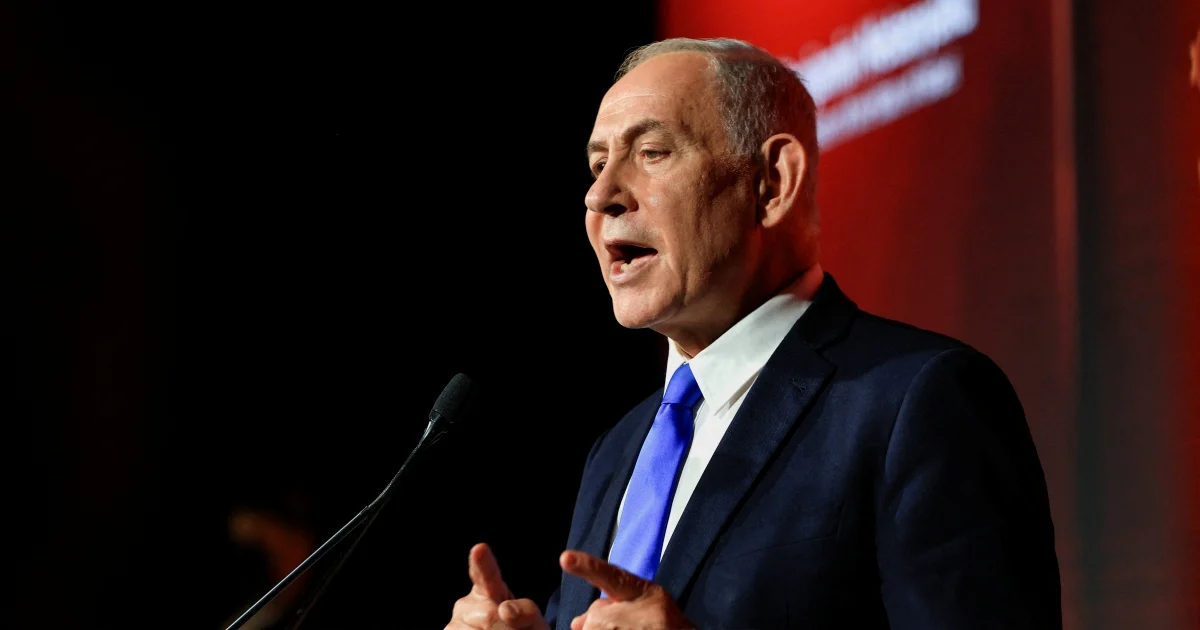
Israeli Prime Minister Benjamin Netanyahu doubled down on his government's military commitment to southern Lebanon on Sunday, asserting that forces would maintain their presence for as long as security conditions demand. The declaration underscores a significant escalation in Israel's regional posture and signals that any withdrawal from Lebanese territory will not occur on a predetermined timeline, despite international pressure and ceasefire negotiations.
The timing of Netanyahu's remarks reflects the complex dynamics shaping the eastern Mediterranean at present. Israel's deployment into Lebanon represents one of the most substantial cross-border military operations in the region in recent years, fundamentally altering the security landscape and raising questions about the sustainability of such operations. By explicitly rejecting any fixed withdrawal schedule, Netanyahu has essentially placed the onus on Hezbollah and the Lebanese government to meet unspecified security benchmarks before Israel considers pulling back its forces.
For Malaysian observers and regional policymakers across Southeast Asia, this development carries broader implications for understanding how major powers manage protracted military commitments in disputed territories. The open-ended nature of Israel's presence in southern Lebanon echoes patterns seen in other global conflicts, where initial operations described as temporary have evolved into sustained occupations lasting years or decades. This precedent matters for how regional stability mechanisms function and how international law is applied inconsistently across different theatres.
Netanyahu's statement also occurred within the context of his administration simultaneously addressing what it perceives as the overarching regional security challenge: Iran's nuclear programme. By coupling his remarks about Lebanon with fresh warnings against Iranian nuclear advancement, Netanyahu attempted to frame Israel's military operations as integral to a broader strategic vision aimed at countering Tehran's influence across the Middle East. This linkage reveals how Israeli decision-makers view southern Lebanon not as an isolated concern but as one component of a multifaceted security architecture.
The commitment to an indefinite presence in Lebanon raises practical questions about logistics, military fatigue, and the domestic political costs of sustaining such operations. Maintaining a significant military force in a potentially hostile neighbouring territory requires continuous resource allocation, replacement personnel rotation, and confrontation with local resistance. These factors eventually create political pressure even within Israel itself, where public opinion regarding prolonged deployments has historically shifted over time.
International response to Netanyahu's declaration has been measured but reflects underlying concerns about regional escalation. The United Nations, various European nations, and Arab states have called for Israeli withdrawal, citing both international law and humanitarian considerations. Malaysia and other Southeast Asian nations, while maintaining diplomatic distance from direct intervention in Middle Eastern conflicts, have expressed general concern through multilateral forums about military escalations that destabilize international norms and create civilian suffering.
The Lebanese government finds itself in an extraordinarily difficult position. The country has long struggled with state capacity and territorial sovereignty, particularly in regions where Hezbollah maintains significant influence. Israeli occupation of southern Lebanon effectively removes Lebanese state authority from these areas, complicating any reconstruction efforts and undermining the Lebanese government's ability to extend its writ across the entire national territory. This situation has historical echoes, as Israel previously occupied parts of southern Lebanon for 18 years, from 1982 to 2000.
Hezbollah's response to Netanyahu's commitment will significantly influence whether the current tensions evolve into a broader conflict or eventually settle into a frozen arrangement. The organization has historically demonstrated both capacity for military resistance and pragmatic acceptance of truces when circumstances favour such arrangements. The coming weeks and months will reveal whether Hezbollah interprets Netanyahu's statement as a negotiating position or as evidence that military escalation will continue regardless of ceasefire discussions.
For international observers tracking Middle Eastern developments, Netanyahu's declaration represents a moment of clarity regarding Israeli strategic intentions. Rather than presenting the Lebanon operation as a temporary necessity likely to conclude soon, the Prime Minister has instead adopted language suggesting an indefinite commitment contingent on subjective assessments of security conditions. This approach differs markedly from how some other nations frame military operations abroad and signals a hardening of Israel's negotiating position.
The regional implications extend beyond Lebanon itself. Neighbouring Syria, already devastated by civil war and facing its own instability, must now account for the reality of an extended Israeli military presence in what remains contested territory. Iraq and other nations in the region remain concerned about potential escalation vectors that could draw broader powers into direct confrontation. The strategic environment across the Middle East has thus fundamentally shifted based on this single statement, with consequences that will reverberate for years ahead.
From a Malaysian perspective, these developments underscore why regional nations maintain careful diplomatic engagement across the Middle East without taking sides in internal conflicts. The situation demonstrates how major power conflicts, while geographically distant, influence international security architecture and the precedents established for military intervention. As Southeast Asia navigates its own security challenges, understanding how other regions manage prolonged military commitments and territorial disputes provides valuable lessons in diplomacy and conflict prevention.