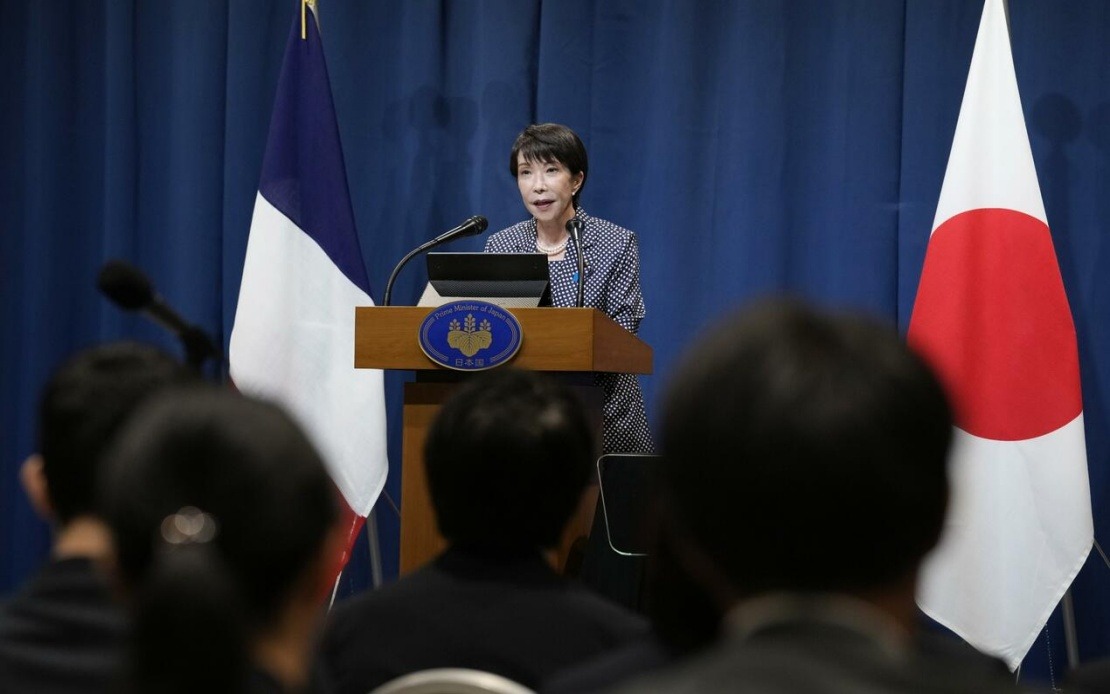
Prime Minister Sanae Takaichi faces mounting public discontent as her cabinet's approval rating dropped to 55.8 per cent this weekend, according to a Kyodo News poll released Sunday. The figure represents the weakest showing since she assumed office last October, signalling erosion in her political standing at a critical juncture for Japan's domestic and foreign policy agenda.
The timing of the decline comes amid persistent economic uncertainty, particularly over Japan's exposure to regional instability in West Asia. As a resource-dependent nation heavily reliant on energy imports, Japan remains vulnerable to disruptions in global supply chains and commodity prices. The combination of these external pressures with domestic inflationary concerns has created a challenging environment for household finances across the country.
A key finding from the weekend telephone survey reveals substantial public reluctance regarding military involvement in regional disputes. Just over half of respondents, at 54.7 per cent, oppose dispatching Japan's Self-Defence Forces to secure maritime passages in contested waterways, while 36.6 per cent favour such deployment. This split reflects broader Japanese public anxiety about military commitments abroad, rooted in the nation's post-war pacifist constitution and historical experience.
The poll's timing proves significant, following the announcement of preliminary peace negotiations between the United States and Iran, which included provisions for Tehran to reopen the Strait of Hormuz. This development potentially reduces the immediate rationale for Japanese military involvement in the region, yet the public's preference for avoiding such commitments underscores deeper reservation about expanding Japan's strategic footprint in troubled zones.
Persistent inflation continues to dominate Japanese household concerns, with prices remaining elevated across essential goods and services. This economic headwind directly impacts consumer sentiment and government approval ratings, as families struggle to maintain living standards amid stagnant wage growth. For Malaysia and other regional economies watching Japan's policy responses, these domestic pressures offer insight into how Tokyo may recalibrate its regional engagement and spending priorities.
The consumption tax emerges as a focal point of public frustration. Nearly 44 per cent of poll respondents view a reduction in the food and beverage tax rate from 8.0 per cent to 1.0 per cent as an acceptable compromise measure if it enables faster implementation. A smaller cohort, representing 22.6 per cent, demands complete elimination of the tax on these essentials, consistent with pledges made by the ruling coalition parties. This fragmentation suggests no clear consensus exists on the optimal path forward, complicating the government's fiscal planning.
The ruling parties' earlier campaign promises regarding tax relief have intensified public expectations for immediate action. Takaichi's cabinet must navigate the tension between addressing inflationary pressures through targeted tax cuts and maintaining fiscal discipline during a period of rising global uncertainty. How Japan resolves this dilemma will influence its competitiveness and investment climate across the Asia-Pacific region.
From a Southeast Asian perspective, Japan's domestic political difficulties carry spillover implications. As a major regional investor and trading partner, any contraction in Japanese consumer spending or shift in government expenditure priorities could affect export-dependent economies throughout the region. Additionally, Japan's cautious public stance on regional military involvement may influence Tokyo's approach to security cooperation frameworks involving ASEAN nations.
The declining approval rating also reflects broader disillusionment with the pace of economic reform and inequality reduction. Middle-class Japanese households report feeling squeezed by the gap between stagnant wages and rising living costs, a pattern increasingly common across developed economies. This frustration has become a consistent drag on government popularity regardless of specific policy proposals.
Takaichi's administration faces pressure to demonstrate tangible results on its economic agenda before sentiment deteriorates further. The window for launching bold policy initiatives narrows as approval ratings decline, limiting political capital for major legislative efforts. Prime Ministers facing single-digit deficits in public support typically resort to defensive positioning rather than aggressive agenda-setting.
Regional observers note that Takaichi's difficulties emerge at a moment when Japan requires political stability to address China's assertiveness in contested maritime zones and maintain alliance cohesion with the United States. Domestic political weakness could inadvertently signal vulnerability that rival powers might exploit in bilateral negotiations.
The consumption tax debate particularly matters for working families and small businesses already struggling with operational costs. Any relief measures, whether modest or ambitious, will carry significant fiscal implications for government budgeting and social spending. Takaichi's government must communicate clearly how tax reductions will be funded without compromising essential services or deepening long-term structural deficits.
Moving forward, Takaichi requires both economic news that eases household financial pressures and diplomatic achievements that demonstrate effective stewardship of Japan's regional interests. Without visible progress on either front, her approval ratings may continue their downward trajectory, potentially creating openings for political challengers within her coalition or opposition parties.