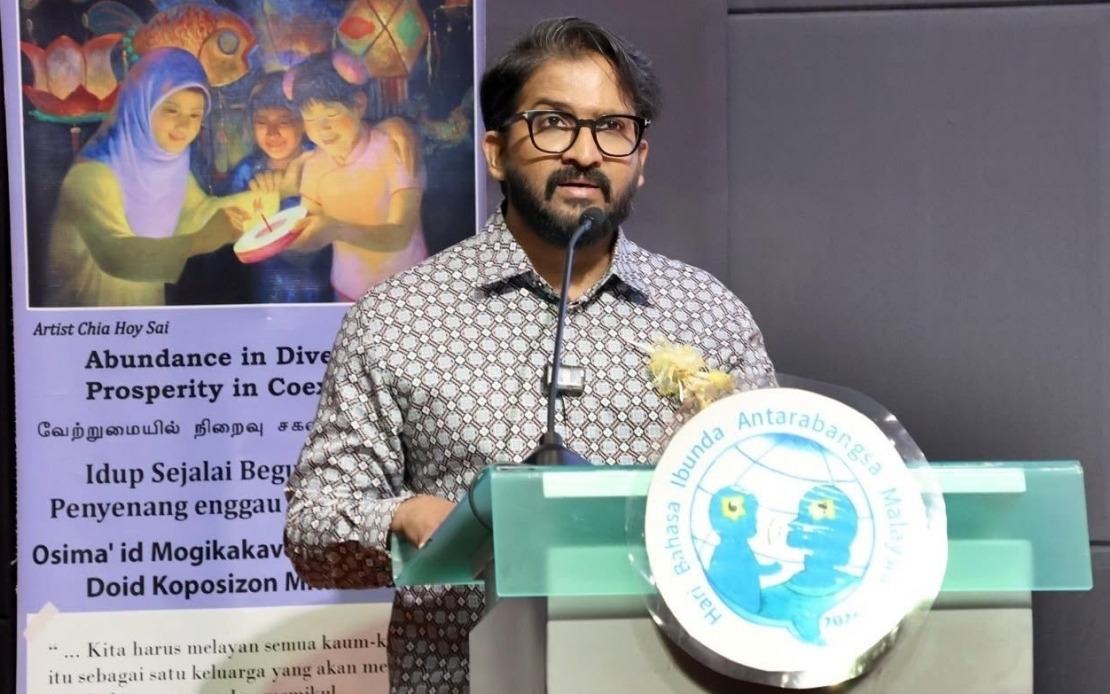
Deputy National Unity Minister R. Yuneswaran has called for a renewed commitment to preserving and strengthening mother-tongue proficiency, particularly among younger Malaysians, as a strategic approach to reducing societal tensions over sensitive topics. Speaking on social media this week, Yuneswaran argued that the persistent emergence of race, religion and royalty issues—commonly referred to as 3R concerns—stems fundamentally from inadequate understanding across Malaysia's diverse communities rather than from language barriers themselves.
The minister's intervention comes amid ongoing concerns about inflammatory discourse surrounding 3R topics on digital platforms, where misunderstandings frequently escalate into broader social divisions. Yuneswaran contends that these flashpoint issues reflect a deeper malaise: the absence of meaningful cross-cultural knowledge and appreciation among Malaysians who increasingly encounter one another through social media rather than through sustained personal interaction.
Language, according to Yuneswaran's perspective, functions as far more than a mere tool for exchanging information. He emphasises that linguistic proficiency carries profound significance as a vessel for identity, ancestral memory, and the value systems that fundamentally structure communities and define their sense of belonging. This understanding positions language preservation not as a parochial concern but as essential infrastructure for building empathy and reducing friction between groups.
Malaysia's extraordinary linguistic diversity—encompassing approximately 130 distinct languages across its population—represents a distinctive national asset rather than an inherent liability or source of fragmentation, the minister argues. This reframing is significant because it counters narratives that present multilingualism as a complicating factor in national integration. Instead, Yuneswaran suggests that this diversity, when properly understood and respected, strengthens the nation's social cohesion and cultural resilience.
Crucially, Yuneswaran emphasises that mastery of one's ancestral language does not create impediments to learning Malay, the national language, or any other linguistic system. This clarification directly addresses a persistent tension in Malaysian public discourse, where some have framed mother-tongue education as competing with efforts to promote Bahasa Malaysia. The deputy minister's own trajectory—spanning education in both Chinese and national school systems—serves as a personal testament to the compatibility of these linguistic commitments.
His position suggests that individuals who maintain strong connections to their heritage language simultaneously develop enhanced capacity to engage respectfully with other cultural traditions. Rather than operating as zero-sum rivals, proficiency in one's mother tongue and fluency in the national language can reinforce one another, each enriching cognitive flexibility and intercultural sensitivity. This framework challenges zero-sum thinking that has occasionally characterised debates around language policy.
The National Unity Ministry's mandate, articulated within the broader framework of the 13th Malaysia Plan, centres on consolidating nation-building through deliberately fostering mutual comprehension, reciprocal respect, and genuine willingness among Malaysians to learn meaningfully about one another's backgrounds. This institutional responsibility reflects recognition that unity requires sustained, intentional effort rather than emerging spontaneously from geographic proximity or legal citizenship alone.
Yuneswaran characterises understanding, reciprocal respect, and openness to genuine knowledge-gathering as foundational elements from which substantive national unity must develop. Language emerges from this analysis as the critical connective tissue binding these elements together. By strengthening linguistic and cultural literacy, particularly among digital natives who navigate increasingly polarised online spaces, Malaysia can build defences against the erosion of social cohesion that 3R controversies repeatedly threaten to accelerate.
For Malaysia's policymakers and educators, Yuneswaran's intervention suggests that addressing 3R tensions requires moving beyond reactive moderation of inflammatory speech toward proactive cultivation of deeper cultural understanding. This preventive approach demands investment in educational curricula, community programmes, and institutional frameworks that enable Malaysians to appreciate the linguistic and cultural inheritances of fellow citizens not as exotic curiosities but as integral components of shared national identity.