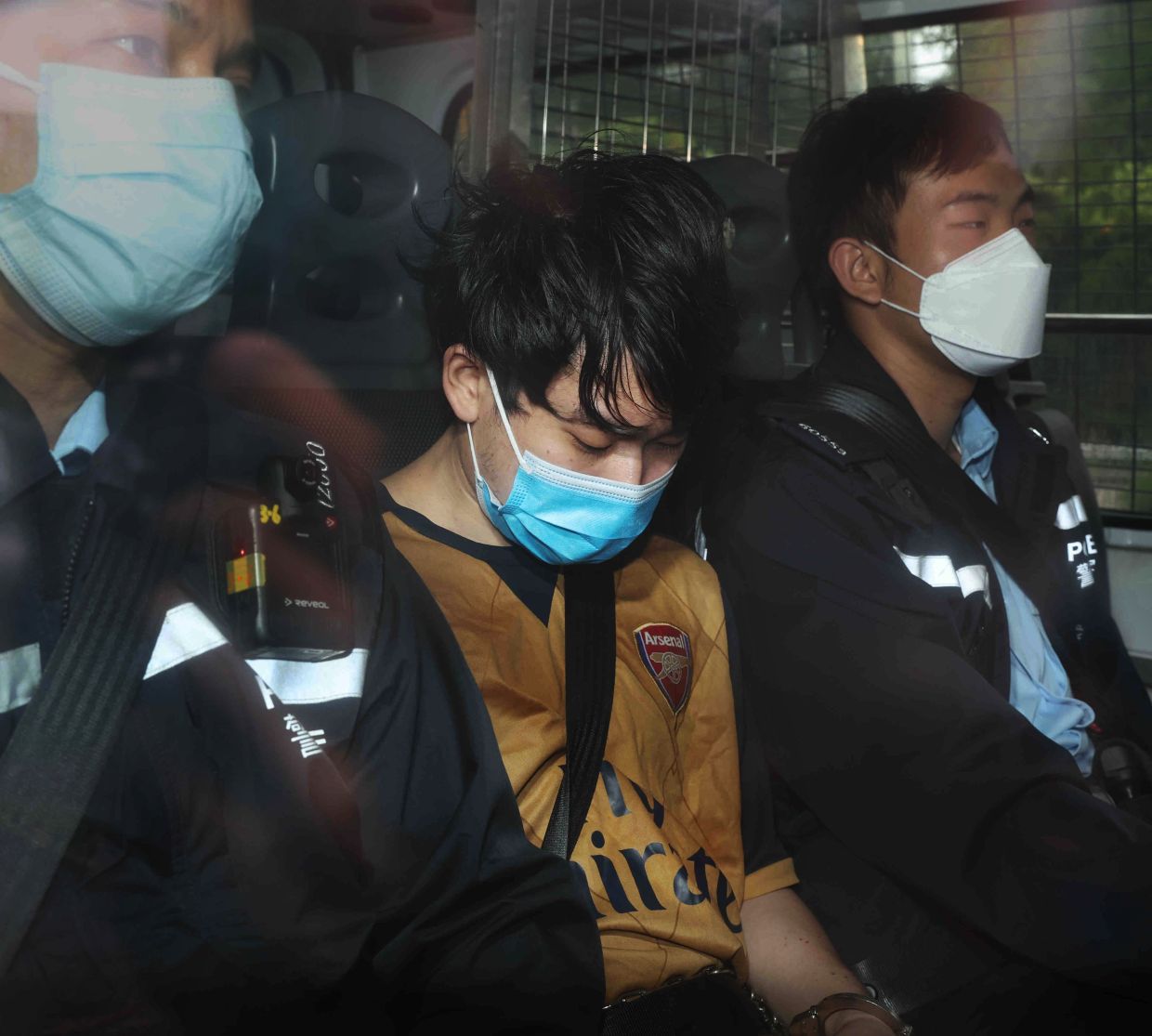
A jobless 29-year-old man has taken the stand at Hong Kong's High Court to defend himself against murder charges stemming from the 2022 death of his 30-year-old girlfriend, offering an implausible defence that he struck her fatally while attempting to assist with weight loss through sleep deprivation. Ng Ka-sing faces allegations that he killed his partner Yip Tsz-ching at their modest 700-square-foot apartment in Galore Garden, Hung Shui Kiu, over the course of two days in late April 2022. The case has drawn scrutiny not only for the unusual circumstances surrounding her death, but also for the defendant's explanation of events that prosecutors have characterised as evasive and inconsistent.
The narrative presented by prosecutors paints a picture of escalating violence within the household during the period of April 27 and 28, 2022. According to the prosecution's opening statement delivered by Senior Public Prosecutor Audrey Parwani, Ng subjected Yip to repeated beatings over several hours, starting from late evening on April 27 and continuing into the early morning hours of April 28. The defendant allegedly wielded a rod as a weapon, striking his girlfriend intermittently across multiple sessions spanning more than six hours in total. Parwani emphasised to the jury that Ng has provided varying explanations to police regarding the injuries sustained by Yip, undermining his credibility and suggesting deliberate misrepresentation of events.
The alleged assault appears to have involved the participation of other household members, raising questions about the knowledge and complicity of those sharing the flat. According to Ng's account provided to police, when he paused during the beating to question whether he should continue, his sworn sister—whose family occupied the same apartment—allegedly encouraged him to persist for a longer period. This detail suggests that Yip's suffering may have unfolded with awareness from multiple people present in the confined space. The defendant claimed he continued the beatings during two distinct windows: from 10pm through 1:30am and again from 3am to 5:30am, supposedly because his girlfriend did not explicitly tell him to stop.
Beyond the beatings, Yip sustained extensive chemical burns covering approximately 55 percent of her body, injuries that compound the brutality of the assault. Ng's explanation for these burns diverges starkly from evidence of his own culpability. He has claimed that Yip deliberately poured drain cleaner on herself, while he merely splashed the liquid on the floor to "stimulate" her feet—a claim that stretches credibility given the severity and distribution of her burns. Additionally, Ng alleged that Yip struck herself against a wall seven to eight times after slipping on the floor, attributing injuries that could have resulted from deliberate violence to accidental falls.
The progression toward Yip's final hours reveals a deteriorating situation that the defendant apparently recognised had become life-threatening. Around 5am on April 28, Yip communicated to Ng that she was experiencing severe pain and expressed fear that she might not survive. Just two hours later, at 7:21am, she spoke for the last time before slipping into an irreversible coma. Government pathologist Dr Foo Ka-chung later determined that death resulted from suffocation following head injuries and the extensive chemical burns to her trunk and limbs. The medical evidence indicated that Yip had been deceased for 12 to 24 hours by the time her body was discovered, establishing a timeline consistent with the prosecution's account of events.
The discovery of Yip's remains came through the most mundane of circumstances: joggers observing a human leg protruding from a rolled quilt loaded onto a wheelboard on the morning of April 29. This observation triggered an investigation that exposed Ng's attempt to dispose of his girlfriend's body illegally. Forensic evidence specialist Lo Man-hung documented that Yip's corpse had been bound to an overturned wooden chair with black rubbish bags, then covered with a quilt and an elaborate wrapping of cling film and adhesive tape around her head. The meticulous concealment suggested premeditated disposal rather than spontaneous panic following an accidental death.
Witness accounts of Ng's demeanour immediately following the discovery further undermine his defence. Jogger Lau Kwok-yan, who reported the case to police, testified that when officers arrived, Ng stood motionless on the street without exhibiting signs of distress or panic. Street cleaner Wong Ah-sum recalled that when he questioned Ng about the body before police arrival, the defendant calmly referred to it as a "corpse" and stated his intention to transport it to a police station—language and composure inconsistent with someone who had merely made a tragic accident. Upon arrest at 6:36am, Ng made a brief statement acknowledging, "This was my girlfriend. I hit her to death with a rod by mistake," an admission that the prosecution interprets as an acknowledgment of intentional violence rather than genuine accident.
The prosecution has rejected Ng's offer to plead guilty to the lesser charge of manslaughter, indicating their confidence in pursuing a full murder conviction. Senior Public Prosecutor Parwani explicitly told the seven-member jury that "the prosecution does not accept the accused was telling the whole truth," signalling serious doubts about his consistency and veracity throughout police questioning and his trial testimony. The defendant's evolving explanations regarding Yip's injuries, combined with the calculated disposal of her body, suggest a narrative of intentional harm followed by deliberate concealment rather than accidental tragedy followed by panic.
This case holds particular relevance for Malaysia and the broader Southeast Asian region, where domestic violence remains significantly underreported and inadequately prosecuted. The involvement of household members who allegedly encouraged continued violence highlights the enabling dynamics that sometimes occur within shared living spaces, particularly in economically constrained communities. The 18-day trial is expected to thoroughly examine whether responsibility extends beyond Ng to others who may have tacitly permitted or encouraged the abuse. For Malaysian observers, the case underscores the importance of robust intervention protocols for neighbours and family members who witness signs of domestic violence, as early intervention might have prevented this tragedy.
%22%2F%3E%3C%2Fpattern%3E%3C%2Fdefs%3E%3Crect%20width%3D%22100%25%22%20height%3D%22100%25%22%20fill%3D%22url(%23ph40xibg)%22%2F%3E%3Crect%20width%3D%22100%25%22%20height%3D%22100%25%22%20fill%3D%22url(%23ph40xibp)%22%2F%3E%3Ctext%20x%3D%2250%25%22%20y%3D%2250%25%22%20text-anchor%3D%22middle%22%20dominant-baseline%3D%22central%22%20fill%3D%22rgba(255%2C255%2C255%2C0.95)%22%20font-family%3D%22Georgia%2C%20'Times%20New%20Roman'%2C%20serif%22%20font-weight%3D%22700%22%20font-size%3D%22272%22%20letter-spacing%3D%22-0.02em%22%3EMITRA%3C%2Ftext%3E%3C%2Fsvg%3E)