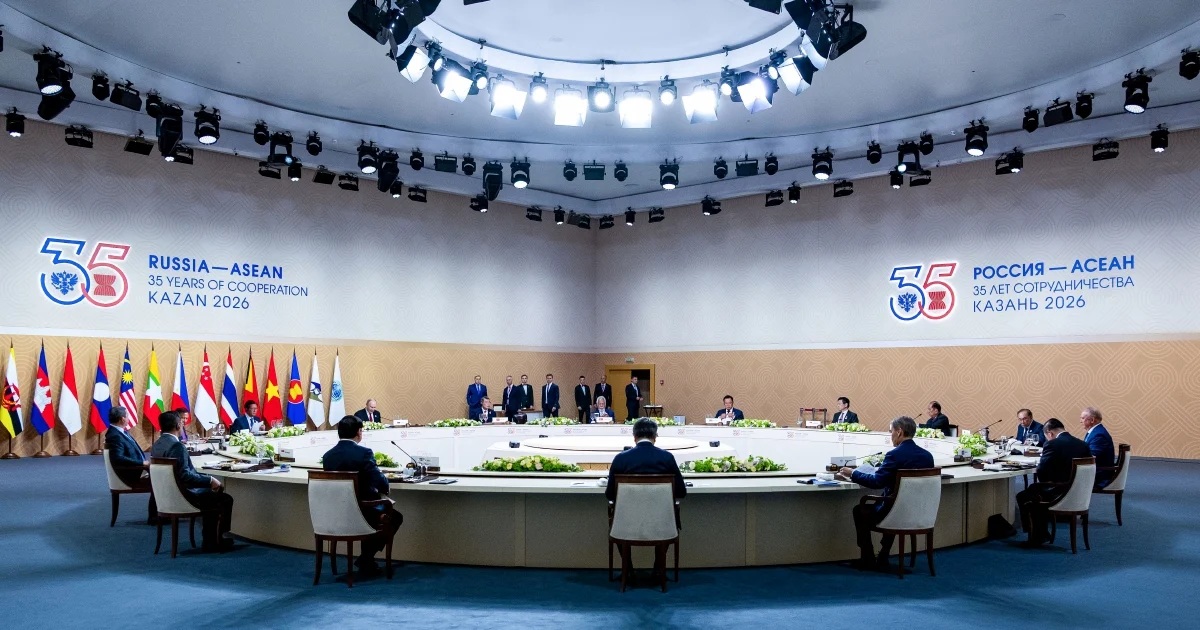
Prime Minister Datuk Seri Anwar Ibrahim's whirlwind tour through three Central Asian capitals—Tashkent, Kazan, and Ashgabat—represents a significant shift in Malaysia's diplomatic priorities, signalling the country's intent to deepen economic ties beyond traditional Southeast Asian partnerships and towards regions with substantial untapped potential.
The sequential nature of these visits, rather than representing a haphazard itinerary, reflects a carefully calibrated diplomatic strategy aimed at consolidating Malaysia's presence across three distinct but interconnected economic zones. Each destination offers unique opportunities: Uzbekistan serves as a pivotal regional hub with significant energy resources and manufacturing capabilities; Russia's Volga region represents access to broader Eurasian markets; and Turkmenistan maintains crucial energy reserves and sits at the intersection of Asia, Europe, and the Middle East. By visiting all three in rapid succession, the Prime Minister addressed multiple economic priorities simultaneously while projecting Malaysia as a serious investor and trading partner in regions where Southeast Asian engagement remains relatively underdeveloped.
Malaysia's outreach to Central Asia occurs at a crucial juncture in global geopolitics. The region, long dominated by Russian and Chinese economic interests, is increasingly attractive to emerging market economies seeking diversification and new trade corridors. For Malaysia, these countries represent potential markets for Palm oil, manufactured goods, and Islamic finance services—sectors where the nation holds competitive advantages. Simultaneously, Central Asian nations possess valuable minerals, energy products, and agricultural commodities that could benefit Malaysian industries and consumers.
The timing of Anwar Ibrahim's visits also aligns with Malaysia's broader strategic repositioning. As the country navigates complex relationships with established powers, cultivating partnerships in Central Asia allows Malaysia to maintain strategic autonomy while building influence in regions where it lacks historical entanglement in cold war legacies or contentious border disputes. This positions Malaysia as a neutral, pragmatic partner—an advantage when competing against nations with more fraught regional histories.
Tashkent, as Uzbekistan's capital and Central Asia's largest metropolitan area, naturally featured prominently in this diplomatic circuit. The city serves as headquarters for numerous regional organisations and attracts international businesses seeking Central Asian exposure. Malaysia's engagement here addresses both bilateral opportunities with Uzbekistan and the potential to establish itself as a bridge for Southeast Asian companies entering the broader region. The Uzbek government, under President Shavkat Mirziyoyev's reform agenda, has actively sought diversified international partnerships, creating receptive conditions for Malaysian initiatives.
Kazan's inclusion underscores Malaysia's interest in deeper Russian engagement beyond Moscow-centric diplomacy. As the capital of Tatarstan, a region with significant Muslim population and Islamic institutional infrastructure, Kazan offers particular relevance for Malaysia's Islamic finance and halal industry ambitions. The city has positioned itself as Russia's Islamic financial centre, creating natural synergies with Malaysian expertise in Shariah-compliant banking, investment products, and certification standards. Furthermore, Kazan's role as an economic bridge between European Russia and Asian Russia makes it strategically valuable for companies seeking to penetrate broader Eurasian markets.
Ashgabat represents perhaps the most strategic destination on this itinerary. Turkmenistan holds among the world's largest proven natural gas reserves and maintains significant oil production capacity. For Malaysia, a country perpetually conscious of energy security and resource availability, establishing stronger governmental and commercial ties with Turkmenistan carries substantial long-term implications. Beyond hydrocarbons, Turkmenistan's position on the Caspian Sea and along crucial trade routes connecting China, Iran, and Europe make it geopolitically significant. Malaysian investments or partnerships here could yield dividends as regional infrastructure projects develop and connectivity initiatives expand.
The diplomatic dimensions of these visits extend beyond immediate commercial transactions. They signal to Malaysia's existing partners—particularly those in ASEAN and the broader Indo-Pacific region—that the country maintains independent agency in foreign policy and economic strategy. This matters as regional powers jostle for influence and as smaller nations must carefully calibrate their alignment to preserve autonomy. Malaysia's Central Asian engagement demonstrates the nation refuses to be confined within any single strategic sphere of influence.
From a business perspective, these visits likely generated discussions regarding investment frameworks, trade agreements, visa facilitation, and sectoral partnerships. Malaysian companies in palm oil, construction, finance, and manufacturing could benefit from improved access to these markets, while state-linked enterprises might identify infrastructure or resource opportunities. The visits also provide platforms for government-to-government exploration of joint ventures in sectors like renewable energy, where Malaysia increasingly positions itself as a regional technology leader.
The expansion of Malaysia's economic diplomacy into Central Asia also reflects demographic and economic trends. As Southeast Asian markets mature and competition intensifies among regional players, Malaysian policymakers recognise the necessity of exploring newer frontiers. Central Asia, home to over 80 million people with rising disposable incomes and growing consumer markets, presents expansion opportunities that complement rather than displace Malaysia's traditional focus areas.
Looking forward, the substantive outcomes of these visits will determine their lasting significance. Concrete agreements on trade, investment, or institutional cooperation would validate this diplomatic pivot and potentially inspire follow-up engagements. Conversely, if the visits remain largely ceremonial, they risk being dismissed as symbolic gestures without strategic impact. The real test lies in whether Malaysian businesses, particularly small and medium enterprises, receive practical support in accessing these markets and whether Central Asian partners reciprocate with genuine economic commitment to Malaysia.
Ultimately, Anwar Ibrahim's Central Asian tour represents Malaysia's maturing approach to international engagement—one that moves beyond reactive diplomacy towards proactive exploration of underutilised partnerships. In an era where economic power increasingly translates to geopolitical influence, Malaysia's willingness to invest diplomatic capital in regions beyond its immediate geographical sphere suggests the nation understands the imperative of economic diversification and strategic optionality.
%22%2F%3E%3C%2Fpattern%3E%3C%2Fdefs%3E%3Crect%20width%3D%22100%25%22%20height%3D%22100%25%22%20fill%3D%22url(%23ph40xibg)%22%2F%3E%3Crect%20width%3D%22100%25%22%20height%3D%22100%25%22%20fill%3D%22url(%23ph40xibp)%22%2F%3E%3Ctext%20x%3D%2250%25%22%20y%3D%2250%25%22%20text-anchor%3D%22middle%22%20dominant-baseline%3D%22central%22%20fill%3D%22rgba(255%2C255%2C255%2C0.95)%22%20font-family%3D%22Georgia%2C%20'Times%20New%20Roman'%2C%20serif%22%20font-weight%3D%22700%22%20font-size%3D%22272%22%20letter-spacing%3D%22-0.02em%22%3EMITRA%3C%2Ftext%3E%3C%2Fsvg%3E)