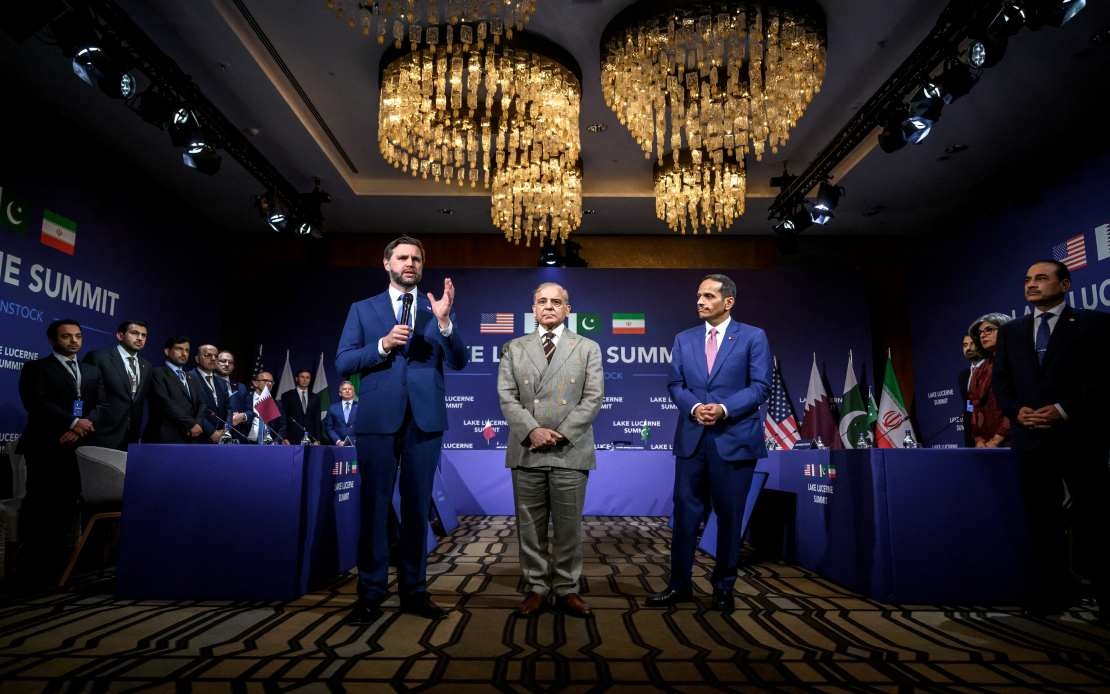
Delegations from Iran and the United States have completed their opening round of direct negotiations in Switzerland, marking a significant diplomatic development in efforts to resolve months of regional tensions. The talks, which took place under the mediation of Qatar and Pakistan, concluded on Sunday according to reports from Iran's Fars News Agency. The meeting was suspended after approximately eighty minutes to permit each delegation to conduct internal consultations, indicating that substantive discussions occurred during the session.
The negotiation framework stems from a memorandum of understanding signed on Wednesday between the two nations, designed to bring an end to the prolonged conflict in West Asia and restore operations through the Strait of Hormuz. This strategic waterway represents one of the world's most critical maritime chokepoints, with disruptions carrying enormous implications for global energy markets and regional stability. The interim agreement signals a shift in diplomatic posture after months of escalating tensions that have threatened maritime commerce and regional security.
The delegations assembled in Bürgenstock were led by high-ranking officials from both sides, reflecting the gravity of the negotiations. The US team was headed by Vice President JD Vance, while Iran dispatched Parliament Speaker Mohammad Bagher Qalibaf and Foreign Minister Abbas Araghchi to lead their contingent. The presence of such senior figures underscores the significance both governments attach to reaching a sustainable resolution. Pakistani officials played a crucial mediation role throughout the discussions, while Qatar facilitated the broader diplomatic process.
For Malaysian and Southeast Asian observers, these developments carry considerable weight. The stability of global energy supplies depends heavily on unobstructed passage through the Strait of Hormuz, through which vast quantities of petroleum and liquefied natural gas flow toward Asian markets. Malaysia, as a major trading nation and energy importer, has a vested interest in ensuring that regional conflicts do not disrupt maritime commerce or elevate energy costs. Any escalation between Iran and the US would reverberate through supply chains and shipping costs affecting the entire region.
The mechanics of the negotiation process reveal careful diplomatic choreography. Both sides arrived in Switzerland in advance to prepare, and the decision to suspend talks after eighty minutes suggests structured discussion rather than acrimonious confrontation. This measured approach indicates that each side came prepared with specific proposals and willing to engage substantively. The requirement for delegations to conduct internal consultations before resuming negotiations is standard practice, allowing governments to review progress and adjust positions as needed.
The intermediary role of Qatar and Pakistan deserves particular attention. Qatar has cultivated relationships across the ideological spectrum in Middle Eastern politics and maintains active communication channels with multiple parties. Pakistan, meanwhile, shares borders with Iran and has historically maintained diplomatic ties with both Tehran and Washington, positioning Islamabad as a credible neutral party. These mediators provide essential shuttle diplomacy functions and help translate positions between parties whose direct communication remains limited.
While official statements remained sparse regarding specific outcomes or timelines for subsequent sessions, the conclusion of the first round without reported incidents suggests constructive engagement. Neither side issued inflammatory statements, and both appeared committed to following agreed procedures. This contrasts sharply with previous periods marked by hostile rhetoric and military posturing, indicating a genuine attempt to move beyond confrontation toward resolution.
The timing of these talks coincides with broader regional recalibration efforts. Several Middle Eastern nations have pursued rapprochement in recent years, mediated by countries like China and Saudi Arabia. The Iran-US negotiations thus occur within a context of shifting geopolitical alignments and renewed emphasis on dialogue over confrontation. Success in these talks could set patterns for future conflict resolution across the region.
Southeast Asian capitals will monitor these developments closely. The region's economies depend on stable, predictable energy supplies and uninterrupted maritime commerce. Higher energy prices flowing from Middle Eastern instability inflate costs for manufacturers, transportation, and electricity generation across Southeast Asia. A successful interim agreement reducing military tensions would therefore generate positive spillover effects for regional economic stability and growth prospects.
The path forward remains uncertain. The suspension after eighty minutes, while potentially routine, also reflects how preliminary these discussions remain. Numerous technical details regarding implementation of the interim agreement require resolution, including verification mechanisms, sanctions relief sequencing, and confidence-building measures. These negotiations will likely span multiple sessions before reaching comprehensive agreements.
Observers should expect a prolonged process. Initial rounds typically focus on establishing procedural frameworks, verifying that both sides understand the interim agreement identically, and identifying areas of genuine disagreement requiring creative solutions. Subsequent sessions will test whether the political will demonstrated by leadership actually translates into movement on substantive issues or whether entrenched interests on either side prove resistant to compromise.
The success or failure of these negotiations holds enormous implications extending far beyond Iran and the United States. For Malaysia and Southeast Asia, a stabilised Middle East means lower energy costs, safer shipping routes, and reduced economic uncertainty. Conversely, negotiation failure could trigger new rounds of military confrontation with cascading effects on global markets. The conclusion of this first round, while modest in itself, represents a necessary first step toward achieving that stability.