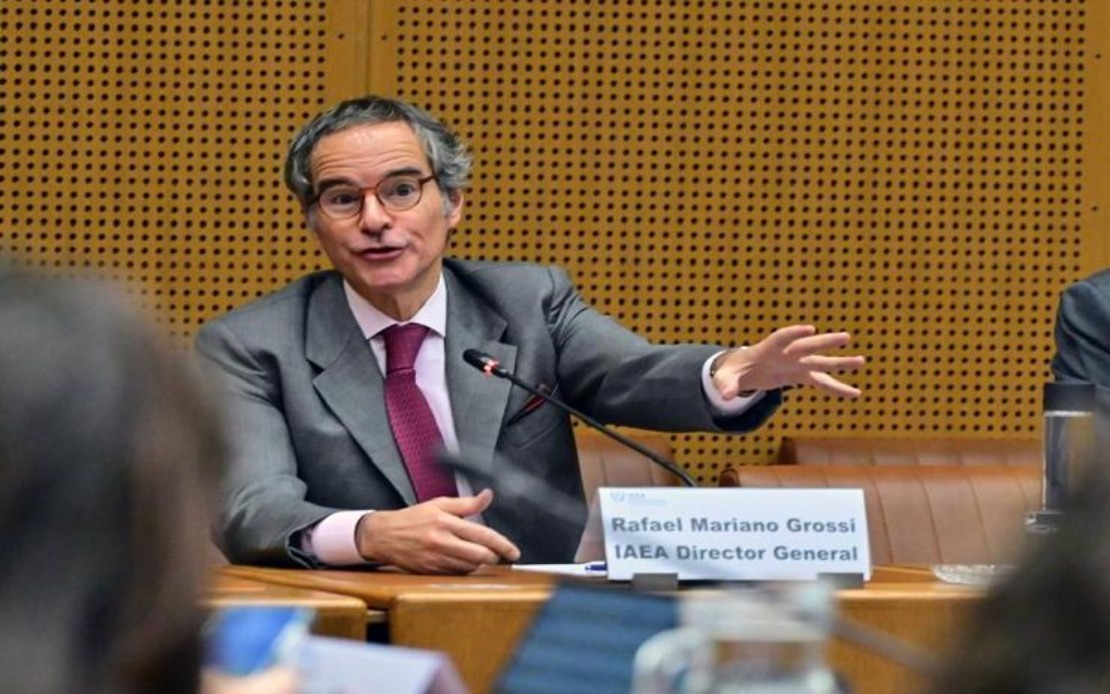
The International Atomic Energy Agency has weighed in on escalating diplomatic efforts between Washington and Tehran, with Director General Rafael Mariano Grossi emphasising that this pivotal moment demands a sustained commitment to negotiation. Speaking from Istanbul, Grossi highlighted the necessity of pursuing every diplomatic avenue available as delegations from the United States and Iran prepared to engage in direct talks scheduled for Sunday in the Swiss resort town of Burgenstock, marking a significant development in efforts to resolve longstanding nuclear tensions in the Middle East.
Grossi's intervention underscores the IAEA's central role as a neutral arbiter in nuclear negotiations, a position the Vienna-based organisation has maintained throughout various cycles of Iranian nuclear diplomacy over the past two decades. The agency has consistently served as a technical and monitoring body, tasked with verifying compliance with international nuclear safeguards agreements and providing objective assessments of Iran's nuclear programme. By publicly emphasising the value of diplomatic engagement, Grossi positioned the IAEA as a constructive force in facilitating dialogue rather than merely observing from the sidelines.
The groundwork for this week's negotiations was laid earlier with the signing of the Islamabad Memorandum of Understanding between US President Donald Trump and Iranian President Masoud Pezeshkian, an agreement that created the diplomatic framework necessary for substantive bilateral talks. This breakthrough followed months of preliminary discussions and signals from both capitals suggesting a willingness to engage directly on nuclear and broader regional security matters. The significance of direct engagement cannot be understated in the context of US-Iran relations, which have been characterised by decades of hostility, proxy conflicts, and periodic crises punctuated by rare moments of diplomatic opening.
Swiss Foreign Minister Ignazio Cassis played a crucial facilitating role in these negotiations, meeting separately with both Grossi and Iranian Foreign Minister Abbas Araghchi at Burgenstock before the scheduled Sunday talks. Switzerland's position as a traditionally neutral state with long-standing diplomatic ties to both Washington and Tehran made it an ideal venue for such sensitive negotiations. Cassis's diplomatic shuttle, meeting with key players on both sides, reflected the careful choreography required to bring contentious parties to the negotiating table and maintain momentum toward productive dialogue.
For Malaysia and the broader Southeast Asian region, the outcome of these talks carries implications that extend beyond the immediate Middle East context. A successful de-escalation between the United States and Iran could reshape regional power dynamics, influence energy markets that directly affect ASEAN economies, and potentially reduce the risk of military conflict that could draw in global powers with strategic interests across Asia. Malaysia, as a Muslim-majority nation with historical ties to Iran and strategic partnerships with the United States, occupies a delicate diplomatic position and benefits from regional stability.
Grossi's emphasis on giving diplomacy every opportunity to succeed reflected the IAEA's institutional interest in maintaining access to Iranian nuclear facilities and continuing its inspection and monitoring mandate. The agency's effectiveness depends upon Iran's cooperation and willingness to permit inspectors to verify compliance with nuclear agreements. Should negotiations fail or relations deteriorate further, the IAEA's ability to conduct its work could be compromised, undermining international confidence in monitoring mechanisms designed to prevent nuclear weapons development.
The timing of these talks came amid broader international concern about nuclear proliferation in the Middle East and the stability of the international non-proliferation regime. The IAEA has been vocal about the necessity of maintaining robust safeguards and verification mechanisms in regions where nuclear technology and ambitions coexist with political tensions. Grossi's public statements served to reinforce the message that technical solutions to nuclear questions require political will and sustained engagement rather than confrontation or sanctions alone.
Swiss gratitude for Switzerland's support of the IAEA, voiced by Grossi during his meeting with Cassis, acknowledged the practical and political backing that smaller nations provide to international organisations. Switzerland hosts numerous international bodies and provides diplomatic infrastructure for multilateral negotiations, a role that reflects its neutrality tradition and commitment to international law. This support proves essential when major powers require neutral ground for sensitive talks that might otherwise remain deadlocked through bilateral channels alone.
The road ahead for US-Iran nuclear negotiations remains uncertain, with significant technical and political obstacles remaining. The previous Joint Comprehensive Plan of Action, negotiated in 2015, provided a roadmap for nuclear cooperation and restrictions, though the US withdrew from the agreement in 2018. Any new framework would need to address concerns held by the United States regarding Iranian nuclear intentions while satisfying Iran's demands for sanctions relief and recognition of its nuclear energy rights under international law. Grossi's call for sustained diplomatic effort acknowledged the complexity and stakes involved in bridging these positions.