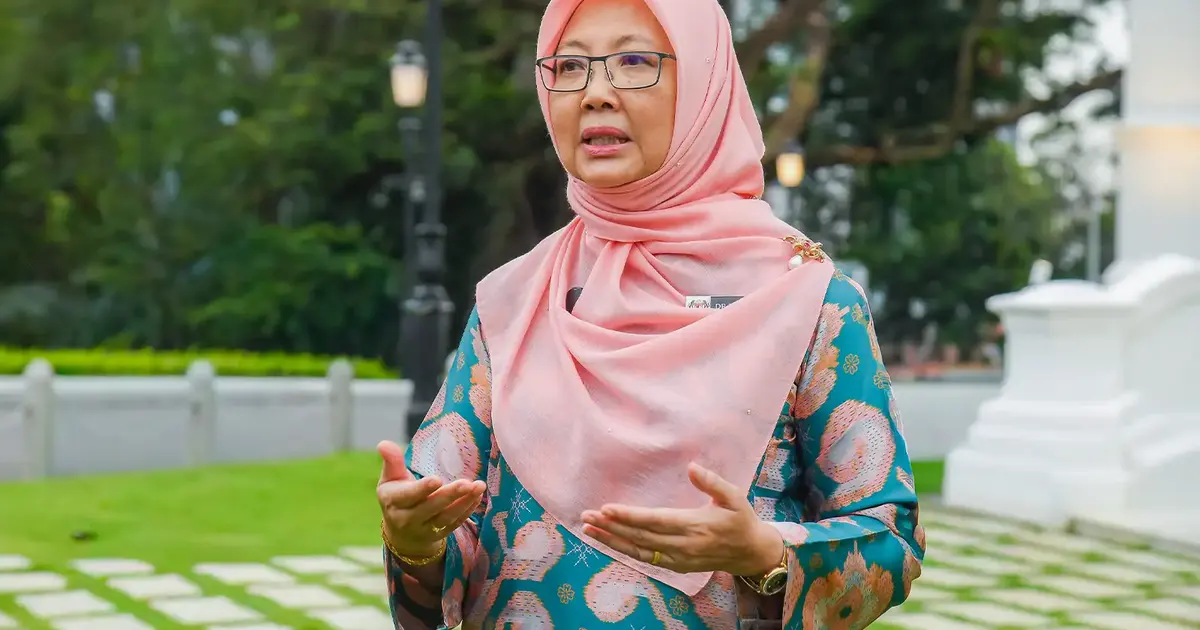
PKR vice-president Zaliha Harun has expressed confusion at Johor Barisan Nasional chairman Onn Hafiz Ghazi's insistence that Pakatan Harapan should publicly declare a chief campaigner for the state's upcoming elections, particularly given that no agreement guarantees such a figure would ultimately assume the office of menteri besar.
Zaliha's remarks underscore a fundamental tension in Malaysian electoral politics, where the identity of a coalition's candidate for chief minister has become a central focus of campaign strategy and public discourse. The timing of Onn Hafiz's demand raises questions about what practical purpose it serves, especially when the final allocation of the top post remains uncertain and subject to post-election negotiations among coalition partners. In Johor's political landscape, where Umno and BN have traditionally held sway, any challenge to their dominance requires careful coordination between DAP, PKR, and other PH components—a process made more complicated when external actors demand transparency on matters not yet formally decided.
The PKR official's perplexity reflects a broader challenge facing Pakatan Harapan as it seeks to mount a credible challenge in Johor. Naming a poster boy prematurely could invite ridicule if that person fails to win their own seat or if coalition arithmetic after polling day dictates a different distribution of key positions. Conversely, maintaining strategic ambiguity frustrates voters seeking clarity about who will lead the state if they support PH. This tension between tactical discretion and voter expectations has plagued opposition coalitions throughout Southeast Asia, where parties often struggle to balance internal consensus-building with the electorate's demand for straightforward messaging.
Onn Hafiz's call must also be understood within the context of Johor's political dominance by BN and Umno. The Menteri Besar position has been a preserve of the ruling coalition for decades, making any suggestion that PH might field a credible candidate a significant departure from conventional state politics. By demanding that PH name its candidate, Onn Hafiz may be attempting to force the opposition into an uncomfortable position—either appearing evasive or committing to a figurehead who might become a liability. It is a common tactical manoeuvre in Malaysian politics, where opposition movements are often painted as disorganised or lacking clear vision.
For Malaysian observers and regional analysts watching Johor's political developments, the exchange highlights how elections in the country have become increasingly personality-driven rather than purely issue-oriented. The demand for a "poster boy" reflects the importance of individual leaders in mobilising support, particularly in state contests where voters may be less attuned to policy differentiation between coalitions. This personalisation of politics can obscure substantive debates about economic management, service delivery, and social policy that ultimately affect residents' daily lives.
Zaliha's refusal to be drawn into naming a specific candidate also suggests PH's awareness that Johor presents unique electoral challenges. The state has been historically conservative in its voting patterns, and introducing a prominent opposition face could provoke organised counter-messaging from BN machinery. Additionally, if PH has genuinely not settled on a menteri besar candidate internally, publicly naming one could create fractures within the coalition, particularly between DAP and PKR, who have sometimes disagreed on power-sharing arrangements in other states. The democratic process of internal coalition deliberation, while perhaps less theatrically satisfying than a dramatic announcement, serves important functions in maintaining unity for the campaign ahead.
From a regional perspective, Malaysia's opposition coalitions operate under structural constraints that their counterparts in some neighbouring democracies do not face. The dominance of state-level governance by BN, combined with the electoral system's mechanics and demographic factors, means that any challenge to incumbent rule requires extraordinarily tight coordination. A misstep in candidate selection or messaging can be devastating, whereas poorly coordinated ruling coalitions sometimes retain power through fragmentation of opposition votes. Zaliha's caution thus reflects not evasiveness but realism about the stakes involved.
The broader implication of this exchange is that Malaysian voters in Johor will likely head to the polls without a clear sense of who will be the opposition's chief ministerial candidate, a situation that may suppress opposition turnout or provide ammunition for BN messaging claiming PH lacks seriousness. Alternatively, if the opposition campaign builds sufficient momentum on other grounds—dissatisfaction with incumbent performance, local grievances, or appeals to younger voters—the absence of a named poster boy may prove immaterial. Political outcomes ultimately depend on complex interactions between candidate identity, campaign competence, local conditions, and turnout dynamics that are difficult to predict in advance.
Onn Hafiz's demand and Zaliha's response thus represent more than a mere disagreement about campaign tactics. They illustrate enduring questions about how Malaysian coalitions should balance strategic flexibility with voter expectations, how parties should manage internal power-sharing without allowing those discussions to paralyse external messaging, and how opposition movements can effectively challenge entrenched incumbents while operating within institutional frameworks that favour the status quo. The resolution of these questions will partly determine not just Johor's outcome but the trajectory of Malaysian opposition politics more broadly.