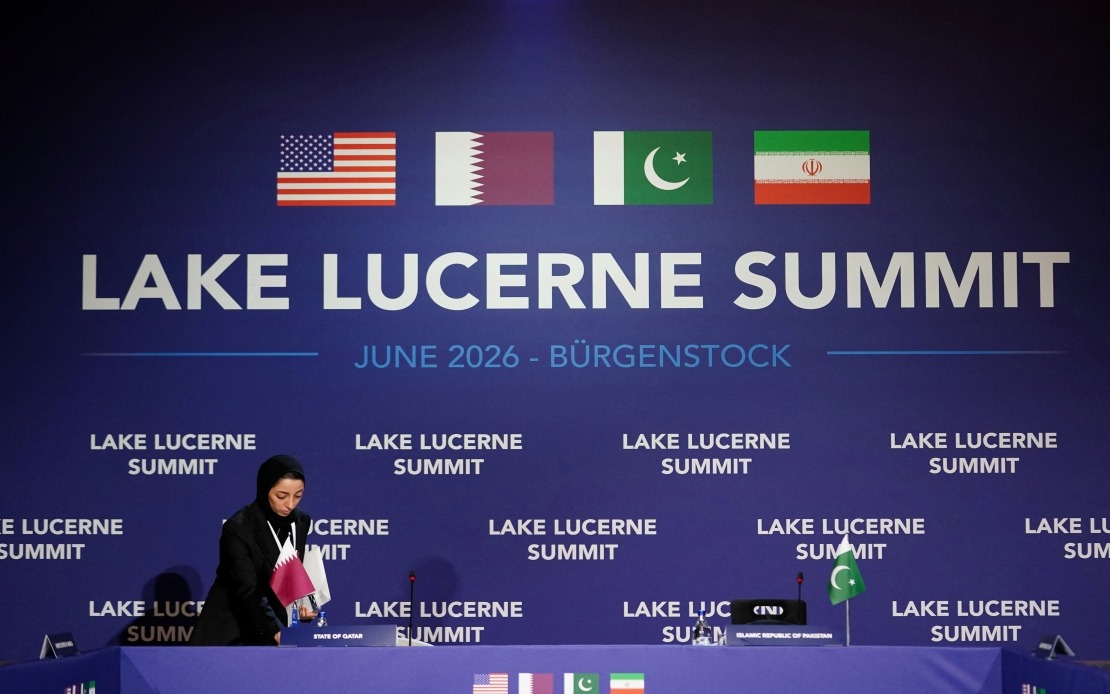
A coalition of four strategically influential nations in the Islamic world and broader Middle East has signalled approval for a recently signed understanding between the United States and Iran, framing the development as an essential brake on escalating regional tensions. Türkiye, Egypt, Pakistan and Saudi Arabia issued a coordinated statement on Sunday following diplomatic consultations in Cairo, with their foreign ministers characterising the Islamabad Memorandum of Understanding as a constructive pathway toward de-escalation in a region long troubled by geopolitical friction and security uncertainties.
The endorsement carries particular weight given the diverse geopolitical positions these four nations occupy. Saudi Arabia and the United Arab Emirates have historically harboured deep concerns about Iranian regional ambitions, while Türkiye maintains a more balanced approach to managing its relations with both Western allies and regional powers. Pakistan's role as an intermediary reflects its longstanding diplomatic ties across the Islamic world, and Egypt's signature underscores the Arab dimension of this multilateral consensus. The convergence of their positions suggests that even traditionally divided actors recognise mutual benefits in reducing the risk of armed conflict across the volatile corridor stretching from the Persian Gulf through the Levant.
According to the joint statement released through the Turkish Foreign Ministry, these ministers explicitly acknowledged the broader implications of de-escalation beyond headline political outcomes. They recognised that sustained tensions in West Asia create cascading economic disruptions—threatening global energy markets, disrupting crucial maritime shipping lanes through strategic chokepoints, destabilising international supply chains already fragile from pandemic aftereffects, and undermining global commerce more broadly. For Malaysia and other Southeast Asian trading nations dependent on Middle Eastern oil and gas, or reliant on safe passage through regional waters, such recognition of interconnected risks carries tangible relevance to prosperity and economic security.
The four nations singled out for particular credit the facilitating role played by intermediaries, most notably Qatar, which has invested considerable diplomatic capital in shuttle negotiations. Pakistan received specific commendation for its organisational contributions to the negotiation framework, a distinction that reflects Islamabad's positioning as a bridge between Gulf Arab states, Western powers, and Iran. This acknowledgement of Pakistan's diplomatic labour also highlights how smaller nations and trusted mediators can leverage their relationships to shape outcomes affecting much larger powers.
However, the statement made clear that the Islamabad Memorandum represents only an opening move rather than a final settlement. The ministers stressed urgency in proceeding to subsequent negotiation phases aimed at producing enduring arrangements that would be subject to rigorous verification mechanisms and mutually acceptable to all parties. They specifically stipulated that any comprehensive accord must carefully incorporate the security interests and red lines of Gulf states and Levantine nations, signalling that further deals cannot sidestep the concerns of regional actors who have felt threatened by Iranian assertiveness or American disengagement.
The Palestinian question emerged as a central preoccupation in the ministers' collective assessment of regional stability prospects. They insisted that genuine and sustainable peace across West Asia remains contingent upon resolving the Israeli-Palestinian conflict, treating this not as a separate bilateral issue but as fundamental to the architecture of lasting regional security. This framing reflects a widely held perspective across the Muslim world that broader Middle Eastern calm cannot be achieved while the Palestinian grievance festers, and that any major power diplomatic reset must eventually confront this underlying fault line.
The four nations reaffirmed their commitment to the international consensus position on Palestine, explicitly endorsing establishment of an independent Palestinian state within the 1967 borders with East Jerusalem as its capital. This language, rooted in numerous UN resolutions, represents the baseline Arab and Islamic position that has remained largely unchanged for decades despite shifting geopolitical circumstances. By restating this principle within a statement otherwise focused on US-Iran rapprochement, the ministers signalled that they view Palestinian statehood not as peripheral to contemporary diplomacy but as essential to any credible framework for regional peace.
For Malaysia and other nations in the Non-Aligned Movement, this multilateral statement offers insights into how middle-power diplomacy can shape outcomes on global issues. The involvement of Pakistan, a South Asian nation, alongside Middle Eastern players demonstrates how Islamic solidarity and shared security interests can create diplomatic formations cutting across traditional geographic blocs. Malaysia's own balancing act between Western partners and Islamic nations finds parallel in the positioning these four countries have adopted—supportive of de-escalation and international mediation, yet insistent that their core interests and principles be respected in any final arrangements.
The timing and composition of this initiative also reflect shifting calculations about regional order in the post-American withdrawal phase from Afghanistan. With Washington's military footprint in Central Asia diminished, regional powers recognise both the risks of unchecked proxy conflicts and the opportunities for negotiated settlements. Pakistan's prominence in this statement underscores its central position in managing spillover effects from Afghan instability, while Saudi Arabia's participation suggests Crown Prince Mohammed bin Salman's government sees value in diplomatic off-ramps rather than escalation.
The statement's emphasis on economic and maritime security dimensions speaks to how security competition in West Asia increasingly intersects with globalised trade and energy systems. The chokepoint of the Strait of Hormuz, through which roughly one-third of all globally traded oil passes, makes any regional conflict zone an international economic emergency. This interconnection means that nations far from the Middle East—including Malaysia—have legitimate stakes in de-escalation, even when diplomatic voice in the region remains limited.
Looking ahead, the success of the Islamabad Memorandum and any subsequent comprehensive agreement will hinge on whether the verification mechanisms and security assurances can satisfy the profound mutual distrust that decades of confrontation have created. The four ministers' collective statement, by emphasising the need for rigorous and verifiable arrangements, implicitly acknowledged the scepticism that still surrounds the durability of such agreements given the history of broken commitments and shifting American administrations.
For Southeast Asian observers, this diplomatic manoeuvre offers a model of how regionally diverse actors can find common ground through patient mediation and careful attention to each party's core concerns. The involvement of Qatar as facilitator and Pakistan as organiser demonstrates that smaller or non-Western powers can punch above their weight in shaping major international outcomes when they position themselves strategically. Malaysia, similarly positioned as a bridge between Islamic and Western worlds, may find analogous opportunities to influence regional architectures affecting its interests, particularly as the post-pandemic international system continues to reconfigure.
%22%2F%3E%3C%2Fpattern%3E%3C%2Fdefs%3E%3Crect%20width%3D%22100%25%22%20height%3D%22100%25%22%20fill%3D%22url(%23pho97cg)%22%2F%3E%3Crect%20width%3D%22100%25%22%20height%3D%22100%25%22%20fill%3D%22url(%23pho97cp)%22%2F%3E%3Ctext%20x%3D%2250%25%22%20y%3D%2250%25%22%20text-anchor%3D%22middle%22%20dominant-baseline%3D%22central%22%20fill%3D%22rgba(255%2C255%2C255%2C0.95)%22%20font-family%3D%22Georgia%2C%20'Times%20New%20Roman'%2C%20serif%22%20font-weight%3D%22700%22%20font-size%3D%22272%22%20letter-spacing%3D%22-0.02em%22%3EDeath%3C%2Ftext%3E%3C%2Fsvg%3E)
%22%2F%3E%3C%2Fpattern%3E%3C%2Fdefs%3E%3Crect%20width%3D%22100%25%22%20height%3D%22100%25%22%20fill%3D%22url(%23ph3rh1xg)%22%2F%3E%3Crect%20width%3D%22100%25%22%20height%3D%22100%25%22%20fill%3D%22url(%23ph3rh1xp)%22%2F%3E%3Ctext%20x%3D%2250%25%22%20y%3D%2250%25%22%20text-anchor%3D%22middle%22%20dominant-baseline%3D%22central%22%20fill%3D%22rgba(255%2C255%2C255%2C0.95)%22%20font-family%3D%22Georgia%2C%20'Times%20New%20Roman'%2C%20serif%22%20font-weight%3D%22700%22%20font-size%3D%22320%22%20letter-spacing%3D%22-0.02em%22%3EIran%3C%2Ftext%3E%3C%2Fsvg%3E)