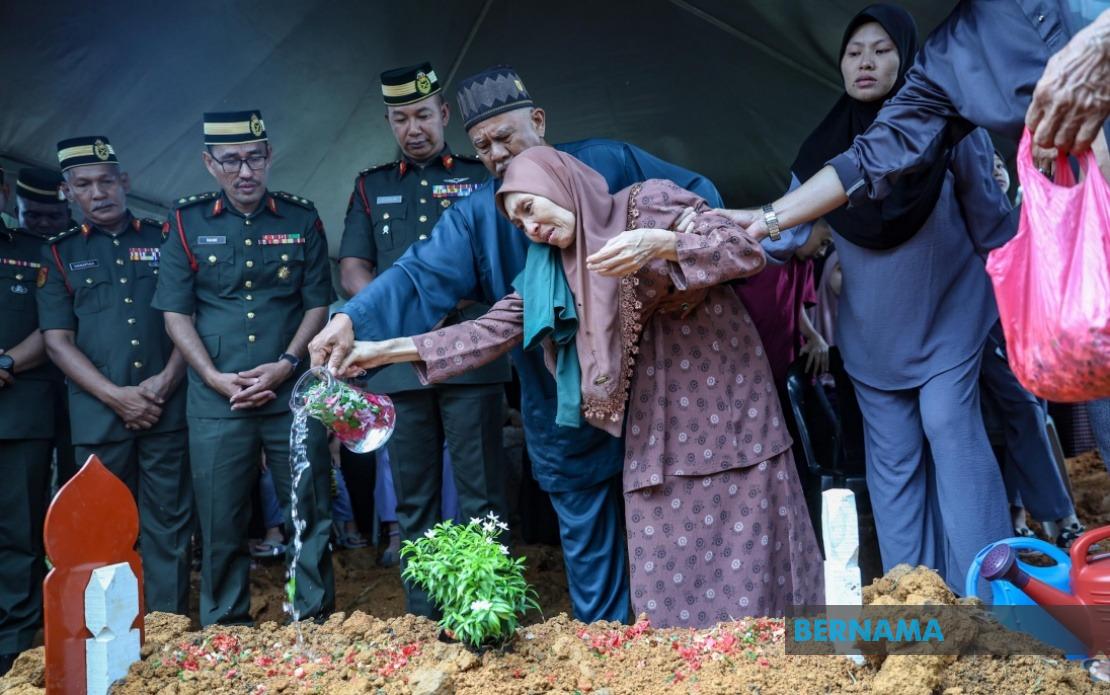
The Malaysian Army laid to rest one of two service personnel who lost their lives in a training accident at Hobart Camp in Gurun, Kedah. Private Siti Khadijah Sungip, a 24-year-old engineer from the First Squadron of the Royal Engineer Regiment, was committed to the ground at Taman Sri Lambak Muslim Cemetery in Kluang on June 17 at 1.15 pm, just over a day after an explosive device detonated during routine grenade throwing instruction.
The fatal incident unfolded at 10.57 am on June 16 during a training exercise at the camp's target range. Siti Khadijah and Corporal Norazmi Abu Bakar, who belonged to the Sixth Battalion of the Royal Malay Regiment, sustained severe injuries from the explosion and were rushed toward Sultan Abdul Halim Hospital in Sungai Petani. Both service members were pronounced dead in transit, adding another chapter to the rare but devastating accidents that periodically impact military training operations across the region.
The funeral service drew a substantial gathering of mourners who assembled to honour the fallen soldier. Her immediate and extended family, personal friends, and numerous Malaysian Army personnel attended the ceremony at the mosque and cemetery to pay respects. The atmosphere reflected the gravity of the loss and the solemnity appropriate to honouring someone who died in the line of duty. The presence of military ranks underscored the institutional recognition of her service and sacrifice.
Brigadier General Datuk Zulhelmy Masdar, commanding officer of the 7th Malaysian Infantry Brigade based at Mahkota Camp, officiated a significant moment during the funeral rites—the symbolic presentation of the Jalur Gemilang national flag to Siti Khadijah's father, Sungip Jais, aged 65. This ceremonial transfer represents the nation's acknowledgement of the family's loss and the respect accorded to those who die while serving the armed forces. Such gestures, while brief, carry profound meaning for grieving families and underscore the bond between the military institution and those it loses.
Logistical details of the deceased's final journey reveal the procedural respect accorded to fallen service members. Following the explosion, Siti Khadijah's body was transported to Sultanah Bahiyah Hospital in Alor Setar, where a post-mortem examination was conducted. The autopsy concluded at approximately 2.30 am on June 17. Her remains were then escorted by First Field Troop Leader Lieutenant Muhammad Lutfil Hadi Osman and four soldiers from the Royal Engineer Regiment's First Squadron, stationed at Sangro Camp in Taiping, Perak. The cortège arrived at her family home in Taman Sri Lambak at 12.10 pm, providing time for immediate family to receive the body before the funeral prayer service.
The funeral prayer itself was conducted by Major Mohd Azlan Shah Abdul Razak of the TDM Field Engineering Institute, ensuring that the religious elements of the ceremony were handled by qualified personnel with ties to Siti Khadijah's engineering corps. This attention to detail—assigning an officer from her own specialized unit to lead prayers—reflects how the military attempts to personalise the farewell process and acknowledge each soldier's specific contribution to the service.
The Hobart Camp incident represents a sobering reminder of the inherent risks embedded within military training, particularly involving explosives and ordnance. Grenade throwing drills are fundamental to infantry and engineer preparation across most armed forces, yet the combination of live explosives, controlled environments, and the human element inevitably carries residual danger. While modern militaries implement extensive safety protocols and supervision measures, accidents continue to occur sporadically, testing institutional responses and investigations into root causes.
For Malaysia, this tragedy strikes at a broader conversation about occupational safety within the defence sector. The Malaysian Army, like militaries throughout Southeast Asia, must continually balance the operational necessity of realistic training with the imperative to minimize preventable casualties. Incidents such as this typically trigger formal investigations to identify procedural breakdowns, equipment failures, or command oversights that may have contributed to the explosion.
The loss of two young service members—Siti Khadijah at 24 and Corporal Norazmi—underscores the demographic composition of modern armed forces. Both soldiers represented a younger generation of military personnel, including women now fully integrated into combat and combat-support roles across the region. Siti Khadijah's presence in the Royal Engineer Regiment exemplifies Malaysia's embrace of gender diversity in defence sectors, making her death not only a personal family tragedy but also a reflection on the evolving character of Southeast Asian militaries.
Communities and institutions across Malaysia will likely take note of this incident as awareness spreads through social networks, military families, and recruitment-conscious young people contemplating service. Training accidents, while statistically rare relative to overall personnel numbers, carry disproportionate psychological weight and influence public perception of military safety culture. The Malaysian Army's handling of this case—including the dignified funeral arrangements and high-level military attendance—signals institutional responsibility and respect for fallen personnel, though such gestures cannot eliminate the deeper sense of loss experienced by the deceased's family and unit members.
The second victim, Corporal Norazmi Abu Bakar, also received military honours and funeral rites befitting his rank and service, though details of his interment were not included in publicly available accounts. Both deaths will likely feature in subsequent military reviews and may prompt renewed examination of training protocols at Hobart Camp and similar facilities. For the defence establishment and for the families involved, this incident marks a permanent punctuation in the ongoing operational and personal narratives of the Malaysian Army.

