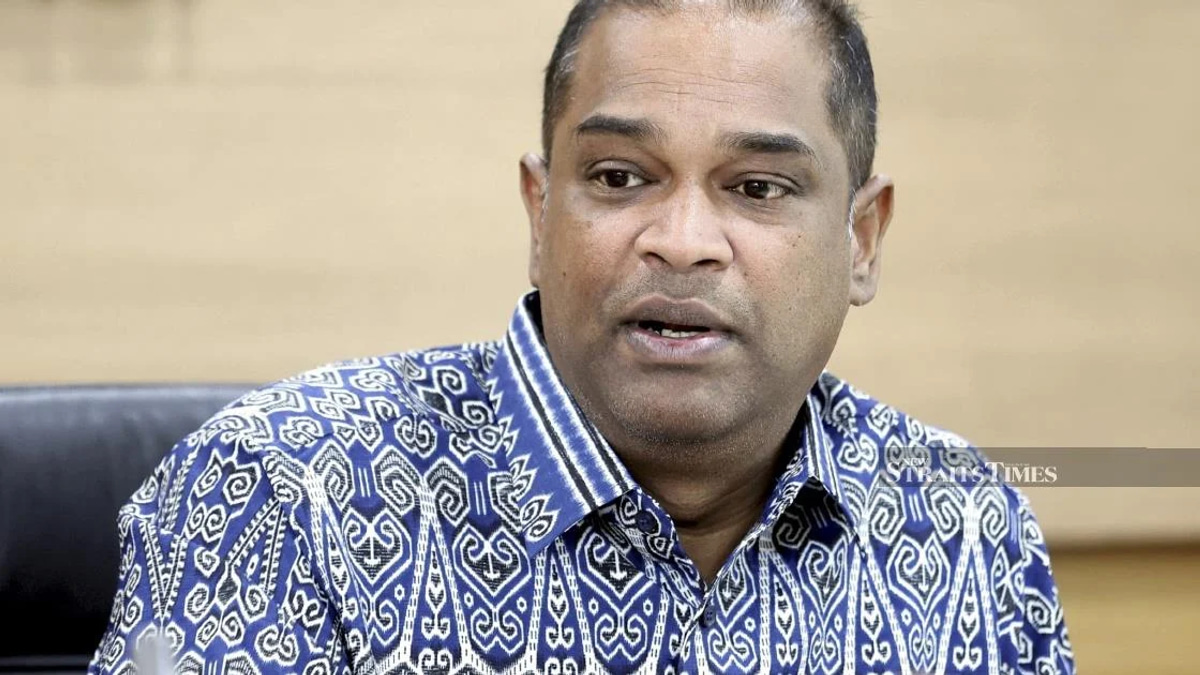
Three Malaysian nationals were detained by Singapore law enforcement just six hours into what authorities describe as a criminal errand orchestrated by an international scam operation. The swift arrests suggest an increasingly coordinated effort by regional police to intercept cross-border criminal activity at the earliest opportunity, a development that carries significant implications for Malaysian law enforcement and public awareness about transnational fraud networks operating throughout Southeast Asia.
According to Singapore authorities, the three men arrived in the city-state with specific instructions to execute a collection operation centred on gathering funds and valuables from victims of advance-fee fraud and unauthorised bank withdrawals. Their alleged mandate encompassed retrieving cash deposits and gold bars that victims had transferred to designated accounts or meeting points, as well as withdrawing money that the syndicate had fraudulently extracted from victims' ATM accounts through compromised banking credentials and cloned cards.
This arrest pattern reflects a growing troubling trend in the region: criminal syndicates increasingly compartmentalise their operations across multiple countries, with different crews handling specific functions. Malaysian foot soldiers are frequently deployed to Singapore, Thailand, and other neighbouring jurisdictions to perform the highest-risk activities—physical collection of contraband or cash—while organisers and money handlers remain insulated in their home base. The rapid detection and arrest suggests that Singapore's border and financial intelligence systems have grown increasingly sophisticated at identifying suspicious cross-border movements matching known scam operation profiles.
The operational model these men allegedly executed is particularly pernicious because it transforms victims twice over. First, they fall prey to the initial scam—whether advance-fee fraud, investment schemes, or romance cons that convince them to transfer money to seemingly legitimate accounts. Then, their banking credentials are exploited for additional unauthorised ATM withdrawals, compounding their losses and creating a secondary victimisation layer. Gold bar collection indicates the syndicate is also diversifying its asset accumulation beyond purely digital transfers, suggesting a more sophisticated approach to money laundering and value storage.
For Malaysian readers, this arrest underscores a critical vulnerability in our financial ecosystem. Many of the victims whose cash and ATM access are being exploited likely reside in Malaysia, even if the collection operation occurs across the border. This transnational component creates enforcement complications: Malaysian victims report crimes to local police, Singapore handles the apprehension, while the coordinating kingpins may operate from Malaysia, Thailand, or even further afield. Cooperation between Bukit Aman's Commercial Crime Investigation Department, the Malaysian Anti-Corruption Commission's financial crime unit, and Singapore's equivalent agencies becomes essential for disrupting these networks at their source.
The six-hour window between arrival and arrest is particularly revealing about intelligence-sharing protocols between Singapore and Malaysia. Either Singapore authorities received advance warning that suspicious individuals matching scam operation profiles were expected to enter, or their port-of-entry screening has become sufficiently refined to flag high-risk cross-border movements almost instantaneously. This suggests both countries are sharing biometric data, travel patterns, and criminal network intelligence more effectively than before—a positive development for regional security, though it also indicates scam syndicates must continuously adapt their personnel rotations and methods.
From a Malaysian perspective, understanding how these operations function illuminates why conventional police investigations often struggle to dismantle these networks. The compartmentalisation means that front-line foot soldiers—the three men arrested in Singapore—typically possess limited information about higher-level organisers, funding sources, or infrastructure. Prosecution of collection crews yields convictions but rarely disrupts the core criminal enterprise. Genuine disruption requires coordinated investigation of the Malaysian handlers, the financial institutions facilitating fund transfers, and the money service businesses converting criminal proceeds into hawala networks or cryptocurrency.
The specificity of their alleged mission—collecting cash and gold bars while making ATM withdrawals—reveals an operational sophistication that belies the often-dismissed perception of scam syndicates as unsophisticated operations. These organisations employ specialised roles, conduct surveillance to identify optimal collection points and timing, coordinate with financial crime specialists who compromise banking systems, and maintain logistical networks spanning multiple countries. They operate with compartmentalisation principles borrowed from organised crime structures, making them considerably more resilient than traditional fraud rings.
Malaysian authorities and financial regulators must grapple with uncomfortable questions raised by this arrest. How many similar collection missions have succeeded undetected in Malaysia? What volume of Malaysian victims' funds are being extracted through compromised ATM networks? Are financial institutions detecting these patterns and reporting them to the Financial Intelligence Unit with sufficient promptness? The fact that Singapore can apprehend three arriving operatives within six hours suggests their intelligence is sufficiently granular to identify suspicious movement patterns—standards Malaysia should aspire toward across all ports of entry.
The broader Southeast Asian context matters considerably here. Scam syndicates operate with near-impunity across the region because they exploit jurisdictional gaps, varying enforcement capacity, and inconsistent data-sharing protocols between nations. A person arrested in Singapore may have clear ties to Malaysian organisers, but extraditing evidence or securing Malaysian cooperation remains time-consuming. Meanwhile, the core criminal infrastructure—call centres, money laundering operations, victim databases—often continues functioning unimpeded. Regional law enforcement bodies like INTERPOL's Southeast Asian working groups and bilateral task forces remain crucial, but their effectiveness is constrained by capacity limitations and competing institutional priorities.
Looking forward, this case exemplifies why Malaysian citizens and financial institutions must maintain heightened vigilance regarding unsolicited requests for cash transfers or gold deliveries, particularly those involving time pressure or claims of confidentiality. The syndicate members apprehended in Singapore represent merely the visible tip of operations that process dozens or hundreds of victims simultaneously across multiple countries. Understanding the international dimensions of these networks—that arrests in Singapore often correlate with victimisation in Malaysia—should prompt stronger engagement with financial reporting mechanisms and community awareness initiatives designed to interrupt the entire criminal pipeline.
%22%2F%3E%3C%2Fpattern%3E%3C%2Fdefs%3E%3Crect%20width%3D%22100%25%22%20height%3D%22100%25%22%20fill%3D%22url(%23ph561wag)%22%2F%3E%3Crect%20width%3D%22100%25%22%20height%3D%22100%25%22%20fill%3D%22url(%23ph561wap)%22%2F%3E%3Ctext%20x%3D%2250%25%22%20y%3D%2250%25%22%20text-anchor%3D%22middle%22%20dominant-baseline%3D%22central%22%20fill%3D%22rgba(255%2C255%2C255%2C0.95)%22%20font-family%3D%22Georgia%2C%20'Times%20New%20Roman'%2C%20serif%22%20font-weight%3D%22700%22%20font-size%3D%22151%22%20letter-spacing%3D%22-0.02em%22%3ETraveller%3C%2Ftext%3E%3C%2Fsvg%3E)