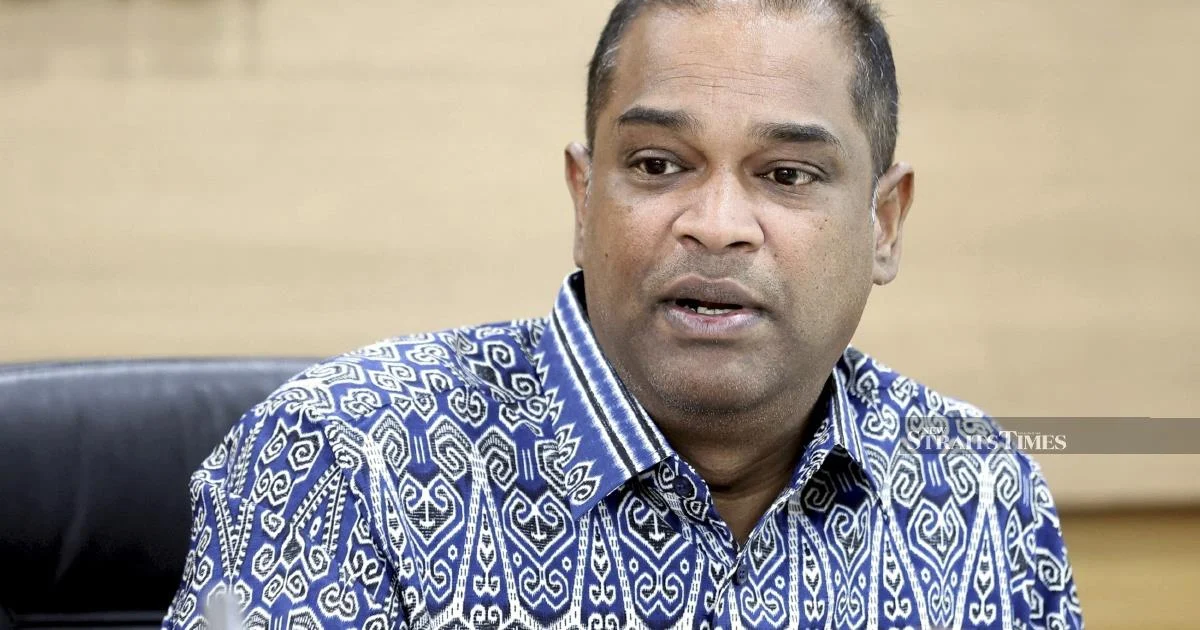
Political leaders contesting the 16th Johor state election have drawn sharp rebuke from PKR vice-president Datuk Seri R. Ramanan, who warned that strategic references to the royal institution undermine public respect for the monarchy and blur the constitutional separation between the sovereign and party politics. Speaking in Johor Baru, Ramanan articulated concerns that have long simmered within Malaysia's political landscape regarding the selective invocation of royal authority during electoral campaigns.
The criticism reflects a broader anxiety within democratic circles across Southeast Asia about the instrumentalisation of traditional institutions for electoral advantage. In Malaysia's federal system, where state rulers retain significant ceremonial and constitutional powers, the temptation for politicians to align themselves with royal patronage has proven historically difficult to resist. Yet such manoeuvres carry inherent risks: they can erode public confidence in the monarchy's neutrality and suggest that traditional institutions are merely props in partisan competition rather than symbols of national unity transcending factional interests.
Johor, as Malaysia's second-largest state by population and a consistent political battleground, has witnessed multiple cycles of electoral competition where royal symbolism features prominently in campaign messaging. The state's unique constitutional arrangement, wherein the Sultan retains executive powers alongside the Menteri Besar, creates additional complexity when distinguishing between legitimate acknowledgement of royal authority and problematic politicisation. Ramanan's intervention suggests that the boundary between these categories has become dangerously blurred during current campaign activities.
PKR's positioning on this issue carries particular significance given the party's stated commitment to democratic reform and institutional independence. As an opposition-leaning coalition partner in certain state governments and a major player in federal politics, PKR's critique gains credibility from its role as both insider and outsider within Malaysia's political establishment. The party's vice-president was not merely lodging a procedural complaint but articulating a substantive concern about democratic governance and the proper relationship between electoral politics and hereditary institutions.
For Malaysian voters, particularly those concerned about institutional integrity, Ramanan's remarks provide a template for evaluating campaign rhetoric during the Johor election. Citizens observing political messaging can ask themselves whether candidates are respectfully acknowledging the Sultan's constitutional role or instrumentally invoking royal support to enhance their electoral positioning. This distinction matters because public trust in democratic institutions depends partly on maintaining clear demarcation between legitimate political competition and inappropriate attempts to conscript traditional authority into factional struggles.
The 16th Johor election represents more than a simple contest for legislative control; it functions as a test case for whether Malaysia's political elite can conduct elections while respecting constitutional limits on political discourse. Ramanan's warning suggests that some political actors have failed this test, using references to the royal institution in ways that prioritise electoral gain over institutional preservation. Such behaviour, if widespread, gradually corrodes the apolitical status that monarchical institutions require to function effectively as national symbols.
From a Southeast Asian perspective, Malaysia's struggle to maintain institutional boundaries during elections reflects challenges facing other democracies in the region. Thailand's experience demonstrates the dangers of allowing political actors to weaponise reverence for the monarchy, ultimately producing constitutional crises and military interventions. While Malaysia's situation remains distinctly different, the underlying dynamic—politicians attempting to capture the authority and prestige associated with non-partisan institutions—presents similar hazards to long-term democratic stability.
The implications extend beyond Johor specifically. If political leaders normalise the practice of dragging royal institutions into campaign messaging, successive elections will see escalating politicisation of what should remain constitutionally neutral territory. This incremental erosion might not produce dramatic constitutional crises, but it would steadily diminish public respect for the monarchy and compromise the Sultan's ability to serve as an impartial arbiter during periods of political tension or deadlock. The stakes for Malaysian governance are therefore considerably higher than immediate election outcomes suggest.
Ramanan's intervention also highlights potential internal divisions within Malaysia's political landscape regarding acceptable campaign practices. Not all political parties appear equally committed to respecting institutional boundaries, and some may calculate that electoral benefits from royal associations outweigh longer-term costs to institutional integrity. This asymmetry—where some politicians restrain themselves while others do not—creates perverse incentives that reward those willing to breach established norms, gradually shifting the entire political culture toward greater institutionalisation.
The call to maintain separation between monarchy and partisan politics ultimately serves the interests of all political actors across the spectrum. Whichever coalition eventually governs Johor will benefit from operating within a framework where royal authority remains dignified, respected, and above electoral manipulation. Conversely, if politicians allow the royal institution to become entangled with party politics, future state administrations will inherit a compromised institution less capable of providing legitimate constitutional guidance or public reassurance during crises. Ramanan's warning, therefore, represents enlightened self-interest wrapped in principled language about institutional preservation.