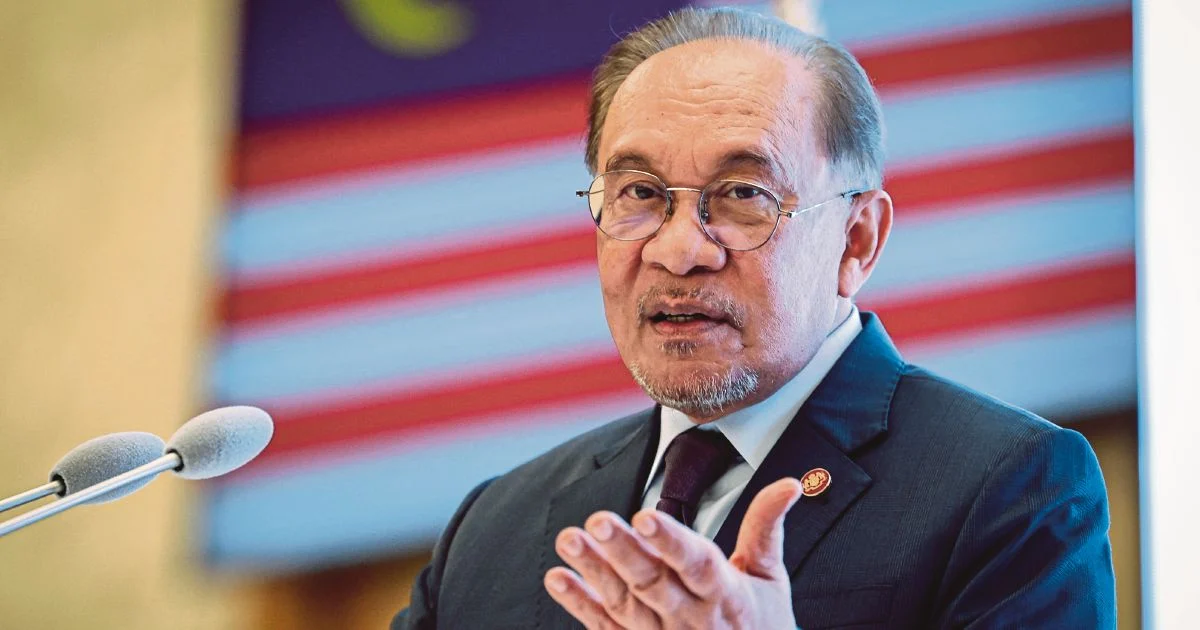
Turkmenistan's selection of Petroliam Nasional Bhd (Petronas) as a partner in one of the world's largest gas reserves carries profound significance beyond commercial terms, according to Prime Minister Datuk Seri Anwar Ibrahim. Speaking in Batu Kawan, he characterised the arrangement as a broader endorsement of Malaysia's standing as a dependable player in international business and politics, highlighting how regional stability and internal cohesion translate into tangible economic opportunities for Malaysian firms.
The assignment of exploration and production rights to Petronas in the Turkmenistan venture underscores a crucial reality facing Southeast Asian economies: that geopolitical credibility directly influences investment decisions and partnership allocations by global energy companies. For Malaysia, a nation navigating complex regional dynamics and managing diverse stakeholder interests domestically, such recognition validates efforts to maintain institutional strength and economic governance standards that international partners require before committing capital to massive infrastructure projects.
Gas fields of the scale found in Turkmenistan represent multi-decade commitments and investments spanning billions of dollars. International energy corporations conducting due diligence on potential partners evaluate not merely technical expertise but the political environment, regulatory predictability, and long-term viability of working relationships. Petronas's selection therefore reflects confidence that Malaysia itself—as the home nation and regulatory overseer—possesses the institutional maturity and political stability to honour agreements and maintain a business-friendly environment across multiple government administrations.
The timing of this arrangement carries additional weight given ongoing regional uncertainties. The Middle East remains volatile, European energy security remains strained by geopolitical fractures, and competition for energy resources intensifies as global demand recovers. Within this context, partnerships with Southeast Asian firms capable of accessing Central Asian reserves offer Western and Asian energy companies strategic diversification and supply chain resilience. Malaysia's positioning in this framework depends fundamentally on perceptions of its reliability and unity.
Anwar's emphasis on national unity appears deliberately calibrated, given recent domestic political divisions and coalition complexities that have occasionally raised questions internationally about Malaysia's governance continuity. By positioning the Turkmenistan deal as validation of unity and stability, the Prime Minister reinforces a narrative that internal political management has reached sufficient maturity that it does not deter international capital or concern major project partners. This messaging carries domestic audiences as well, suggesting that political compromises and balancing acts translate into tangible economic wins benefiting the nation.
Petronas itself represents Malaysia's primary vehicle for capturing energy sector opportunities globally. The national oil and gas corporation commands significant technical expertise, operational scale, and capital resources that position it competitively alongside international majors. Yet Petronas's effectiveness in securing partnerships depends equally on Malaysia's enabling environment—transparent regulatory frameworks, enforceable contracts, and political conditions permitting long-term planning. The Turkmenistan commitment implies that these foundational elements are perceived as sufficiently robust to justify major investment.
For Southeast Asia more broadly, Malaysia's success in accessing Central Asian energy resources has implications for regional energy security. The region faces growing energy demands driven by industrialisation and population growth, with energy supplies constrained by limited domestic production in most nations. Diversifying sources of liquefied natural gas and pipeline gas becomes strategically important as economies reduce coal dependence and transition toward cleaner energy. Malaysian firms serving as partners with Central Asian producers create potential pathways for distributing these resources throughout Southeast Asia, enhancing regional energy independence.
The commercial structure of such arrangements typically involves staged development phases, technology transfer, local workforce training, and infrastructure construction that generate employment and economic activity across Malaysia's supply chains. Engineering, construction, maritime services, and financial intermediation sectors benefit when major energy projects advance. Beyond immediate economic impacts, successful energy partnerships elevate Malaysia's visibility among global energy traders and infrastructure developers, potentially attracting additional investment and partnerships in adjacent sectors.
International confidence in Malaysia extends to how the nation manages environmental and social considerations attendant to major resource extraction. Modern energy projects increasingly face scrutiny regarding carbon intensity, local community impacts, and alignment with global decarbonisation commitments. That Petronas secured partnership terms in Turkmenistan suggests international partners view Malaysia as capable of implementing projects respecting contemporary environmental governance standards and managing stakeholder relations responsibly. This perception differs markedly from historical patterns where resource extraction in developing economies proceeded with limited environmental oversight.
From a strategic perspective, Malaysia's engagement with Central Asian energy resources also reflects deliberate geographic diversification of international partnerships. Rather than concentrating economic relationships in established Western markets or proximate Asian neighbours, Malaysia cultivates relationships across Eurasia, building networks that insulate the economy from overreliance on any single region or partner. This approach generates multiple revenue streams, expands diplomatic influence, and positions Malaysian firms as essential intermediaries within emerging global supply chains.
The Turkmenistan arrangement also carries implications for how Malaysia positions itself within the broader competition for influence among major powers. Central Asia remains contested terrain where Russia, China, and Western powers compete for access and influence. Malaysian partnerships in the region, pursued through commercial rather than explicitly political channels, offer subtle positioning that maintains strategic autonomy while capturing economic benefits. Petronas operates within parameters established by Malaysian foreign policy, yet functions as an independent commercial entity, creating a framework through which Malaysia engages Central Asia without overt geopolitical alignment.
Moving forward, such arrangements require sustained attention to the institutional capacities that international partners rely upon. Regulatory excellence, contract enforcement through transparent legal systems, and maintaining political conditions conducive to long-term business planning remain ongoing imperatives. The Turkmenistan deal therefore represents not merely a commercial achievement but a reinforcement of institutional foundations that distinguish Malaysia as a destination for serious global energy partnerships. Sustaining this status demands continued commitment to governance standards and political maturity that the arrangement implicitly demands.

