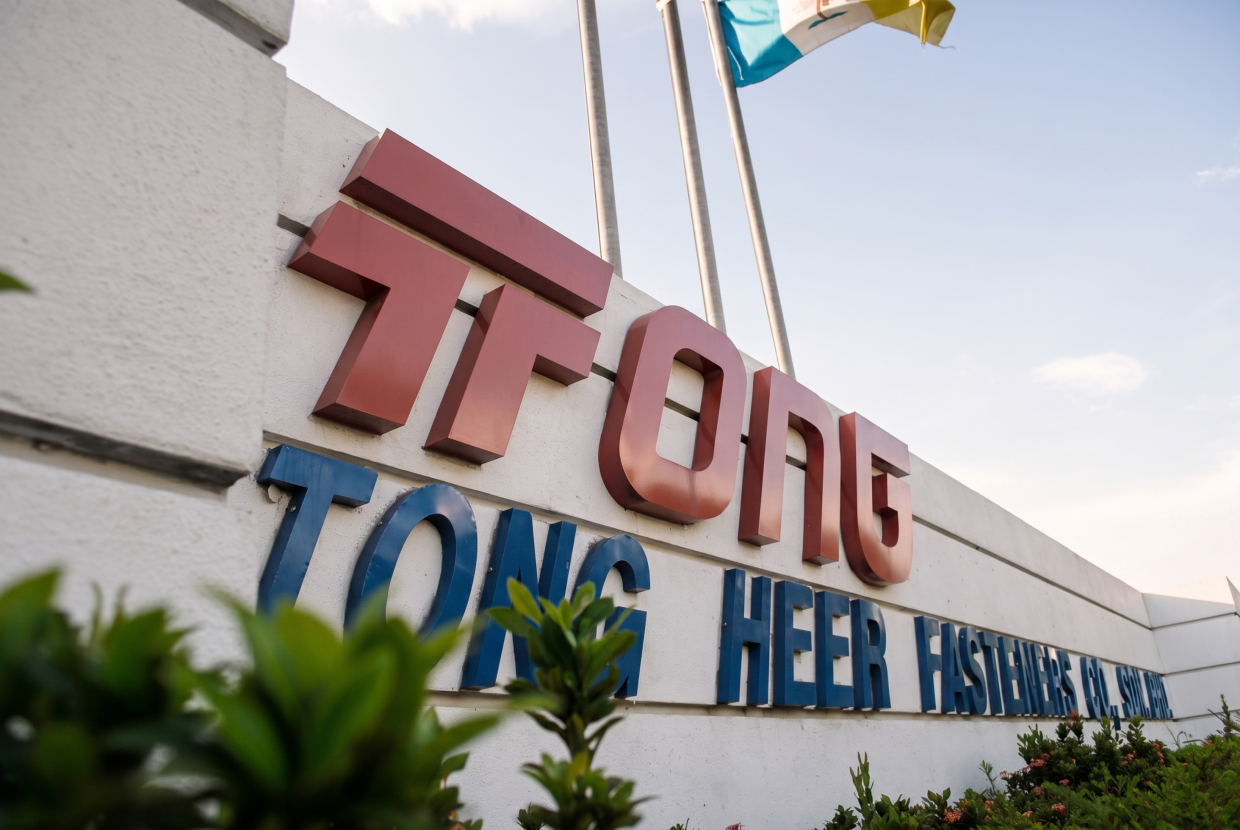
Tong Herr, a manufacturer of stainless steel fasteners and aluminium extrusions, faces a delisting proposal from its major shareholders, who are offering RM2.55 per share to take the company off the stock exchange. The price represents a substantial 34.2% premium to the company's last closing price of RM1.90, though it equates to a 41.7% premium when measured against the RM1.80 closing price recorded on August 5, 2026, the reference date for calculating the VWAP that informed the valuation.
Allrich Corp and Richard Holdings Ltd, which command 39.68% and 31.95% stakes respectively, have jointly orchestrated the proposal alongside other related parties and persons acting in concert. Their combined position extends to 114.38 million shares, granting them effective control of approximately 74.5% of Tong Herr's total issued capital. This substantial shareholding means the proposal faces a relatively clear path through the approval process, though minority shareholder consent remains a regulatory requirement.
The delisting mechanism being pursued is a selective capital reduction coupled with a repayment exercise, a structural approach increasingly favoured in Malaysia for privatising companies held by cohesive controlling groups. This method allows shareholders to exit their positions at the agreed price while simultaneously removing the company from public markets. The joint offerors have indicated they will petition Bursa Securities to formally delist Tong Herr and terminate its listing status upon the scheme's completion, signalling their intent to transition the business into private ownership.
Justifying the proposal, the controlling shareholders emphasise the operational advantages that private status would confer. They argue that delisting would liberate management from the regulatory compliance burdens and disclosure requirements inherent to maintaining a listed status, permitting the company to pivot toward growth opportunities and long-term value generation without the associated costs and administrative drain. For a company of Tong Herr's size and market position, these efficiency gains could prove material to profitability.
A compelling driver of the delisting proposal is Tong Herr's chronically poor liquidity profile. Over the preceding three-year period, the company averaged merely 21,075 shares traded daily, a figure that represents only 0.05% of its free float. This skeletal trading activity suggests that minority investors face genuine difficulties realising their holdings at any reasonable speed or without incurring significant market impact. The selective capital reduction framework thus offers non-interested shareholders an exit mechanism they might otherwise struggle to find through open market sales.
The regulatory pathway requires affirmation from non-interested shareholders via a special resolution at an extraordinary general meeting, followed by confirmation from the High Court, underscoring the safeguards embedded within Malaysia's corporate restructuring framework. Non-interested shareholders must approve the measure by a majority in number and by 75% in value of votes cast. Critically, the proposal cannot succeed if more than 10% in value of all non-interested shareholdings are voted against it, a protective provision designed to ensure that delisting does not proceed against substantial minority opposition.
Tong Herr's independent directors have been tasked with deliberating the privatisation proposal and determining the company's response. Their assessment will likely focus on whether the RM2.55 offer price adequately reflects the company's intrinsic value and whether the minority shareholders stand to benefit equitably from the arrangement. The board indicated that further announcements would follow once this internal review concludes, potentially within weeks.
The proposal carries broader relevance for Malaysian capital markets, particularly concerning the sustainability of listings for smaller-cap industrial manufacturers with chronically low trading activity. Tong Herr's situation exemplifies the conundrum faced by many mid-sized production companies that lack the institutional investor base or brand recognition to generate consistent market interest. Rising compliance costs and stagnant liquidity frequently render public listing status more burdensome than beneficial for such enterprises.
For minority shareholders in Tong Herr, the privatisation bid presents a genuine opportunity to crystallise investments in a company where selling through the exchange would be inefficient and costly. The 34% premium to recent market prices acknowledges this illiquidity discount and compensates shareholders for agreeing to exit the investment. However, shareholders may question whether the valuation adequately reflects the underlying business value or whether the controlling shareholders have negotiated aggressively in their own favour.
The timing and structure of this proposal also reflect broader trends among Southeast Asian controlling shareholders, particularly those managing manufacturing businesses exposed to complex global supply chains. Taking operations private permits faster decision-making regarding production shifts, supplier relationships, and capital allocation—advantages that may prove significant as manufacturing landscapes continue to reconfigure across the region. For Tong Herr's fasteners and extrusions business, private status could facilitate more nimble responses to customer demands and market disruptions.
Investor sentiment toward the proposal will crystallise at the forthcoming EGM, where minority shareholders will ultimately determine whether the privatisation proceeds. The 75% valuation threshold and the 10% blocking mechanism together create a structure that, while protecting minorities, also respects controlling shareholders' prerogatives. For a company trading at depressed liquidity levels with limited institutional analyst coverage, the proposal may prove difficult to resist on financial grounds.

