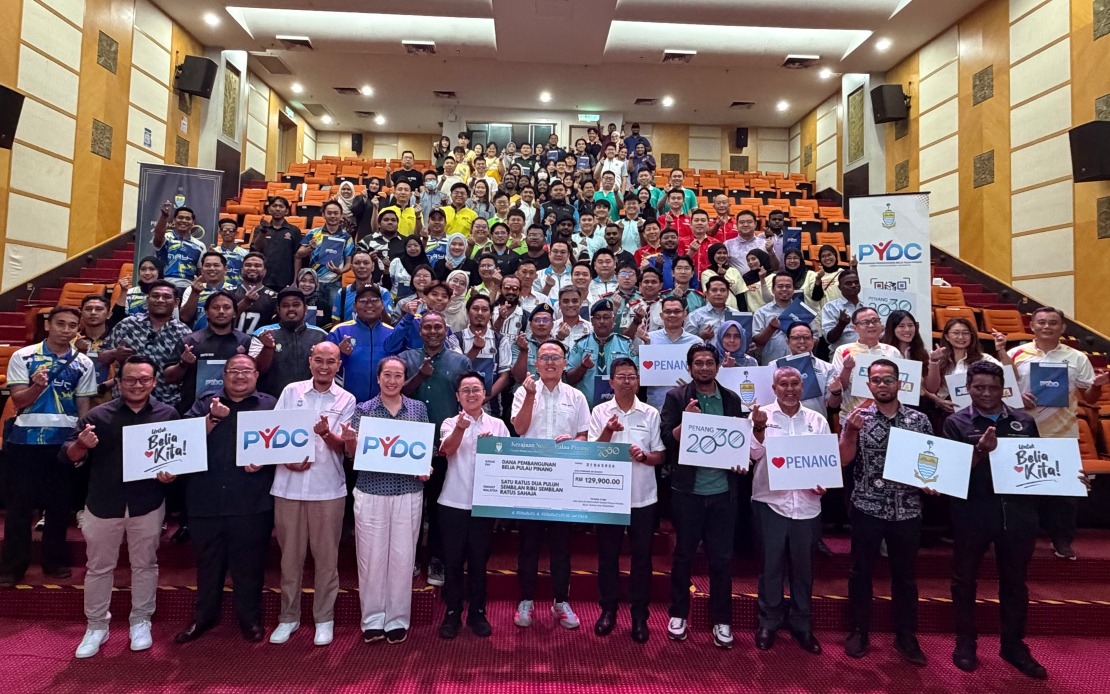
Penang's government has committed RM129,900 from its Youth Development Fund this financial year to underpin a diverse portfolio of 68 youth-oriented initiatives across 48 community organisations throughout the state. The allocation represents a significant proportion of the RM200,000 that the Penang State Executive Council approved for youth-centred development activities, signalling the administration's sustained commitment to nurturing the next generation of leaders and changemakers in the region.
Daniel Gooi Zi Sen, the chairman of Penang's Youth, Sports and Health Committee, outlined the strategic rationale behind the fund distribution in a statement released from George Town. According to Gooi, the financial support encompasses a carefully designed spectrum of developmental areas including technical skills acquisition, employment readiness, community service engagement, and organisational leadership capabilities. The breadth of focus reflects an understanding that youth development cannot be confined to a single domain but must address the multifaceted needs of young people navigating an increasingly complex socioeconomic landscape.
Crucially, Gooi reframed the nature of state funding in a manner that challenges conventional perceptions of government grants. Rather than positioning the money as charitable handouts or welfare payments, he characterised the fund as an expression of institutional trust—a confidence placed in youth organisations to translate their ideas into tangible social value. This philosophical distinction matters considerably in Southeast Asian contexts, where capacity-building and confidence-boosting in youth sectors can determine whether programmes achieve lasting community transformation or remain transactional in nature.
The scale of support—distributed across 48 separate organisations—underscores a decentralised approach to youth empowerment. By channelling funds through multiple grassroots and community-based groups rather than concentrating resources in a handful of larger entities, the Penang government broadens the reach of its youth development strategy and reduces dependency on centralised decision-making structures. This distributional model typically increases accessibility for smaller associations that might otherwise struggle to secure government backing through more competitive or hierarchical allocation processes.
For youth associations receiving these funds, Gooi stipulated clear expectations regarding financial stewardship and operational conduct. Organisations are expected to implement their approved programmes with demonstrated integrity, maintain transparent accounting practices, and exercise diligent resource management throughout the implementation period. These requirements, while standard in government funding arrangements, carry particular weight in Malaysian governance contexts where public accountability and the appropriate use of taxpayer resources remain focal points of media scrutiny and public discourse.
The committee chairman's emphasis on programme impact measurement signals a maturation in how Penang approaches youth development evaluation. Rather than reducing success to simple metrics such as activity completion or participant attendance numbers, Gooi advocated for a more nuanced assessment framework that examines the enduring consequences of programmes on individuals and their broader communities. This long-term perspective aligns with international best practices in youth development research, where sustained behavioural change, skill retention, and community contribution are recognised as the authentic markers of programmatic success.
For Malaysia's youth sector more broadly, Penang's initiative offers instructive lessons about integrating diverse developmental priorities within a single funding mechanism. The inclusion of skills development, employability, volunteerism, and leadership training reflects recognition that young people today require a constellation of competencies to navigate labour markets characterised by technological disruption and evolving employer expectations. The volunteerism component particularly merits attention, as it addresses a genuine deficit in organised community engagement opportunities for Malaysian youth and bridges potential disconnects between educational systems and civic participation.
The RM129,900 allocation also carries implications for regional youth policy architecture. As other Malaysian states and Southeast Asian jurisdictions contemplate youth development strategies, Penang's structured approach—combining adequate funding, clear performance expectations, and emphasis on non-financial aspects such as integrity and long-term impact—provides a replicable model. The initiative demonstrates that meaningful youth investment need not require exceptional budgetary allocations; strategic deployment of modest resources through accountable partnerships often yields superior outcomes compared to larger, less-focused expenditures.
Looking forward, the success of this funding cycle will likely influence how Penang calibrates future youth development investments. Given Malaysia's demographic structure, where youth comprise a substantial proportion of the population, and considering the competitive positioning demands facing the state within a globalised economy, nurturing local youth talent and ensuring robust community engagement represent strategic imperatives rather than discretionary social spending. The current allocation thus serves as both immediate support for 68 specific programmes and a test case for scaling youth development investment across Penang's administrative apparatus.

%22%2F%3E%3C%2Fpattern%3E%3C%2Fdefs%3E%3Crect%20width%3D%22100%25%22%20height%3D%22100%25%22%20fill%3D%22url(%23ph1f6pzg)%22%2F%3E%3Crect%20width%3D%22100%25%22%20height%3D%22100%25%22%20fill%3D%22url(%23ph1f6pzp)%22%2F%3E%3Ctext%20x%3D%2250%25%22%20y%3D%2250%25%22%20text-anchor%3D%22middle%22%20dominant-baseline%3D%22central%22%20fill%3D%22rgba(255%2C255%2C255%2C0.95)%22%20font-family%3D%22Georgia%2C%20'Times%20New%20Roman'%2C%20serif%22%20font-weight%3D%22700%22%20font-size%3D%22151%22%20letter-spacing%3D%22-0.02em%22%3EPerikatan%3C%2Ftext%3E%3C%2Fsvg%3E)