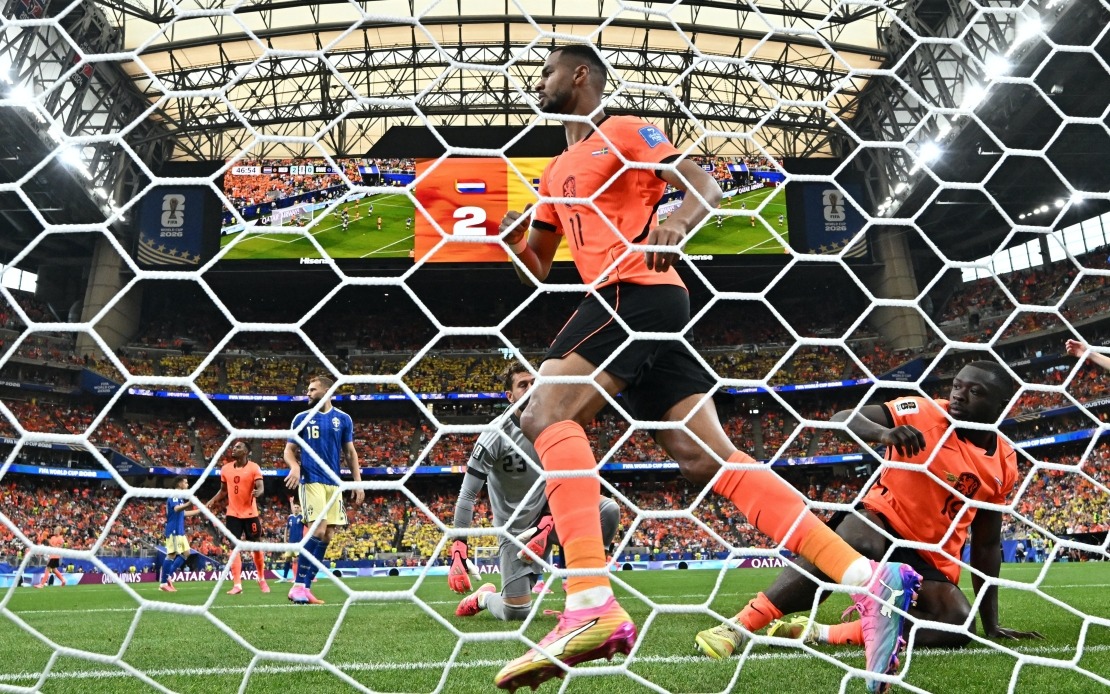
The 2022 World Cup tournament has already etched itself into the record books as one of the most prolific scoring competitions in the competition's history. Netherlands forward Cody Gakpo provided the historic moment on Saturday when his strike in his nation's commanding 5-1 victory over Sweden became the tournament's 100th goal. The achievement came remarkably quickly, requiring only 33 matches to reach the milestone, an average of precisely 3.03 goals per game throughout the group stage matches played to that point.
This rapid accumulation of goals represents the quickest pace since Switzerland hosted the tournament in 1954, when the 100-goal marker was reached after just 20 matches. The contrast with previous tournaments is striking: Brazil's 2014 edition required 36 matches, Spain's 1982 tournament needed the same number, while Argentina 1978 and the United States 1994 both extended the journey to 38 matches. For Malaysian football enthusiasts and analysts tracking global trends in the sport, the acceleration in scoring provides insight into how the beautiful game has evolved tactically and physically over recent decades.
Analysts and football observers have offered several compelling explanations for why defences have struggled more than in past tournaments. The official match ball, branded as the Trionda, has attracted particular scrutiny from commentators who suggest its aerodynamic properties may disadvantage goalkeepers when facing shots from distance. This theory gained credence when statistics revealed that ten goals had already been scored from outside the penalty area, indicating that the ball's behaviour in flight may indeed be affecting shot-stopping accuracy at the elite level.
Beyond the equipment factor, tournament organisers and coaches have acknowledged that environmental conditions have likely influenced match outcomes. The heat experienced during fixtures has contributed to player fatigue, particularly affecting defensive organisation during the latter stages of matches. Interestingly, the tournament's introduction of mandatory three-minute cooling breaks has provided coaches with additional tactical opportunities, allowing them to reorganise defensive shape and implement fresh strategic approaches during these stoppages. This rule change has therefore created unexpected advantages for teams capable of utilising the intervals effectively.
The expansion of the tournament format to 48 participating teams, a departure from the traditional 32-team structure, inevitably drew commentary regarding its potential impact on scoring patterns. Initial evidence from early group stage matches appeared to support concerns about competitive imbalance. Germany's demolition of Curaçao with a 7-1 scoreline, Canada's 6-0 humbling of Qatar, and Tunisia's successive heavy defeats to Sweden by 5-1 and Japan by 4-0 suggested that the expanded format might produce lopsided contests between vastly different calibre opponents.
However, a more nuanced examination of results provides a counternarrative that challenges the assumption that expansion has simply created a parade of one-sided affairs. Curaçao demonstrated surprising resilience by holding Ecuador to a goalless draw, suggesting that smaller nations are capable of effective defensive solidity when properly organised. Cabo Verde similarly frustrated a Spanish side ranked among Europe's elite by maintaining a 0-0 draw, proving that tactical discipline can neutralise superior attacking talent. Furthermore, Qatar's performance against Canada, despite ultimately losing 6-0, becomes more contextually understandable when considering that the team played the majority of the encounter with only nine players following red card dismissals.
The performance of perceived outsiders such as Jordan and Uzbekistan further supports the thesis that the expanded format has introduced greater competitive unpredictability rather than producing merely a series of walkovers. Both teams sustained creditable 3-1 defeats to Austria and Colombia respectively, suggesting they competed authentically rather than surrendering passively. For Southeast Asian observers, the competitive showing of these underdog nations provides encouraging evidence that the expanded World Cup format may actually create more opportunities for traditionally weaker football nations to showcase their capabilities against stronger opposition.
These factors collectively paint a picture of a tournament that, while certainly producing elevated scoring, has not necessarily sacrificed competitive integrity or tactical sophistication. The combination of ball design, environmental conditions, expanded participant numbers, and tactical innovation appears to have created an environment where clinical finishing and opportunistic play have been rewarded, without entirely eliminating the possibility of disciplined defensive performances. The milestone achieved by Gakpo's goal therefore represents not merely increased scoring for its own sake, but rather a reflection of multiple intersecting variables affecting how the modern game is contested at its highest level.

%22%2F%3E%3C%2Fpattern%3E%3C%2Fdefs%3E%3Crect%20width%3D%22100%25%22%20height%3D%22100%25%22%20fill%3D%22url(%23ph5cf5sg)%22%2F%3E%3Crect%20width%3D%22100%25%22%20height%3D%22100%25%22%20fill%3D%22url(%23ph5cf5sp)%22%2F%3E%3Ctext%20x%3D%2250%25%22%20y%3D%2250%25%22%20text-anchor%3D%22middle%22%20dominant-baseline%3D%22central%22%20fill%3D%22rgba(255%2C255%2C255%2C0.95)%22%20font-family%3D%22Georgia%2C%20'Times%20New%20Roman'%2C%20serif%22%20font-weight%3D%22700%22%20font-size%3D%22226%22%20letter-spacing%3D%22-0.02em%22%3EHamzah%3C%2Ftext%3E%3C%2Fsvg%3E)
%22%2F%3E%3C%2Fpattern%3E%3C%2Fdefs%3E%3Crect%20width%3D%22100%25%22%20height%3D%22100%25%22%20fill%3D%22url(%23ph1p4mng)%22%2F%3E%3Crect%20width%3D%22100%25%22%20height%3D%22100%25%22%20fill%3D%22url(%23ph1p4mnp)%22%2F%3E%3Ctext%20x%3D%2250%25%22%20y%3D%2250%25%22%20text-anchor%3D%22middle%22%20dominant-baseline%3D%22central%22%20fill%3D%22rgba(255%2C255%2C255%2C0.95)%22%20font-family%3D%22Georgia%2C%20'Times%20New%20Roman'%2C%20serif%22%20font-weight%3D%22700%22%20font-size%3D%22170%22%20letter-spacing%3D%22-0.02em%22%3ETambirat%3C%2Ftext%3E%3C%2Fsvg%3E)