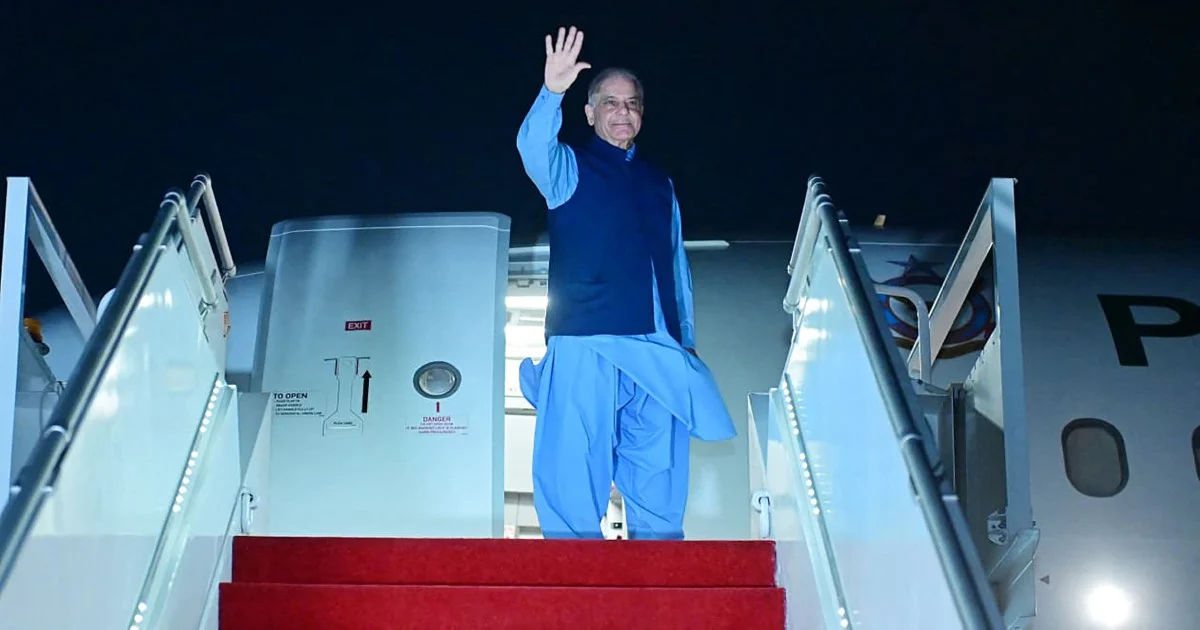
Prime Minister Shehbaz Sharif touched down in Switzerland on Sunday morning as part of what represents Pakistan's latest diplomatic intervention in the escalating tensions between the United States and Iran. The arrival, reported by local media sources, positions Pakistan as an active participant in preliminary technical discussions aimed at de-escalating the armed conflict plaguing the Middle East region.
Pakistan's involvement in these negotiations underscores Islamabad's broader strategic positioning as a regional mediator. The country has historically maintained complex relationships with both Washington and Tehran, allowing it to serve as an intermediary during periods of heightened tensions. Sharif's direct participation in the talks elevates Pakistan's role from passive observer to active facilitator, a responsibility that carries significant weight given the stakes involved in US-Iran relations.
The technical-level nature of these discussions suggests a focus on pragmatic implementation mechanisms rather than high-level political declarations. Such talks typically involve specialists and negotiators working through the granular details of any potential agreement, establishing protocols and verification procedures that would underpin broader diplomatic settlements. This incremental approach often provides space for progress when direct political engagement faces obstacles.
For Pakistan specifically, the opportunity to mediate between these two influential powers carries both opportunity and risk. Success in facilitating even preliminary discussions could enhance Islamabad's credibility as a constructive diplomatic actor within international forums and strengthen its voice on regional security matters. Conversely, any perception of bias or failure to broker progress could complicate Pakistan's relationships with either party.
The broader context of Middle East instability directly affects Pakistan's security environment and economic interests. Escalation between the US and Iran could destabilise the entire region, disrupting global oil markets that Pakistan depends upon and potentially driving further sectarian tensions that resonate across the broader Muslim world, including within Pakistan itself. These considerations explain why Islamabad has invested diplomatic capital in participating in such discussions.
Sharif's presence at these technical-level talks reflects the prime minister's commitment to active engagement with major powers during critical international moments. His government has pursued a policy of balancing relations with the United States while maintaining stable ties with China, Saudi Arabia, and other regional actors. This diplomatic multitasking requires careful navigation, particularly when it involves the volatile US-Iran relationship.
The Middle East remains one of the world's most combustible regions, with multiple overlapping conflicts, proxy wars, and ideological divisions creating an extraordinarily complex landscape. Any genuine progress toward de-escalation between Washington and Tehran would have cascading effects throughout the region, potentially influencing developments in Iraq, Syria, Yemen, and beyond. Pakistan's participation in facilitating such discussions, even at technical levels, demonstrates the interconnectedness of global security challenges.
Sweden's designation as a neutral venue for these talks carries symbolic weight, positioning the country as a trusted intermediary without perceived allegiances to either party. This choice reflects international norms of selecting neutral ground for sensitive negotiations, a practice that enhances the perceived legitimacy of discussions and reduces suspicions about whose interests are being prioritised.
The involvement of technical-level negotiators allows both parties to explore possibilities without the rigid constraints that often accompany high-level political negotiations. These discussions frequently occur parallel to public diplomatic posturing, creating space for genuine problem-solving away from the pressures of domestic politics and nationalist rhetoric that can complicate public negotiations.
For Southeast Asia and the broader Indo-Pacific region, the outcome of these US-Iran discussions carries implications for regional stability and the balance of power in Asian geopolitics. Any major shift in US-Iran relations would necessarily affect American strategic calculations regarding its presence and priorities in Asia, potentially redirecting resources and attention. Pakistan's participation in these discussions therefore represents not merely a bilateral concern between Islamabad and Washington, but a factor in the wider international order affecting all nations seeking stability in their respective regions.
The fact that Pakistan's premier would personally travel to Switzerland for technical talks rather than sending a subordinate delegation underscores the seriousness with which Islamabad views these discussions. While technical-level negotiations typically involve lower-ranking officials, the involvement of the prime minister suggests either a desire to demonstrate Pakistan's commitment to the process or expectations that breakthrough moments might require higher-level decision-making authority.
Shariif's visit also reflects Pakistan's broader foreign policy under his administration, which has sought to position the country as a responsible stakeholder in international affairs and a constructive voice during moments of global tension. This approach contrasts with periods when Pakistan's diplomacy was more defensive or narrowly focused on bilateral concerns, instead emphasising contribution to regional and global peace initiatives.
As these talks progress, the international community will likely monitor not only the substantive outcomes but also the patterns of participation and engagement that emerge. Pakistan's role in facilitating discussions between major powers carries broader implications for how the country is perceived and utilised within international diplomatic architecture, potentially opening doors for greater involvement in other critical negotiations affecting Asian and global interests.
%22%2F%3E%3C%2Fpattern%3E%3C%2Fdefs%3E%3Crect%20width%3D%22100%25%22%20height%3D%22100%25%22%20fill%3D%22url(%23ph5cf5sg)%22%2F%3E%3Crect%20width%3D%22100%25%22%20height%3D%22100%25%22%20fill%3D%22url(%23ph5cf5sp)%22%2F%3E%3Ctext%20x%3D%2250%25%22%20y%3D%2250%25%22%20text-anchor%3D%22middle%22%20dominant-baseline%3D%22central%22%20fill%3D%22rgba(255%2C255%2C255%2C0.95)%22%20font-family%3D%22Georgia%2C%20'Times%20New%20Roman'%2C%20serif%22%20font-weight%3D%22700%22%20font-size%3D%22226%22%20letter-spacing%3D%22-0.02em%22%3EHamzah%3C%2Ftext%3E%3C%2Fsvg%3E)
%22%2F%3E%3C%2Fpattern%3E%3C%2Fdefs%3E%3Crect%20width%3D%22100%25%22%20height%3D%22100%25%22%20fill%3D%22url(%23ph1p4mng)%22%2F%3E%3Crect%20width%3D%22100%25%22%20height%3D%22100%25%22%20fill%3D%22url(%23ph1p4mnp)%22%2F%3E%3Ctext%20x%3D%2250%25%22%20y%3D%2250%25%22%20text-anchor%3D%22middle%22%20dominant-baseline%3D%22central%22%20fill%3D%22rgba(255%2C255%2C255%2C0.95)%22%20font-family%3D%22Georgia%2C%20'Times%20New%20Roman'%2C%20serif%22%20font-weight%3D%22700%22%20font-size%3D%22170%22%20letter-spacing%3D%22-0.02em%22%3ETambirat%3C%2Ftext%3E%3C%2Fsvg%3E)