Penang Chinese Town Hall has concluded its 2025 financial year with stable operational performance, collecting RM12.61 million in total income against expenditure of RM12.55 million. The modest surplus of RM59,191 demonstrates careful financial management during a period of infrastructure expansion and strategic repositioning for the organisation.
Donations have emerged as the lifeblood of PCTH's funding model, supplying RM11.24 million of the annual income. This reliance on philanthropic contributions underscores the institution's embedded role within Penang's Chinese community networks and reflects broader patterns of community support for cultural and civic organisations in Malaysia. Beyond donations, the hall generated RM439,671 from rental and maintenance fees, RM361,245 through auditorium hire, and RM222,498 from anniversary-related activities. This diversified revenue stream provides operational resilience, though the organisation's financial health remains substantially dependent on donor goodwill.
Expenditure patterns reveal organisational priorities. Donations distributed to beneficiaries and charitable causes accounted for approximately 88.6 percent of spending at RM11.12 million, down from RM12.35 million the previous year. This reduction suggests tighter allocation discipline or perhaps fewer large-scale charitable commitments during 2025. Personnel costs, conversely, rose from RM452,761 in 2024 to RM502,625 in 2025, reflecting either staffing increases or salary adjustments to retain talent—a concern relevant across Malaysian nonprofit sectors facing wage pressures.
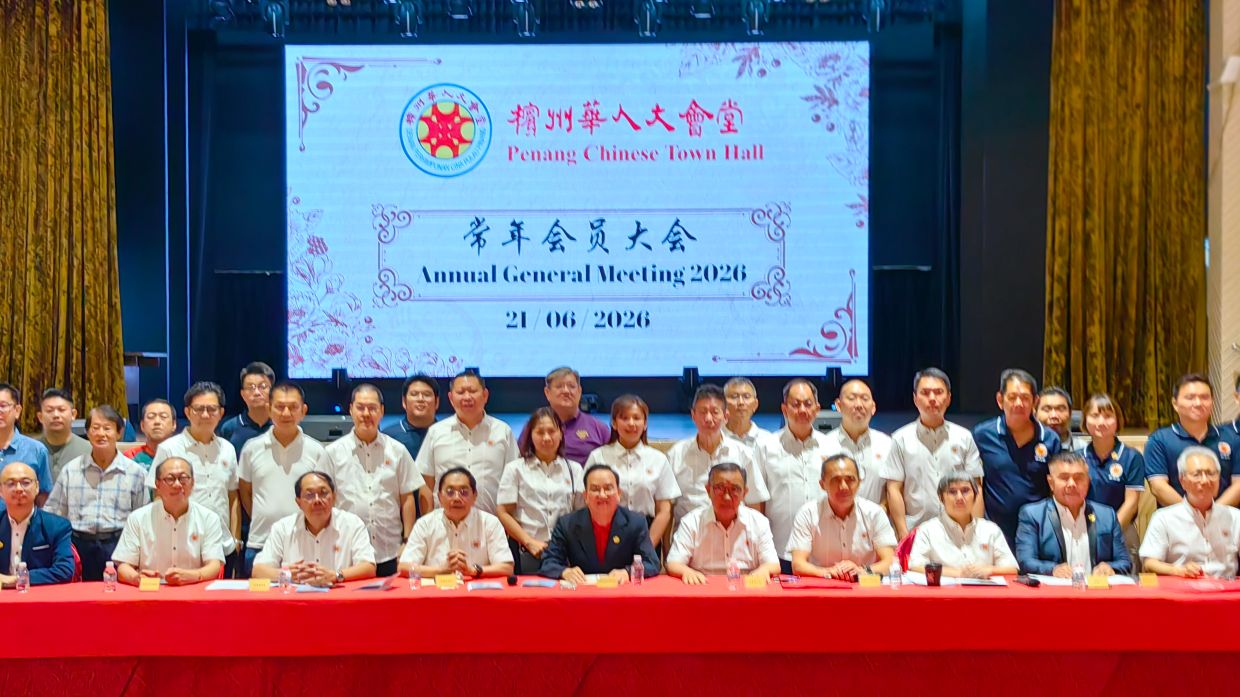
The organisation's leadership gathered some 200 members at its annual general meeting on June 21, where chairman Tan Sri Prof Tan Khoon Hai articulated a civic vision transcending the hall's traditional community focus. With Johor and Negeri Sembilan scheduled for state elections during 2025, he emphasised voter responsibility and electoral participation as foundational democratic duties. His remarks addressed a persistent weakness in Malaysian electoral engagement—the tendency for voters to cast ballots based on sentiment rather than systematic evaluation of party performance, policy platforms, and candidate capability. The chairman's call for rational assessment of parties' capacity to foster unity, catalyse economic development, and preserve social stability signals PCTH's ambition to function as a thought leader on governance beyond ceremonial and cultural programming.
Recognising Penang's unique position in Malaysia's industrial landscape, Tan articulated an expansive strategy positioning the state as a nexus for emerging technology sectors. The hall underwent renovation of its Ping Zhang Hall facility, installing contemporary sound systems, advanced lighting infrastructure, and LED technology to meet modern event requirements. This capital investment positions PCTH as a competitive venue for high-calibre corporate functions, association gatherings, and charitable fundraisers—revenue opportunities that strengthen financial sustainability while elevating the organisation's profile among professional and commercial networks.
The most significant strategic announcement involved PCTH's role as co-organiser of the 2026 China-Asean Artificial Intelligence Cooperation Forum scheduled for November in Penang. This represents a deliberate pivot toward positioning the state and the organisation within Southeast Asia's technology innovation ecosystem. The forum intends to convene researchers, entrepreneurs, and corporate decision-makers from across the region to examine artificial intelligence technologies, industrial deployment models, and cross-border commercial partnerships. Such positioning aligns with Malaysia's broader digital economy objectives while capitalising on Penang's established credentials as an electrical and electronics manufacturing hub.
The Silicon Valley of the East designation, while somewhat dated given the rise of alternative technology clusters, retains relevance in Penang's industrial identity and labour force expertise. The state's concentration of semiconductor fabrication, component manufacturing, and supply chain operations creates organic advantages for artificial intelligence application development—industries increasingly reliant on data processing, machine learning models, and automated decision-making systems. PCTH's facilitation of regional technology dialogue potentially enhances Penang's attractiveness to multinational enterprises and startup ecosystems seeking geographic positioning within Asean markets.
Tan's explicit invitation to members with relevant technological expertise to participate in the forum indicates awareness that PCTH's traditional donor base and membership encompasses professionals capable of contributing substantively to regional technology discourse. This represents an evolution in how heritage cultural institutions position themselves—no longer purely custodians of community traditions, but increasingly bridges between established communities and emerging economic opportunities. Such repositioning may prove essential for institutional relevance as younger generations assess an organisation's value proposition within rapidly transforming economic contexts.
The financial snapshot reveals an organisation navigating transition. Revenue stability and controlled expenditure growth suggest competent stewardship, while the relatively small annual surplus indicates limited capacity for major capital expansion or endowment building. The donation-dependent revenue model creates vulnerability to economic fluctuations affecting donor capacity, though the breadth of the membership base and community attachment presumably mitigates concentration risk. For Malaysian readers, PCTH exemplifies how established community organisations adapt by embracing new roles—whether as civic education platforms, technology cooperation facilitators, or inclusive economic development actors—while sustaining traditional community services.
Moving forward, the organisation's success will depend on executing the ambitious technology forum initiative while maintaining financial discipline and community trust. The choice to invest in modern facilities and position Penang as a technology cooperation hub reflects leadership confidence in the region's trajectory and the organisation's capacity to influence that trajectory. Whether this strategic evolution translates into sustainable revenue growth and institutional relevance will become apparent as the 2026 forum materialises and subsequent financial reports demonstrate whether such positioning attracts new revenue streams or participants.