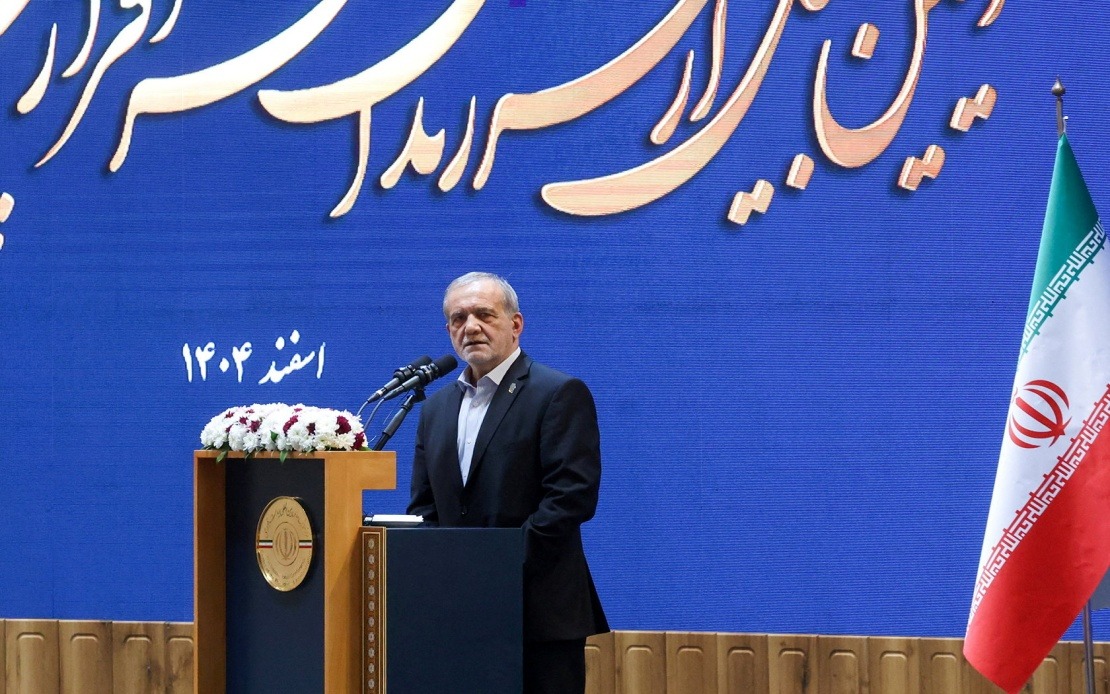
Iranian President Masoud Pezeshkian has indicated that his government might be prepared to commit itself in writing to abandoning any pursuit of nuclear weapons, potentially softening Tehran's stance on one of the world's most contentious geopolitical issues. The statement, made in Tehran on June 21, marks a potentially significant development in the long-running dispute over Iran's nuclear programme, even as uncertainty persists about whether such a gesture forms part of the current diplomatic engagement between Iranian and American officials.
The Iranian leader's comments arrive at a delicate moment in negotiations, with representatives from both nations having convened in Switzerland on Sunday to chart a pathway toward a durable peace settlement. This comes in the wake of a memorandum of understanding signed earlier in the week, which established a 60-day window for finalising a comprehensive agreement specifically addressing Iran's nuclear activities. That deadline reflects the international community's recognition that a lasting resolution requires both substantive technical accords and credible political commitments from Tehran.
While Pezeshkian's willingness to formalise Iran's nuclear intentions through a written declaration could represent a meaningful concession, the president did not explicitly confirm whether this option is actually being tabled during the ongoing talks in Switzerland. The ambiguity surrounding the proposal's status within the negotiating framework underscores the complexity of these discussions, where positioning and communication often occur through careful public statements rather than direct confirmation of negotiating positions.
The Islamic Republic has long maintained an official policy of non-proliferation, with successive Iranian leaders asserting that the nation harbours no ambitions to weaponise its nuclear capacity. Pezeshkian reinforced this narrative by invoking the religious authority of former Supreme Leader Ali Khamenei, who was killed in US-Israeli strikes at the beginning of the recent conflict. According to Pezeshkian, Khamenei had rejected the development of weapons of mass destruction on theological grounds, a position that continues to guide Iran's political establishment today.
For Malaysia and other Southeast Asian nations monitoring these developments, Iran's nuclear posture carries implications extending beyond bilateral US-Iran relations. The region's security architecture depends partly on the stability of global arrangements governing weapons of mass destruction. A successful resolution in Vienna or elsewhere that locks in Iranian nuclear restraint would reduce tensions that have periodically disrupted regional commerce, shipping lanes, and defence calculations. Conversely, any breakdown in these talks could reignite fears of a wider conflagration in the Middle East, with consequences radiating across Asia's maritime trade networks.
The prospect of unlocking US$6 billion in Iranian assets currently frozen in Qatar represents a material incentive for Tehran to sustain its engagement in these negotiations. Such resources could facilitate economic stabilisation within Iran and reduce pressure on the government to pursue confrontational foreign policies. For investors and business communities across the region, evidence of serious nuclear diplomacy creates space for normalisation of economic relations with Tehran.
Pezeshkian's expression of confidence in the negotiating process and his characterisation of agreements reached thus far as broadly favourable to Iranian interests suggest that Tehran's leadership perceives value in this engagement. However, the compressed 60-day timeline underscores the urgency facing both sides, with competing pressures from domestic constituencies, regional actors, and international observers all seeking to influence the outcome. The Iranian president's measured optimism must be weighed against historical scepticism about whether final arrangements can withstand implementation.
The question of verification and enforcement mechanisms remains critical, even if Tehran commits to a written renunciation. International monitoring bodies will need unfettered access to Iranian nuclear facilities, and any agreement must survive changes in government and shifts in regional power dynamics. Pezeshkian's suggestion that such a declaration could be issued points toward acceptance of intrusive oversight, though the specifics of how this would function in practice remain unclear.
The broader geopolitical context cannot be overlooked. The recent conflict that claimed Ali Khamenei's life has altered calculations on both sides, potentially creating space for dialogue that earlier seemed foreclosed. American policymakers, seeking to avoid deeper entanglement in Middle Eastern conflicts, may find mutual interest with Iranian officials seeking to stabilise their position and unlock frozen assets. This convergence of interests, though fragile, provides the foundation upon which these 60-day negotiations rest.
For regional powers and international observers, the coming weeks will prove decisive. A successfully concluded agreement that verifiably constrains Iran's nuclear activities while providing economic relief could reshape Middle Eastern geopolitics and reduce the risk of escalation. Conversely, failure could harden positions and trigger a renewed arms race in a region already burdened by conflict. The written declaration Pezeshkian described represents not the destination but rather a single waypoint on a much longer diplomatic journey.
%22%2F%3E%3C%2Fpattern%3E%3C%2Fdefs%3E%3Crect%20width%3D%22100%25%22%20height%3D%22100%25%22%20fill%3D%22url(%23ph1p4mng)%22%2F%3E%3Crect%20width%3D%22100%25%22%20height%3D%22100%25%22%20fill%3D%22url(%23ph1p4mnp)%22%2F%3E%3Ctext%20x%3D%2250%25%22%20y%3D%2250%25%22%20text-anchor%3D%22middle%22%20dominant-baseline%3D%22central%22%20fill%3D%22rgba(255%2C255%2C255%2C0.95)%22%20font-family%3D%22Georgia%2C%20'Times%20New%20Roman'%2C%20serif%22%20font-weight%3D%22700%22%20font-size%3D%22170%22%20letter-spacing%3D%22-0.02em%22%3ETambirat%3C%2Ftext%3E%3C%2Fsvg%3E)
%22%2F%3E%3C%2Fpattern%3E%3C%2Fdefs%3E%3Crect%20width%3D%22100%25%22%20height%3D%22100%25%22%20fill%3D%22url(%23ph3s6lqg)%22%2F%3E%3Crect%20width%3D%22100%25%22%20height%3D%22100%25%22%20fill%3D%22url(%23ph3s6lqp)%22%2F%3E%3Ctext%20x%3D%2250%25%22%20y%3D%2250%25%22%20text-anchor%3D%22middle%22%20dominant-baseline%3D%22central%22%20fill%3D%22rgba(255%2C255%2C255%2C0.95)%22%20font-family%3D%22Georgia%2C%20'Times%20New%20Roman'%2C%20serif%22%20font-weight%3D%22700%22%20font-size%3D%22194%22%20letter-spacing%3D%22-0.02em%22%3EBintulu%3C%2Ftext%3E%3C%2Fsvg%3E)