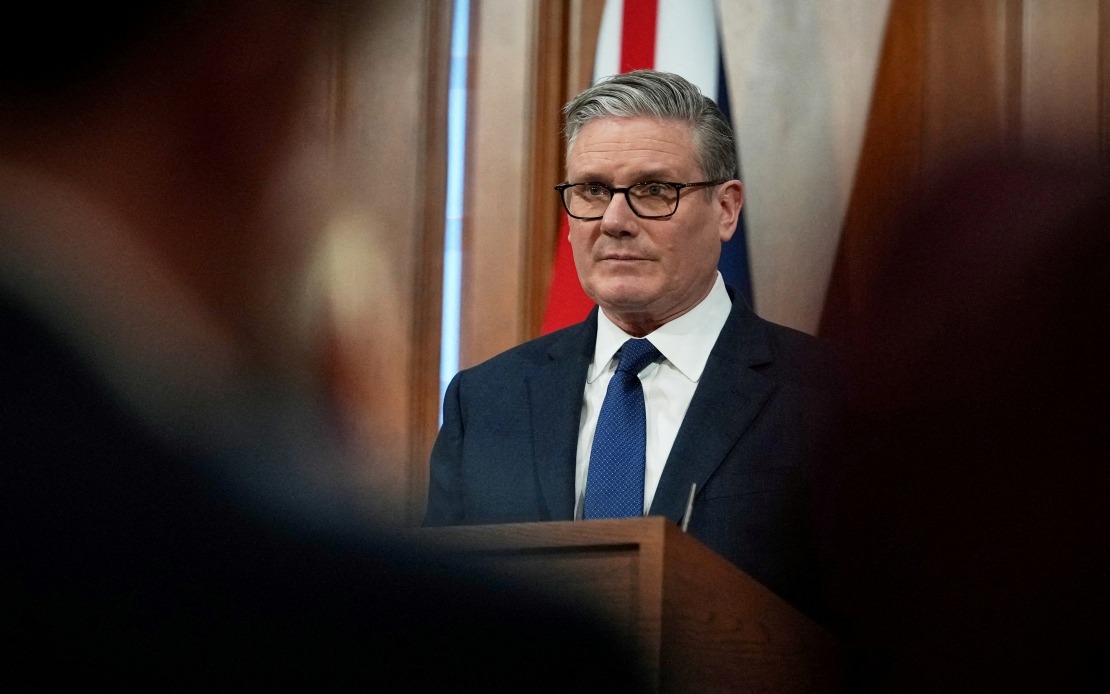
US President Donald Trump has publicly declared that United Kingdom Prime Minister Keir Starmer will resign from his position, citing significant missteps in handling immigration and energy matters. The American leader made the assertion on his Truth Social platform on Sunday, stating with certainty that the British premier will step down. Trump specifically criticised Starmer's management of two policy areas he considers fundamental to national governance, while offering remarks wishing the prime minister well despite his forecast of political departure.
Trump's intervention into British domestic politics reflects the growing intersection of US and UK political discourse, particularly as both nations grapple with similar challenges around border management and energy security. His explicit prediction carries weight given his position and his history of weighing in on international political matters. The timing of his statement adds fuel to existing speculation within British political circles about Starmer's immediate future, amplifying what had previously been internal government discussions into a transatlantic news story.
The British broadcasting corporation reported on the same Sunday that government sources believe Starmer could unveil a timetable for his resignation as soon as the following Monday. Multiple insiders within the UK government apparatus have reportedly shifted their assessment of the situation, now anticipating that the prime minister may move quickly to announce when he plans to leave office. This suggests that internal discussions about Starmer's tenure have reached a critical juncture, with various factions moving toward acceptance of his departure.
Energy policy has become an increasingly contentious issue in British politics, with debates over North Sea oil development forming a significant part of the broader energy security conversation. Trump's specific reference to "open North Sea oil" indicates his view that the UK should pursue more aggressive fossil fuel extraction to meet energy demands and reduce dependency on imports. This perspective aligns with energy-focused policies that have gained prominence in conservative circles across the Atlantic, though it contrasts with the UK government's stated commitment to net-zero emissions targets.
Immigration remains one of the most politically charged policy areas across Western democracies, and the UK has faced sustained criticism from both conservative and progressive quarters regarding its approach to border management, asylum processing, and integration of newcomers. Starmer's government has struggled to present a coherent strategy that satisfies various stakeholder groups, from business leaders seeking labour mobility to communities concerned about integration challenges and public service capacity. Trump's criticism on this front taps into a broader populist critique of centrist handling of migration issues.
The convergence of external pressure from Trump's public statement and internal government expectations about Starmer's timeline creates a politically volatile environment in Westminster. When international figures of Trump's stature begin making predictions about the viability of sitting premiers, it inevitably influences both media coverage and the calculations of domestic political actors. MPs and ministers must now contend with narratives framed not merely in terms of British politics, but as part of a transatlantic political conversation.
For Malaysian observers and Southeast Asian policymakers, the British political turmoil offers instructive lessons about the fragility of political consensus and the challenges of managing multiple policy fronts simultaneously. The ability to maintain public confidence while navigating complex issues like energy transition and immigration represents a persistent challenge for governments across the region. Malaysia itself has grappled with both energy diversification and immigration pressures, making the British experience relevant to local policy discussions.
The relationship between external commentary and domestic political stability also warrants consideration from a regional perspective. Trump's public prediction about Starmer's resignation demonstrates how international figures can inject uncertainty into domestic political processes, a dynamic that matters for smaller nations in Southeast Asia that operate within larger geopolitical frameworks. The incident illustrates how global political figures wielding significant platforms can influence narratives surrounding national leadership in ways that transcend traditional diplomatic channels.
Starmer's potential departure would represent a significant shift in British politics just months into his tenure following Labour's electoral victory. The rapid deterioration of his political position, if confirmed, would suggest that winning an election and translating that mandate into sustained public support remain distinct challenges. For regional governments managing their own transitional periods or facing policy implementation difficulties, the British experience underscores the importance of demonstrating early policy success and maintaining party unity during critical early months in office.
The specific policy criticisms Trump levelled—inadequate immigration controls and insufficient energy production—reflect conservative policy priorities that have resonated across multiple Western democracies. These themes have gained traction in various forms throughout Southeast Asia as well, with multiple governments emphasizing energy security and border management as priority concerns. Starmer's apparent struggle with these issues may influence how regional leaders approach similar challenges, particularly regarding the political risks of appearing insufficiently decisive on security and sovereignty matters.
Looking forward, the British political developments may have implications for UK-Malaysia relations and broader Commonwealth dynamics. Changes in British leadership often prompt reassessments of foreign policy priorities and international relationships. A new British prime minister might bring different emphases regarding trade relationships, defence cooperation, and regional engagement with Southeast Asia, areas where Malaysia maintains longstanding connections with Britain.
The unfolding situation in Britain also reflects broader patterns of political instability affecting Western democracies in recent years, as governments struggle with complex intersecting crises and public expectations for rapid, decisive solutions. Starmer's potential early exit would add to a growing list of Western leaders whose tenures proved shorter than anticipated, suggesting that the contemporary political environment poses particular challenges for maintaining durable coalitions and public support.
%22%2F%3E%3C%2Fpattern%3E%3C%2Fdefs%3E%3Crect%20width%3D%22100%25%22%20height%3D%22100%25%22%20fill%3D%22url(%23ph1p4mng)%22%2F%3E%3Crect%20width%3D%22100%25%22%20height%3D%22100%25%22%20fill%3D%22url(%23ph1p4mnp)%22%2F%3E%3Ctext%20x%3D%2250%25%22%20y%3D%2250%25%22%20text-anchor%3D%22middle%22%20dominant-baseline%3D%22central%22%20fill%3D%22rgba(255%2C255%2C255%2C0.95)%22%20font-family%3D%22Georgia%2C%20'Times%20New%20Roman'%2C%20serif%22%20font-weight%3D%22700%22%20font-size%3D%22170%22%20letter-spacing%3D%22-0.02em%22%3ETambirat%3C%2Ftext%3E%3C%2Fsvg%3E)
%22%2F%3E%3C%2Fpattern%3E%3C%2Fdefs%3E%3Crect%20width%3D%22100%25%22%20height%3D%22100%25%22%20fill%3D%22url(%23ph3s6lqg)%22%2F%3E%3Crect%20width%3D%22100%25%22%20height%3D%22100%25%22%20fill%3D%22url(%23ph3s6lqp)%22%2F%3E%3Ctext%20x%3D%2250%25%22%20y%3D%2250%25%22%20text-anchor%3D%22middle%22%20dominant-baseline%3D%22central%22%20fill%3D%22rgba(255%2C255%2C255%2C0.95)%22%20font-family%3D%22Georgia%2C%20'Times%20New%20Roman'%2C%20serif%22%20font-weight%3D%22700%22%20font-size%3D%22194%22%20letter-spacing%3D%22-0.02em%22%3EBintulu%3C%2Ftext%3E%3C%2Fsvg%3E)