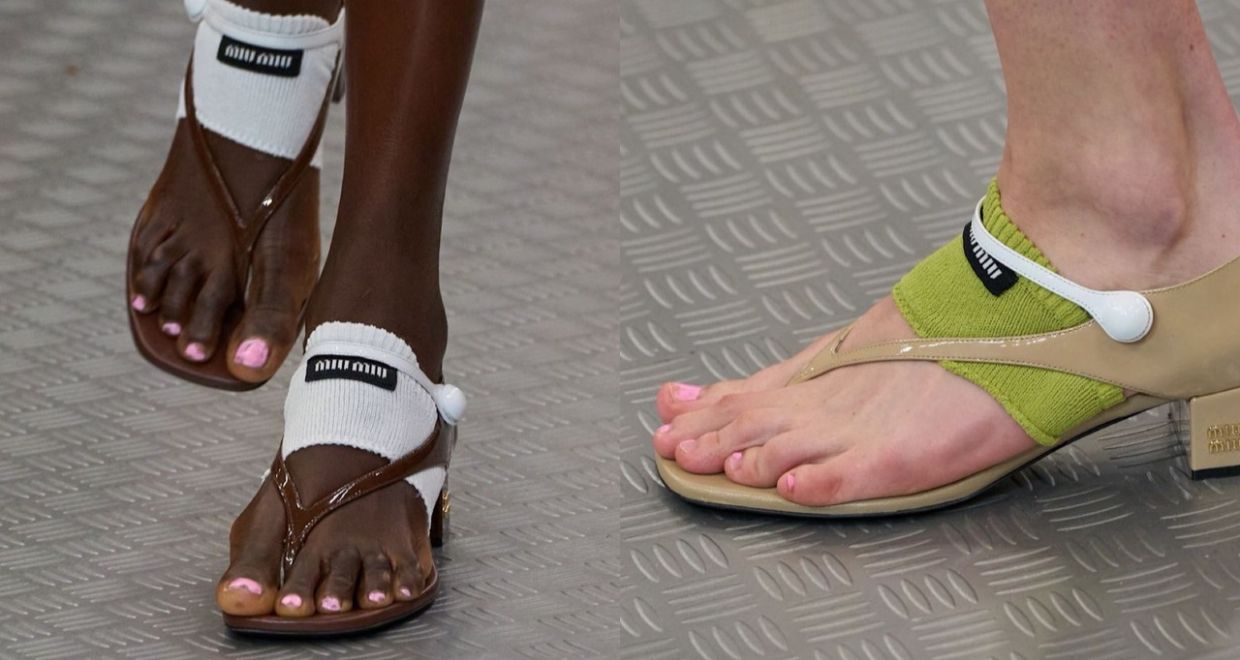
The perpetual summer dilemma of choosing between practical footwear and exposed toes appears to have found an unlikely solution in open-toe socks, a style gaining momentum across retailers as temperatures soar and fashion-forward consumers seek fresh ways to accessorize their warm-weather wardrobes. These cropped socks, designed to cover the arch and top of the foot while deliberately leaving the toes exposed, represent a clever hybrid approach that defies conventional fashion logic yet increasingly appeals to style-conscious shoppers navigating the intersection of comfort and aesthetics.
The trend has accelerated particularly in South Korea, where an unusually early heat wave pushed the seasonal demand for sandals, flip-flops, and summer shoes into overdrive during late May and early June. Data from online fashion platform W Concept revealed that sales of summer footwear categories, including mules, slides, and flip-flops, surged 80 percent in the week spanning May 31 to June 7 compared with the same period a year prior, signalling a marked shift in consumer purchasing patterns ahead of the traditional summer season. This acceleration created an unexpected opportunity for complementary products that could enhance rather than replace traditional summer shoes.
What makes the growth particularly striking is the explosive adoption rate measured by style commerce platforms monitoring this specific category. Ably, which tracks fashion transactions and search behaviour, documented a 1,664 percent increase in transaction value for socks designed to be worn with flip-flops over a month-long period from May 14 to June 14, while related search queries climbed an astonishing 3,227 percent during the same timeframe. These figures indicate not merely a niche interest but a genuine surge in mainstream curiosity and purchasing behaviour, suggesting the trend has transcended insider fashion circles and reached broader consumer consciousness.
The aesthetic foundation for this trend can be traced to luxury fashion houses experimenting with unconventional sock designs. Miu Miu's 2025 Spring/Summer collection featured an avant-garde interpretation where socks wrapped only around the arch rather than extending across the entire foot, establishing a high-fashion precedent that trickled down to more accessible retailers and influencer culture. Celebrity adoption accelerated the trajectory when South Korean actor Cha Jung-won showcased a coordinated look pairing sky-blue flip-flops with beige knit leg warmers on social media, demonstrating how the style could function as a complete aesthetic choice rather than a fashion accident or practical compromise.
The contemporary versions of open-toe socks differ fundamentally from their winter-bound predecessors in both material composition and functional purpose. Rather than employing dense, thermal fabrics designed to trap body heat, current summer iterations prioritize breathability through sheer, mesh, and loosely knitted materials that allow air circulation while providing visual interest and colour blocking without significant warmth retention. This technical distinction transforms what might otherwise appear as an uncomfortable seasonal mismatch into a genuinely practical accessory that addresses legitimate warm-weather concerns while delivering measurable style benefits.
Practical benefits extend beyond pure aesthetics and into genuine foot comfort. The socks reduce friction and chafing that frequently results from flip-flop and sandal straps rubbing directly against bare skin, a particularly valuable function during extended wear or activities involving significant walking. During monsoon seasons, when humidity and moisture become unavoidable environmental factors throughout Southeast Asia, open-toe socks worn with rain boots provide protective barriers against skin irritation and fungal growth that flourishes in damp conditions, making them functionally superior to either bare feet or traditional full socks in these specific climates.
Retailers and fashion consultants emphasize the versatility and accessibility of incorporating this trend into existing wardrobes. For those experimenting with the style for the first time, neutral foundations work best, with grey, black, and white providing subtle texture without dramatic visual disruption. Grey socks paired with black flip-flops or ballerina flats integrate naturally with classic summer separates including denim, Bermuda shorts, and satin skirts, allowing the wearer to ease into the trend through understated experimentation. More adventurous fashionistas can explore bolder colour palettes including vivid yellows, pinks, or sky blues, with deliberately mismatched sock-and-shoe combinations reading as intentionally cool rather than accidental.
The styling principle underlying successful open-toe sock integration involves deliberate restraint elsewhere in the outfit composition. Because the socks and accompanying footwear already command visual attention through colour, pattern, or texture, the remainder of the ensemble benefits from streamlined simplicity, allowing a basic t-shirt paired with shorts or a straightforward shirt-and-skirt combination to provide visual balance without overcrowding the overall aesthetic. Patterns such as dots or florals on the socks coordinate particularly well with solid-coloured clothing, creating layered visual interest without veering into busy or visually chaotic territory that might overwhelm the look.
For Malaysian and Southeast Asian consumers, this trend arrives at an opportune moment when regional retailers and online platforms have expanded their sock and footwear accessory offerings significantly. The style's practicality in tropical and monsoon climates, combined with its relatively low cost of entry and compatibility with existing flip-flop and sandal collections already present in most tropical wardrobes, makes adoption straightforward without requiring complete wardrobe reconstruction. The trend also aligns with broader Southeast Asian fashion sensibilities that emphasize layering, colour coordination, and playful accessorization rather than adherence to rigid seasonal rules dictated by temperate climate fashion conventions.
Fashion industry analysts suggest this represents a broader cultural shift in how consumers approach seasonal dressing, particularly as climate patterns become increasingly unpredictable and traditional seasonal boundaries blur. Rather than strict adherence to temperature-based garment rules, contemporary fashion embraces hybrid solutions that address multiple practical concerns while offering aesthetic flexibility. Open-toe socks embody this philosophy perfectly, solving the bare-foot plainness problem while maintaining the breathability that full socks sacrifice during warm months, establishing a middle path that challenges conventional fashion wisdom while delivering tangible practical benefits.
As this trend continues gaining ground throughout Asia and potentially spreading to other regions with similar climates and fashion-forward consumer bases, it represents more than a passing seasonal novelty. The convergence of practical problem-solving, high-fashion validation, influencer promotion, and measurable consumer demand suggests that open-toe socks have transitioned from curiosity into established accessory category. For those seeking to add subtle detail and visual interest to predictable summer footwear without sacrificing comfort or introducing excessive bulk, open-toe socks offer a surprisingly sophisticated solution that transforms a simple sock into a styling statement, proving that sometimes the most innovative fashion solutions emerge from questioning conventional rules rather than blindly following them.