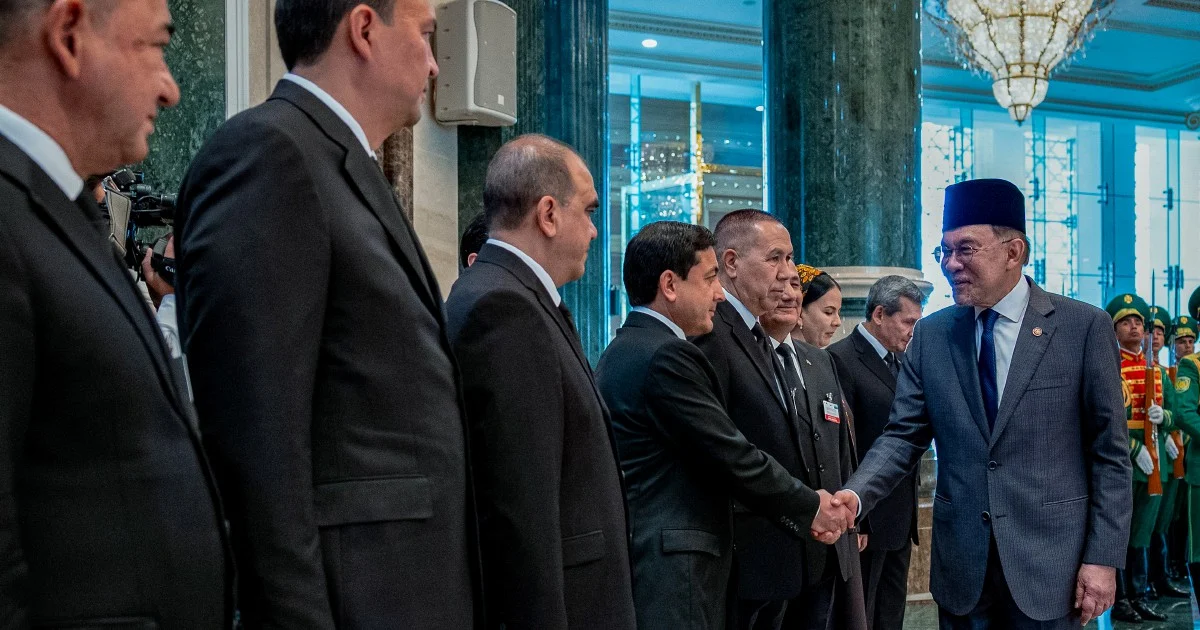
Prime Minister Datuk Seri Anwar Ibrahim's strategic overtures to the international community are garnering backing from observers who see his diplomatic initiatives as instrumental to expanding Malaysia's economic footprint during an era of pronounced geopolitical volatility. The Malaysian leadership's emphasis on cultivating stronger bilateral and multilateral relationships is increasingly viewed as a pathway to broadening the country's commercial horizons and attracting capital inflows at a time when many emerging markets face headwinds from rising tensions and trade friction between major powers.
Academic analysts point to the contemporary global environment as particularly conducive to a proactive diplomatic strategy. With established trading blocs becoming more insular and nations pursuing more nationalist economic policies, Malaysia stands to benefit from positioning itself as a reliable partner and neutral intermediary in international commerce. The nation's geographic location straddling major shipping lanes and its historical role as a regional trading hub reinforce the relevance of diplomatic engagement as a mechanism for preserving and expanding market access.
The administration's approach reflects recognition that in an increasingly multipolar world, smaller and mid-sized economies must be deliberate architects of their own strategic positioning. Rather than passively responding to external pressures, Malaysia's diplomatic machinery under Anwar's leadership has been actively cultivating relationships across diverse economic blocs, including engagement with traditional partners alongside emerging market economies and regional neighbours. This multifaceted strategy reduces the nation's vulnerability to any single geopolitical alignment while simultaneously creating multiple channels for trade expansion and investment attraction.
Trade and investment constitute fundamental pillars of Malaysia's development strategy, with exports representing a substantial portion of gross domestic product. By strengthening diplomatic foundations, the government creates an environment where Malaysian businesses encounter fewer barriers when entering foreign markets, while foreign investors gain greater confidence in the country's political stability and commitment to predictable governance. Both dynamics ultimately translate into sustained employment generation and broad-based economic growth across sectors ranging from manufacturing and technology to services and resource industries.
The timing of this diplomatic thrust carries particular significance given Malaysia's position in Southeast Asia and its role within various multilateral frameworks. As regional integration deepens through mechanisms like ASEAN economic initiatives and broader Indo-Pacific cooperation platforms, Malaysia's diplomatic effectiveness directly influences the nation's capacity to shape outcomes favourable to its economic interests. Observers note that proactive engagement allows Malaysian policymakers to participate meaningfully in rule-setting discussions rather than merely accepting externally-determined parameters.
Global supply chain reconfiguration represents another dimension where enhanced diplomatic relationships deliver tangible economic returns. Many multinational corporations are actively diversifying manufacturing bases away from established concentrations in anticipation of sustained trade tensions and geopolitical fragmentation. Malaysia's diplomatic outreach positioning the country as politically stable, legally transparent, and economically open creates openings for capturing portions of this investment reallocation—a prospect that could revitalise employment across multiple industrial clusters.
Domestic political considerations also undergird public support for the diplomatic agenda. Malaysians across different demographic segments recognize that economic performance fundamentally determines living standards, job prospects, and opportunities for upward mobility. A government demonstrating proactive engagement with international partners signals competence and forward thinking to both domestic audiences and foreign observers, thereby strengthening confidence in national institutions during periods when global uncertainty might otherwise provoke economic caution.
However, observers acknowledge that translating diplomatic goodwill into measurable economic gains requires complementary domestic reforms. Trade agreements remain theoretical unless supporting infrastructure, regulatory frameworks, and workforce capabilities align with commercial opportunities. The government's broader development strategy thus encompasses not only external engagement but simultaneous attention to education, digital infrastructure, and regulatory modernisation—elements that collectively determine whether diplomatic openings produce sustainable prosperity rather than ephemeral windfall gains.
The academic perspective converges on viewing Anwar's diplomatic framework as strategically appropriate for Malaysia's contemporary circumstances. Rather than representing mere ceremonial engagement, the international outreach constitutes a deliberate economic instrument calibrated to the realities of twenty-first century commerce and competition. As nations increasingly compete not primarily through military power but through attractiveness to investors, traders, and innovation, diplomatic effectiveness becomes inseparable from economic performance.
Looking forward, observers suggest that maintaining this diplomatic momentum while delivering credible economic results will prove essential to sustaining public confidence. Malaysians expect that enhanced international relationships translate eventually into expanded opportunities and improved material conditions. Whether the current diplomatic initiatives ultimately yield the anticipated dividends will likely determine both the government's political durability and the nation's competitive positioning within an evolving regional and global economic order.
%22%2F%3E%3C%2Fpattern%3E%3C%2Fdefs%3E%3Crect%20width%3D%22100%25%22%20height%3D%22100%25%22%20fill%3D%22url(%23ph5v20tg)%22%2F%3E%3Crect%20width%3D%22100%25%22%20height%3D%22100%25%22%20fill%3D%22url(%23ph5v20tp)%22%2F%3E%3Ctext%20x%3D%2250%25%22%20y%3D%2250%25%22%20text-anchor%3D%22middle%22%20dominant-baseline%3D%22central%22%20fill%3D%22rgba(255%2C255%2C255%2C0.95)%22%20font-family%3D%22Georgia%2C%20'Times%20New%20Roman'%2C%20serif%22%20font-weight%3D%22700%22%20font-size%3D%22170%22%20letter-spacing%3D%22-0.02em%22%3EMalaysia%3C%2Ftext%3E%3C%2Fsvg%3E)