%22%2F%3E%3C%2Fpattern%3E%3C%2Fdefs%3E%3Crect%20width%3D%22100%25%22%20height%3D%22100%25%22%20fill%3D%22url(%23ph5v20tg)%22%2F%3E%3Crect%20width%3D%22100%25%22%20height%3D%22100%25%22%20fill%3D%22url(%23ph5v20tp)%22%2F%3E%3Ctext%20x%3D%2250%25%22%20y%3D%2250%25%22%20text-anchor%3D%22middle%22%20dominant-baseline%3D%22central%22%20fill%3D%22rgba(255%2C255%2C255%2C0.95)%22%20font-family%3D%22Georgia%2C%20'Times%20New%20Roman'%2C%20serif%22%20font-weight%3D%22700%22%20font-size%3D%22170%22%20letter-spacing%3D%22-0.02em%22%3EMalaysia%3C%2Ftext%3E%3C%2Fsvg%3E)
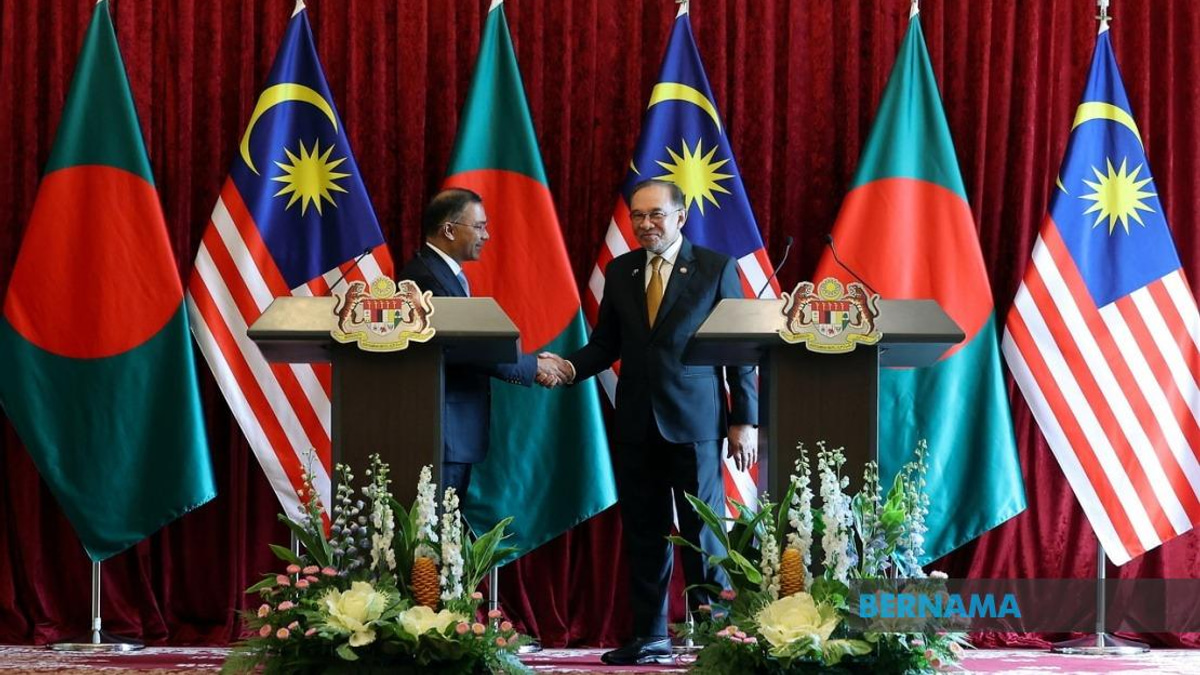
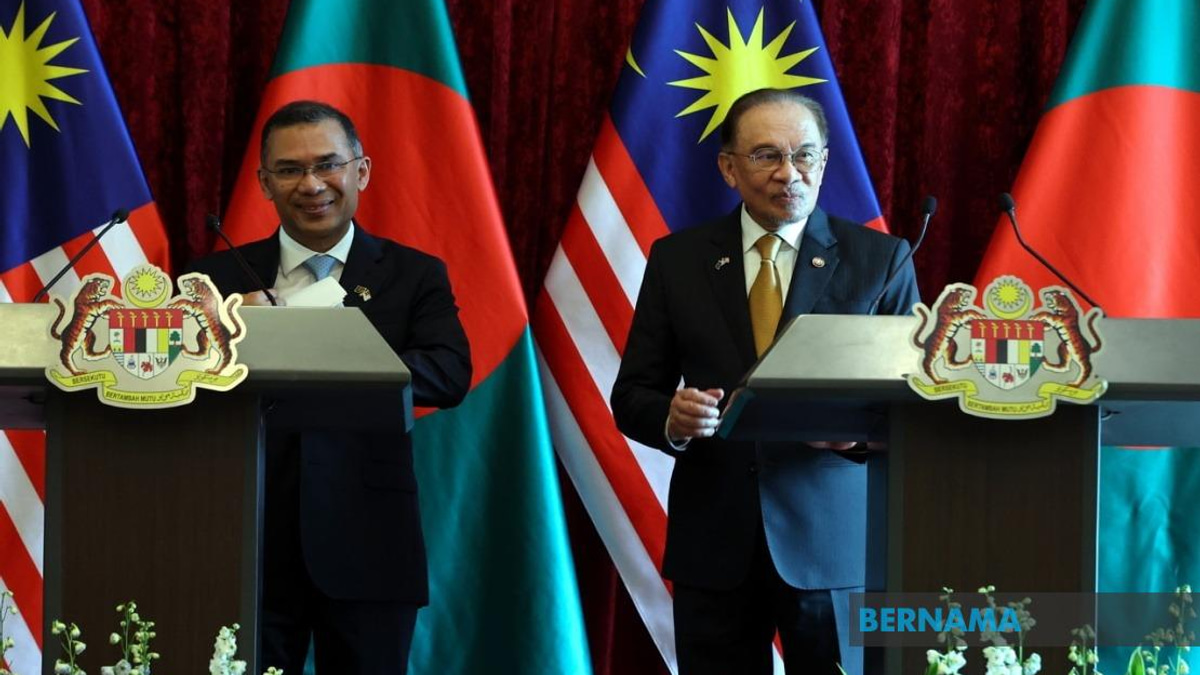
Prime Minister Datuk Seri Anwar Ibrahim has outlined an ambitious agenda to reshape Malaysia-Bangladesh relations by channelling joint efforts into frontier technologies and advanced industries. Speaking alongside visiting Bangladesh Prime Minister Tarique Rahman during a bilateral engagement in Putrajaya on June 22, Anwar stressed that the two nations must venture decisively beyond conventional commerce into artificial intelligence, energy infrastructure, and semiconductor production. The shift reflects both countries' recognition that long-term competitiveness depends on mastery of disruptive technologies rather than reliance on established sectoral strengths.
While agriculture has historically anchored the Malaysia-Bangladesh economic relationship, Anwar made clear that this foundation alone is insufficient for future prosperity. The pivot toward high-value sectors addresses a structural reality facing both nations: global supply chains are consolidating around artificial intelligence capabilities and advanced manufacturing ecosystems. Bangladesh, as a major garment and light-manufacturing hub, faces pressure to ascend the value chain, while Malaysia seeks to position itself as a regional technology centre. Investment will remain necessary, but Anwar emphasised that capital flows must now accompany deeper research partnerships and knowledge transfer in fields that will define the next decade of economic competition.
The prime minister's vision encompasses the entire spectrum of digital transformation. Semiconductors represent perhaps the most strategically significant target. Malaysia already hosts substantial chip manufacturing and design operations, while Bangladesh possesses a young, educated workforce and mounting technical expertise. A coordinated approach could allow Malaysia to deepen its position as a semiconductor hub whilst Bangladesh develops complementary capabilities in testing, assembly, and research. Energy collaboration carries equally weighty implications. Both countries face mounting electricity demand as populations grow and economies industrialise. Renewable energy, grid modernisation, and potentially nuclear technology represent mutual interests where cooperation could yield shared benefits and reduce respective dependencies on fossil fuel imports.
The artificial intelligence dimension merits particular attention for regional observers. Southeast Asia lags far behind China and the West in AI infrastructure development and talent concentration. Malaysia and Bangladesh working in concert on AI research, talent development, and application-focused innovation could help redress this imbalance. The collaboration might encompass establishing joint research institutes, facilitating researcher exchanges, and identifying sectors where AI can unlock productivity gains—agriculture, healthcare, and financial services among them. Both nations possess populations large enough to generate training datasets and test markets for AI applications tailored to South and Southeast Asian contexts.
Formalising these ambitions, the two premiers witnessed the signing of several binding instruments. A Memorandum of Understanding on Cultural Cooperation was exchanged, alongside two Exchanges of Notes covering Counter-Terrorism Research and Investment Promotion and Facilitation. These agreements create institutional frameworks through which the technological collaboration outlined by Anwar can be operationalised. The Counter-Terrorism Research agreement particularly signals mutual recognition that security challenges in the region demand coordinated approaches, whilst the Investment Promotion instrument removes potential obstacles to cross-border capital deployment in the newly prioritised sectors.
Tarique Rahman's two-day official visit to Malaysia represents a significant diplomatic moment for bilateral relations. Bangladesh, as South Asia's second-most populous country and a rising manufacturing economy, holds strategic importance for Malaysia's regional positioning. The visit demonstrates Kuala Lumpur's commitment to strengthening Southeast Asian and South Asian linkages—a geopolitical priority given competing great-power influence in the region. For Bangladesh, deepening technological partnerships with Malaysia offers pathways into advanced manufacturing networks and provides access to Malaysian expertise in semiconductor and energy sectors.
The timing of this expanded cooperation reflects broader regional currents. The U.S.-China technological competition is driving nations across Asia to develop independent capacities in critical technologies. Neither Malaysia nor Bangladesh wishes to remain purely dependent on external suppliers for semiconductors, artificial intelligence platforms, or energy infrastructure. By collaborating, they can build some degree of self-sufficiency while maintaining access to global knowledge networks. This rationale extends beyond mere economics—technological sovereignty increasingly underpins political autonomy in an interconnected world.
For Malaysian businesses, the Bangladesh market represents significant opportunity. Bangladesh's population exceeds 170 million, with growing middle-class purchasing power and rising consumption of technology products and services. Malaysian firms possessing expertise in semiconductor manufacturing, renewable energy solutions, and digital infrastructure could find substantial demand. Conversely, Bangladesh offers access to a large, cost-competitive workforce that could support Malaysian companies' manufacturing operations, particularly in labour-intensive segments of semiconductor assembly or advanced manufacturing.
The semiconductor focus carries particular weight given global supply-chain vulnerabilities exposed in recent years. Taiwan's dominance in advanced chip production creates strategic risks for the entire region. Malaysia, home to significant semiconductor packaging, testing, and design facilities, could serve as a diversification node in regional supply chains. Bangladesh's growing technical education system and labour availability make it a logical partner in this ecosystem. Joint ventures or technology-sharing arrangements could strengthen both economies whilst contributing to supply-chain resilience across Asia.
Energy cooperation touches upon perhaps the most pressing challenge facing both nations. Bangladesh's power generation capacity struggles to keep pace with demand growth, constraining industrial expansion and living standards improvement. Malaysia possesses experience in liquefied natural gas trading, renewable energy development, and grid management that Bangladesh could leverage. Conversely, Bangladesh's geographic position on major maritime routes gives it strategic importance in regional energy trade networks. Collaboration on clean energy transition—critical for both countries' climate commitments—could accelerate technology adoption and cost reduction through shared investment and expertise.
The agreements signed during this visit amount to more than diplomatic niceties. They represent tangible commitments to reorient bilateral engagement toward sectors determining long-term competitiveness. Counter-terrorism research cooperation, though less glamorous than semiconductor partnerships, addresses real security challenges both nations confront. The Investment Promotion and Facilitation agreement removes procedural impediments to capital flows, essential for translating aspirations into functioning joint ventures and research collaborations. These practical instruments will determine whether the technological vision outlined by both leaders materialises into concrete outcomes.
Moving forward, success will depend on sustained commitment beyond the bilateral summit. Governments must allocate resources to establishing research institutes, funding exchange programmes, and creating regulatory pathways for cross-border technology transfer. The private sector must identify specific opportunities within the broad sectors identified and initiate commercial partnerships. Educational institutions in both countries could develop joint programmes preparing graduates for careers in semiconductors, AI, and energy sectors. Without such implementation mechanisms, even carefully negotiated agreements risk remaining merely aspirational.
The Malaysia-Bangladesh partnership expansion reflects a broader recognition across Southeast Asia that prosperity requires technological advancement and regional collaboration. Neither nation acting alone can compete effectively in artificial intelligence or semiconductor manufacturing against entrenched international players. Working together, they can develop complementary capabilities, share research costs, and build markets large enough to support competitive industries. This model of deepening bilateral ties through technology cooperation, if extended more broadly across the region, could help Southeast Asia and South Asia collectively enhance technological self-sufficiency whilst maintaining openness to international collaboration.
%22%2F%3E%3C%2Fpattern%3E%3C%2Fdefs%3E%3Crect%20width%3D%22100%25%22%20height%3D%22100%25%22%20fill%3D%22url(%23pht1b2g)%22%2F%3E%3Crect%20width%3D%22100%25%22%20height%3D%22100%25%22%20fill%3D%22url(%23pht1b2p)%22%2F%3E%3Ctext%20x%3D%2250%25%22%20y%3D%2250%25%22%20text-anchor%3D%22middle%22%20dominant-baseline%3D%22central%22%20fill%3D%22rgba(255%2C255%2C255%2C0.95)%22%20font-family%3D%22Georgia%2C%20'Times%20New%20Roman'%2C%20serif%22%20font-weight%3D%22700%22%20font-size%3D%22136%22%20letter-spacing%3D%22-0.02em%22%3EBangladesh%3C%2Ftext%3E%3C%2Fsvg%3E)