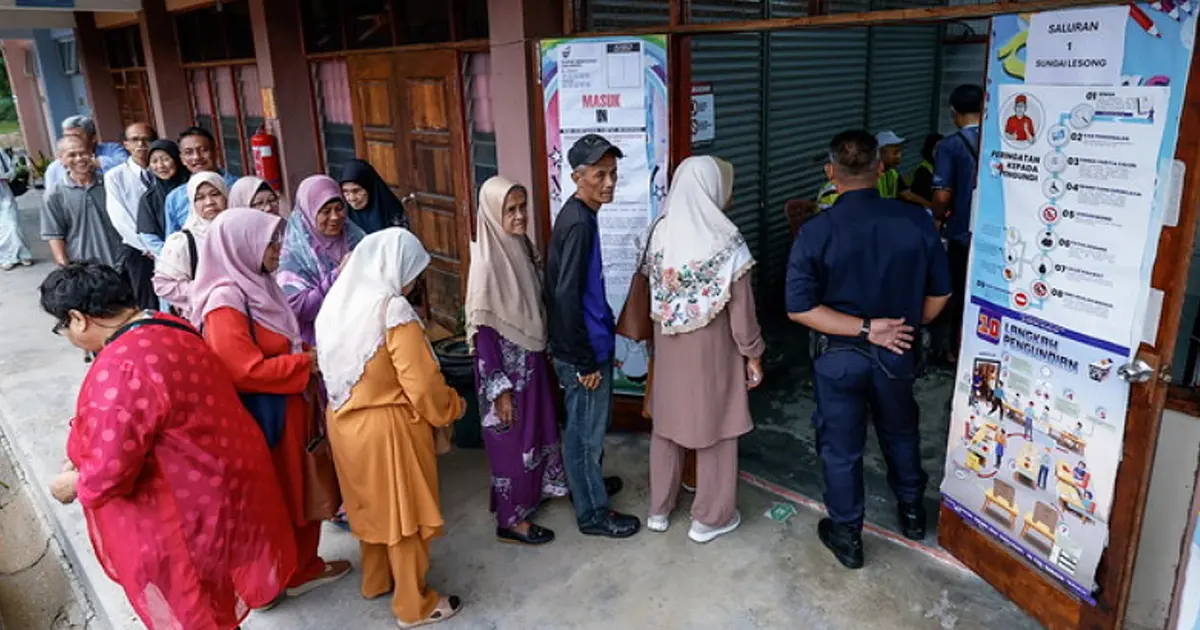
Political parties risk overwhelming Malay voters with fatigue from endless debates over religious doctrine and racial identity if they do not shift focus to practical governance, according to a senior academic observer of Malaysian politics. The relentless cycle of controversy surrounding the so-called 3R issues—religion, race, and royalty—threatens to disconnect electoral messaging from the real concerns dominating household conversations across the country, argues Awang Azman Pawi, a political analyst at Universiti Malaya.
At the core of this warning lies a fundamental insight about voter behaviour that extends beyond traditional demographic analysis. Malay voters, like their counterparts in other communities, are increasingly fatigued by political narratives that emphasise identity-based grievances and symbolic struggles rather than addressing concrete economic hardship. The proliferation of contentious discussions surrounding these three pillars has created an environment where political parties compete primarily on rhetorical positioning rather than substantive policy delivery. This dynamic threatens to alienate voters who expect their elected representatives to solve immediate problems rather than relitigate settled cultural and institutional questions.
The cost-of-living crisis presents perhaps the most urgent example of this disconnect. Malaysian households across all communities have struggled with inflation affecting food, fuel, transportation, and housing costs. These material concerns touch every family daily and shape voting decisions more directly than abstract discussions about constitutional protections or religious authority. When political discourse becomes dominated by identity-focused rhetoric, voters perceive a mismatch between campaign messaging and their actual lived experience. This gap breeds cynicism about political sincerity and disengagement from the electoral process itself.
Awang Azman's analysis suggests that political parties will ultimately be evaluated by their track record in addressing these tangible challenges. A party's ability to demonstrate concrete improvements in household finances, employment opportunities, and social services carries more weight with voters than its rhetorical strength on identity matters. Performance metrics—whether inflation has stabilised, whether wages have grown in real terms, whether healthcare and education have improved—provide clearer measures of competence than speeches about historical injustices or constitutional prerogatives. Voters make rational calculations about which party can deliver material improvements, and repeated failures on these fronts cannot be compensated for through emotionally resonant 3R messaging.
The emotional fatigue phenomenon itself warrants deeper examination. When political messaging becomes predictably anchored to the same identity-based themes across multiple election cycles, voters develop psychological resistance to that narrative. The emotional intensity that initially motivated political engagement gradually becomes exhaustion, as audiences hear similar arguments repeated without substantive resolution. This process mirrors broader patterns observed in global politics, where identity-focused campaigns eventually lose their mobilising power as voters seek fresh approaches and tangible solutions.
For Malay-majority constituencies specifically, this fatigue may reshape electoral calculations in unexpected ways. Voters might increasingly reward parties that combine acknowledgment of identity concerns with credible economic management, rather than those offering identity appeals in isolation. A party demonstrating both cultural authenticity and economic competence would differentiate itself from competitors relying solely on identity rhetoric. This represents a strategic opportunity for parties willing to broaden their appeal beyond narrow identity positioning.
The implications extend throughout Malaysia's political ecosystem. Parties that fail to address voter fatigue by shifting resources toward economic policy development risk losing electoral momentum despite strong performance on identity issues. Conversely, parties that ignore 3R matters entirely will be punished for perceived insensitivity. The challenge lies in achieving genuine balance—acknowledging identity concerns without allowing them to dominate party messaging and campaign resources to the exclusion of economic policy innovation.
Regional context amplifies these dynamics. Throughout Southeast Asia, voters in various countries have signalled decreasing tolerance for identity-based political campaigns divorced from economic delivery. Thailand, Indonesia, and the Philippines have all witnessed electoral shifts toward parties promising practical governance despite weaker identity credentials. Malaysian voters may follow similar patterns if major parties continue prioritising rhetorical battles over substantive policy engagement.
The academic's analysis also reflects changing generational attitudes. Younger Malay voters, while maintaining cultural and religious commitments, often prioritise different policy priorities than their parents. Employment security, housing affordability, and education quality frequently rank above abstract identity concerns in surveys of voting intentions. This generational shift creates pressure on political parties to evolve their messaging frameworks and allocation of campaign resources. Parties that fail to adapt risk appearing increasingly disconnected from evolving voter priorities.
Moving forward, success in Malaysian politics may depend less on who articulates 3R concerns most powerfully and more on who convinces voters that their government genuinely addresses cost-of-living pressures and economic opportunity. This requires not merely rhetorical acknowledgment but demonstrable policy action—concrete measures reducing inflation, expanding employment, and improving service delivery. Without such results, emotional fatigue with identity-focused messaging will likely intensify, reshaping electoral competition in ways unpredictable through traditional identity-based analysis.
%22%2F%3E%3C%2Fpattern%3E%3C%2Fdefs%3E%3Crect%20width%3D%22100%25%22%20height%3D%22100%25%22%20fill%3D%22url(%23ph5v20tg)%22%2F%3E%3Crect%20width%3D%22100%25%22%20height%3D%22100%25%22%20fill%3D%22url(%23ph5v20tp)%22%2F%3E%3Ctext%20x%3D%2250%25%22%20y%3D%2250%25%22%20text-anchor%3D%22middle%22%20dominant-baseline%3D%22central%22%20fill%3D%22rgba(255%2C255%2C255%2C0.95)%22%20font-family%3D%22Georgia%2C%20'Times%20New%20Roman'%2C%20serif%22%20font-weight%3D%22700%22%20font-size%3D%22170%22%20letter-spacing%3D%22-0.02em%22%3EMalaysia%3C%2Ftext%3E%3C%2Fsvg%3E)