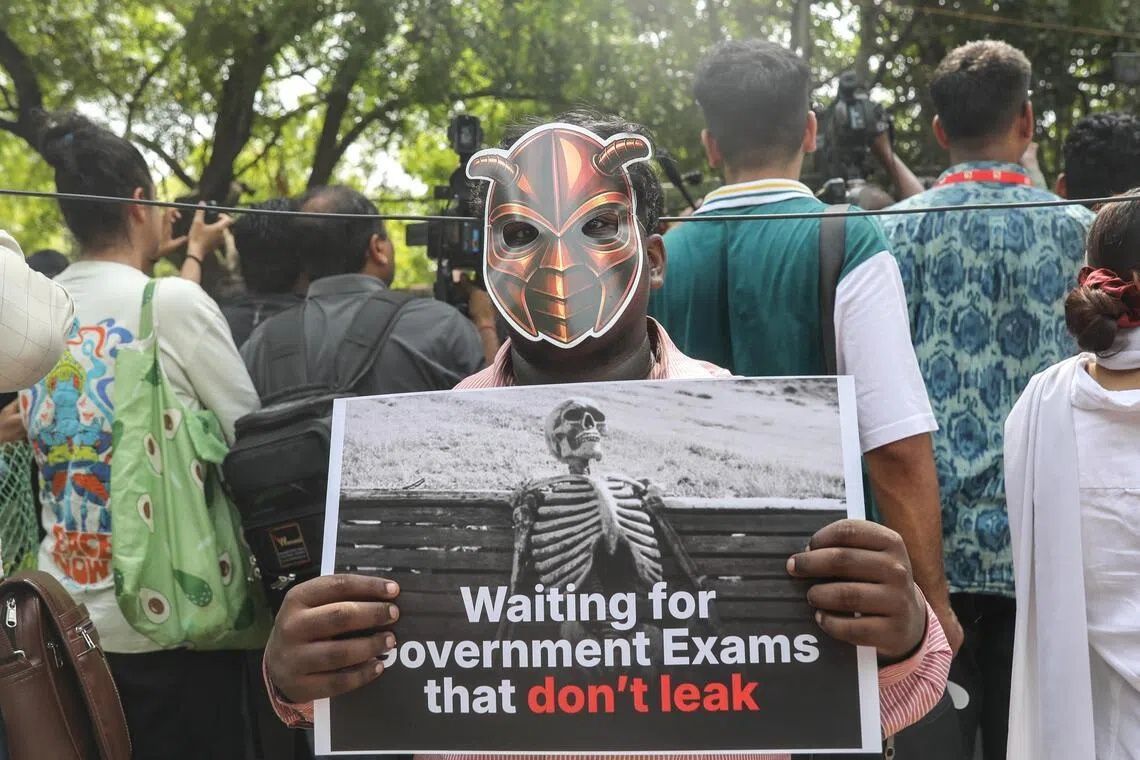
India faces a critical moment in its education system as 2.2 million aspiring medical students prepare to sit for a re-examination on Sunday, June 21, under extraordinary security arrangements following one of the country's most significant exam scandals in recent years. The original test was invalidated after paper leaks exposed fundamental vulnerabilities in the examination process, prompting an explosion of public anger that has reverberated across the nation's education sector and into the political sphere.
The National Eligibility cum Entrance Test, commonly known as NEET, serves as the sole gateway through which candidates compete for approximately 100,000 undergraduate medical seats across India's colleges and universities. The sheer scale of this examination—with millions of students vying for a limited number of places—has transformed it into one of the world's most intensely competitive academic hurdles. This ultra-competitive environment has inadvertently created fertile ground for corruption, spawning a sprawling coaching industry and enabling organised networks to monetise exam fraud through systematic paper leaks and other malpractices.
The authorities have responded to the crisis by mobilising an unprecedented security infrastructure. More than 200,000 officials, including police personnel, have been deployed across examination centres nationwide. The National Testing Agency has implemented what it describes as a "multi-layered security framework" combining biometric authentication systems, artificial intelligence-enabled camera surveillance, and GPS tracking technology for question papers. Additionally, authorities have restricted access to the Telegram messaging application, which they claim had become a primary conduit for cheating networks to disseminate leaked examination questions to candidates.
However, the efficacy of these measures remains questioned by experts and observers familiar with organised exam fraud networks. Pavel Durov, the head of Telegram, publicly challenged the effectiveness of banning his platform, contending that restricting a single application would prove ineffectual because "leaks just moved to other apps." He pointed to the deeper structural problem: the insider threat posed by individuals within the examination system itself who have access to sensitive materials. This observation underscores a critical vulnerability that technological solutions alone cannot address—the human element within institutions tasked with maintaining examination integrity.
The fallout from the examination breach has extended far beyond institutional disappointment. Multiple suicides among teenagers have been reported in Indian media, reflecting the profound psychological toll exerted by examination failure in a society where academic performance carries exceptional weight in determining career trajectories and social standing. These tragic outcomes galvanised parents and students into vocal action, transforming private frustration into public demonstrations demanding accountability from education authorities and political leadership.
The crisis has intensified pressure on Education Minister Dharmendra Pradhan, with young people and their parents organising protests calling for his resignation. The anger has even manifested in unexpected cultural phenomena: a satirical movement called the "Cockroach People's Party" emerged in May and swiftly accumulated millions of followers on social media, channelling public frustration into sharp political commentary and sustained demands for ministerial accountability.
Compounding the chaos in India's examination ecosystem is a parallel controversy involving the online marking system deployed for high school examinations taken by nearly two million students. This system has been beset by errors, with widespread allegations that candidates received incorrect grades or that results were assigned to wrong individuals. These concurrent failures in different examination systems at different educational levels have created a cumulative crisis of confidence in India's testing infrastructure, suggesting systemic problems rather than isolated incidents.
The investigation into the paper leak has yielded arrests, with India's Central Bureau of Investigation identifying and apprehending the alleged orchestrator of the fraud scheme—a chemistry lecturer who operated at the nexus between insider access and external distribution networks. This arrest demonstrates that the conspiracy involved individuals positioned within educational institutions, validating concerns about how institutional vulnerabilities can be weaponised by those with privileged access.
For Southeast Asian observers, India's examination crisis carries sobering implications. Multiple countries in the region operate similarly centralised, high-stakes examination systems determining access to elite educational pathways. The scale and sophistication of fraud networks that infiltrated India's testing system—exploiting messaging applications, corrupting insiders, and leveraging coaching industry connections—represent methods and vulnerabilities that could potentially emerge in regional systems. The incident underscores the necessity for rigorous institutional safeguards, regular security audits, and accountability mechanisms before crises emerge.
The retesting process, beginning at 2pm local time on Sunday, represents both a practical reset and a political test for Indian authorities. Success in conducting a secure examination without further leaks would restore confidence in the National Testing Agency's capacity to manage one of the world's largest testing operations. Failure would deepen the legitimacy crisis already engulfing India's education administration and likely precipitate more significant structural reforms. The enhanced security measures, while comprehensive, must ultimately prove effective against determined, well-resourced networks that have already demonstrated their capacity to penetrate supposedly secure systems. The coming examination will reveal whether technological solutions and institutional restructuring can effectively counter the human vulnerabilities that enabled the original scandal.