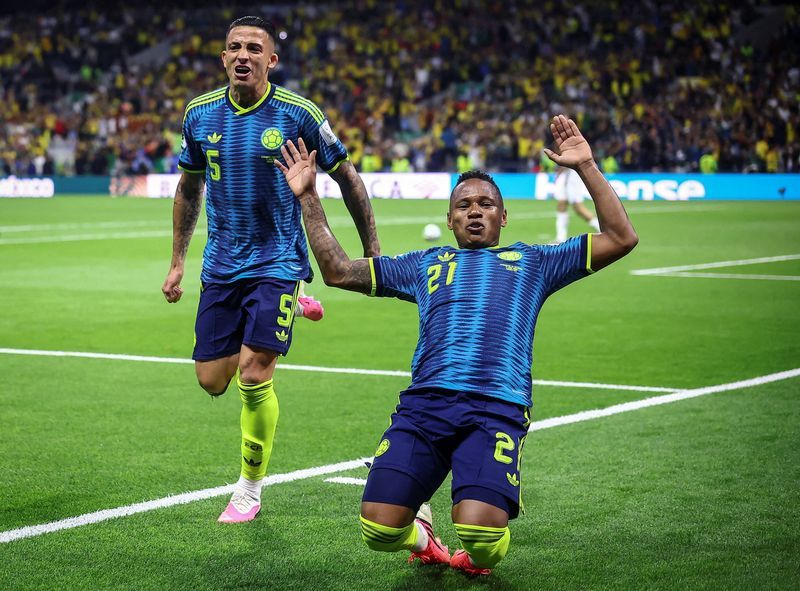
Colombia will attempt to capitalise on their opening-match momentum when they meet DR Congo on Tuesday, looking to extend their unbeaten record in Group K and edge closer to knockout-stage qualification. Nestor Lorenzo's side cannot afford complacency, however, having discovered during their 3-1 triumph over Uzbekistan that their defensive structure remains a work in progress despite the convincing scoreline.
The South American outfit began their campaign in assured fashion, with Bayern Munich's Luis Diaz providing the cutting edge that proved too much for Uzbekistan to handle. Diaz's combination of pace, directness, and finishing quality—he scored once and assisted another—earned him the player-of-the-match accolade and placed him at the centre of Colombia's attacking philosophy. Yet this reliance on individual brilliance masks deeper concerns that Lorenzo will have identified during the tournament's preparation phase. Colombia's second-half performance against Uzbekistan exposed gaps in their defensive organisation that a more threatening opponent could readily exploit, raising questions about their capacity to sustain excellence against higher-calibre competition.
A victory against DR Congo would mathematically secure Colombia's passage to the Round of 32, while simultaneously positioning them favourably for top spot in their group, particularly if Portugal slip up against Uzbekistan in their concurrent fixture. This presents an ideal scenario, as it would reduce pressure during their final group encounter and afford Lorenzo the opportunity to manage squad rotation should injuries or fatigue become considerations. The mathematics of group-stage football, however, should not distract from the immediate challenge at hand.
Captain James Rodríguez, despite his status as the group's most decorated player, played a peripheral role during the Uzbekistan encounter. Lorenzo's tactical setup, which heavily leveraged Diaz's attributes, occasionally marginalised Rodríguez's playmaking capabilities and creative influence. If Colombia are to mount a sustained tournament challenge, they will require greater contribution from their captain, who possesses the technical sophistication and experience to unlock defences through vision and precision rather than solely through explosive athleticism. Against a DR Congo side likely to adopt a compact, defensive-minded approach, Rodríguez's craft may prove more valuable than the direct approach that succeeded against Uzbekistan.
DR Congo arrive at this encounter emboldened by circumstances that few anticipated before the tournament commenced. Their 1-1 draw against Portugal—a nation ranked among the tournament favourites—represents a genuine scalp and demonstration of their competitive credentials. The Central African nation, returning to the World Cup for the first time since 1974 when they competed as Zaire, has already transcended the status of mere participant and established themselves as a potential disruptive force. Yoane Wissa's opening goal carried profound symbolic weight, marking the nation's return to the World Cup stage with a meaningful contribution rather than a ceremonial presence.
Sebastien Desabre's tactical blueprint against Portugal centred on defensive organisation and the strategic deployment of transitions. Rather than attempting to dominate possession or press aggressively in advanced areas, DR Congo compressed their shape, maintained defensive shape, and capitalised on opportunities to launch quick counter-attacks through long balls and direct play. This approach forced Portugal to take risks in their attacking construction, creating spaces that Desabre's squad effectively exploited. Against Colombia, who parade substantially greater attacking firepower than Uzbekistan and comparable technical quality to Portugal, DR Congo will almost certainly replicate this template.
Lorenzo has publicly acknowledged the tactical complexity that DR Congo's style will impose. The Colombian coach recognised that while his side dominated possession against Uzbekistan, this superiority occasionally proved counterproductive, with excessive sideways and backward passing disrupting the rhythm of attacking sequences. Clinicality in the final third emerged as another deficiency, with numerous promising positions failing to translate into clear-cut opportunities. These are correctable issues, yet they represent vulnerabilities that an opponent as organised and transition-focused as DR Congo will deliberately target.
The Argentine coach's strategic concern centres on Colombia's requirement to simultaneously control the game while remaining defensively vigilant against swift counter-attacks. His team must improve their efficiency in possession, converting periods of dominance into tangible attacking rewards rather than allowing momentum to dissipate through imprecise final passes. Defensively, they must tighten their backline to eliminate the gaps that Uzbekistan occasionally exploited, thereby reducing DR Congo's opportunities for devastating transitions.
Geographical advantage will bolster Colombia's effort, as thousands of supporters have already transformed Mexico City into an unofficial home venue. The Estadio Azteca's atmosphere during their opener proved remarkably pro-Colombian, with the yellow-shirted contingent creating an environment that psychological research suggests can measurably impact team performance. Colombia's tournament base in Guadalajara positions them to draw another substantial crowd, potentially replicating the home-ground advantage experienced during their opening fixture. This intangible factor, while not determinative, can provide marginal advantages in crucial moments.
DR Congo's success against Portugal demonstrates that respectable results remain achievable even for nations considered relative underdogs, provided tactical discipline and organisational cohesion supersede individual technical advantages. Colombia possess superior individual talent and greater tournament experience, yet DR Congo have already proven capable of troubling elite opposition. The match presents a fascinating chess match between Colombian ambition and Congolese organisation, with the outcome likely determined by whether Colombia can harness their attacking superiority while neutralising the counter-attacking threat that has already impressed observers and captured imaginations across the tournament.
%22%2F%3E%3C%2Fpattern%3E%3C%2Fdefs%3E%3Crect%20width%3D%22100%25%22%20height%3D%22100%25%22%20fill%3D%22url(%23ph1f6pzg)%22%2F%3E%3Crect%20width%3D%22100%25%22%20height%3D%22100%25%22%20fill%3D%22url(%23ph1f6pzp)%22%2F%3E%3Ctext%20x%3D%2250%25%22%20y%3D%2250%25%22%20text-anchor%3D%22middle%22%20dominant-baseline%3D%22central%22%20fill%3D%22rgba(255%2C255%2C255%2C0.95)%22%20font-family%3D%22Georgia%2C%20'Times%20New%20Roman'%2C%20serif%22%20font-weight%3D%22700%22%20font-size%3D%22151%22%20letter-spacing%3D%22-0.02em%22%3EPerikatan%3C%2Ftext%3E%3C%2Fsvg%3E)