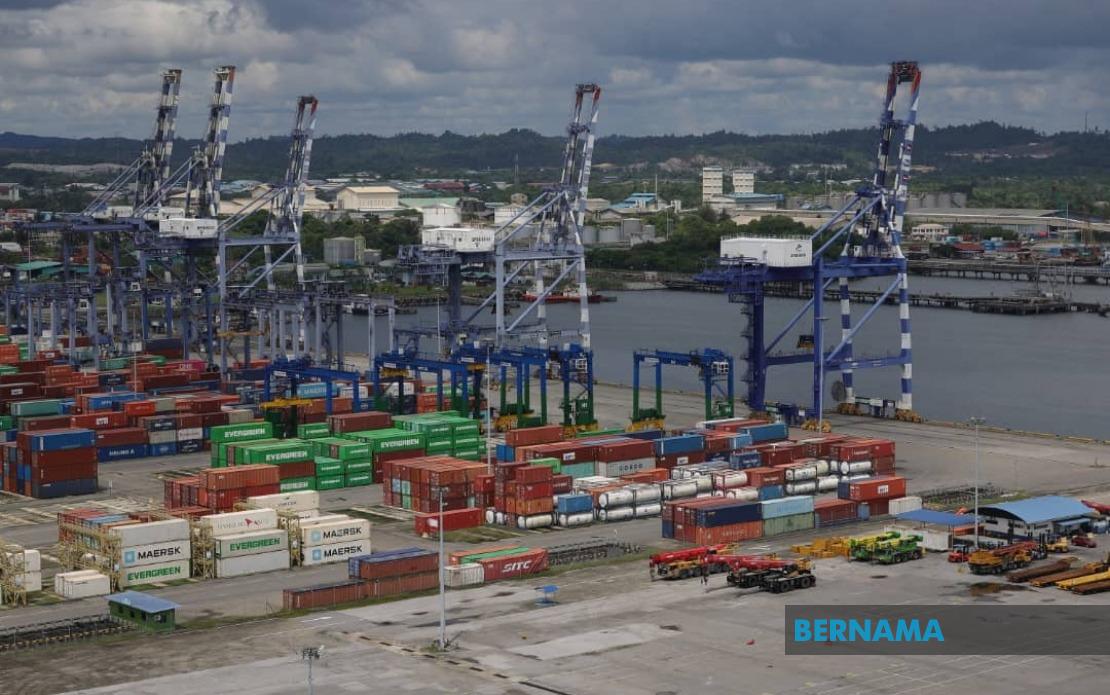
In a ceremony held in Bintulu today, Prime Minister Datuk Seri Anwar Ibrahim and Sarawak Premier Tan Sri Abang Johari Tun Openg oversaw the formal handover of regulatory authority for Bintulu Port from federal to state jurisdiction, signalling a substantive step forward in the realisation of the Malaysia Agreement 1963 (MA63). According to Minister in the Prime Minister's Department (Sabah and Sarawak) Datuk Mustapha Sakmud, this transfer represents one of the most tangible gains yet achieved through the implementation framework, tangibly acknowledging Sarawak's constitutional standing as a founding member of the Malaysian federation.
The significance of this development extends well beyond administrative reorganisation. By ceding control of one of the nation's most strategically important ports, the Federal Government has effectively endorsed a broader interpretation of MA63 that elevates state autonomy in critical economic infrastructure. The port, long regarded as Malaysia's premier liquefied natural gas export facility, now falls within Sarawak's direct stewardship, allowing the state to pursue its own commercial and developmental objectives without federal intermediation. This represents a meaningful recalibration of the federal-state relationship in the context of Malaysia's founding compact.
Mustapha framed the handover as evidence that MA63 implementation need not constitute a zero-sum diminishment of central authority. Rather, he contended, the process strengthens the Malaysian federation by restoring and honouring the explicit constitutional rights granted to Sabah and Sarawak upon their entry into Malaysia. This rhetorical positioning is politically significant, as it seeks to assuage any federal bureaucratic or political concerns that devolution amounts to state aggrandisement at Putrajaya's expense. The government's messaging suggests that institutional recognition of state rights, properly conceived, fortifies rather than fractures the union.
The economic implications of the transfer warrant careful attention for the broader Southeast Asian region. Bintulu Port has functioned primarily as an LNG export hub, a role that positioned it within narrow commodity-export parameters. Under state control, however, the port is being reimagined as a multi-purpose regional node for industrial development, logistics coordination, and—critically—green energy transition. This strategic repositioning reflects Sarawak's aspirations to leverage its abundant hydroelectric resources and renewable energy potential as competitive advantages in attracting multinational investment seeking low-carbon operational footprints.
Sarawak's renewable energy endowment, particularly its substantial hydroelectric capacity, creates compelling synergies with the port's transformed mandate. Companies committed to decarbonising supply chains and manufacturing processes face mounting pressure from global capital markets and institutional investors to source inputs and conduct operations using renewable electricity. Bintulu, now positioned as a state-controlled facility capable of offering port services powered by renewable generation, becomes an increasingly attractive node within regional supply chains oriented toward climate-conscious production. This competitive positioning has implications extending far beyond Sarawak's borders, as it represents a potential reorientation of Malaysia's role within Asia-Pacific trade networks.
The handover also carries deeper constitutional meaning for Malaysia's founding structure. When Sabah and Sarawak joined the federation in 1963, their participation was premised partly on guarantees of substantial state autonomy and control over natural resource management. Decades of federal administrative practice have sometimes obscured these commitments. The MA63 implementation process, of which Bintulu Port represents a high-profile symbol, constitutes a conscious effort to restore constitutional practice to alignment with constitutional promise. For Malaysian readers, particularly those in East Malaysia, this carries profound significance as vindication of grievances dating to independence.
From a regional perspective, the transfer also signals Malaysia's internal evolution toward greater subsidiarity in economic governance. As Southeast Asian nations compete for foreign direct investment, particularly in advanced manufacturing and clean energy sectors, the ability to project unified yet flexible policy frameworks becomes increasingly valuable. By demonstrating that Malaysia can devolve significant economic assets to state partners while maintaining federal coherence, the country sends a message to global investors that it can accommodate diverse operational models and jurisdictional requirements. This flexibility may prove advantageous as companies seek multiple locations and supply chain nodes across the region.
The timing of this announcement, coupled with the visible participation of the Prime Minister himself, underscores the political capital the federal government is investing in MA63 implementation. Previous administrations treated the agreement as a settled historical matter requiring minimal active engagement. The current government's approach suggests recognition that consolidating Malaysia's federation requires ongoing, visible commitment to honouring its founding partners' legitimate aspirations. This represents a departure from earlier governance patterns and potentially signals a longer-term recalibration of federal priorities.
For investors monitoring Sarawak's development trajectory, the port handover offers clarification regarding the state's institutional capacity and political commitment to autonomous economic development. Rather than remaining subject to federal port authority decisions, Sarawak can now make sovereign determinations about port services, fee structures, infrastructure investment, and commercial partnerships. This autonomy, combined with abundant renewable energy and strategic geographic position, positions the state as a coherent platform for industrial operations targeting Southeast Asian and broader Asia-Pacific markets.
The broader MA63 implementation agenda of which this transfer forms part remains substantially incomplete, with numerous issues—including resource rights, educational autonomy, and immigration jurisdiction—still subject to ongoing negotiations and potential further handovers. However, the Bintulu Port transfer demonstrates that when political will aligns with constitutional principle, meaningful progress becomes achievable. For other Malaysian states observing federal-state relations, the transfer also illustrates what structured implementation of constitutional commitments can accomplish when pursued deliberately and with high-level political backing.
Looking forward, the success or failure of this transition in delivering enhanced economic outcomes for Sarawak will substantially influence both future MA63 implementation efforts and broader perceptions of federalism in Malaysia. Should state management of the port facilitate new investment, expand industrial activity, and strengthen Sarawak's regional economic position, the precedent will strengthen arguments for further state devolution across other portfolios. Conversely, implementation challenges could dampen enthusiasm for continued transfers. The stakes associated with this transition therefore extend well beyond Bintulu itself.