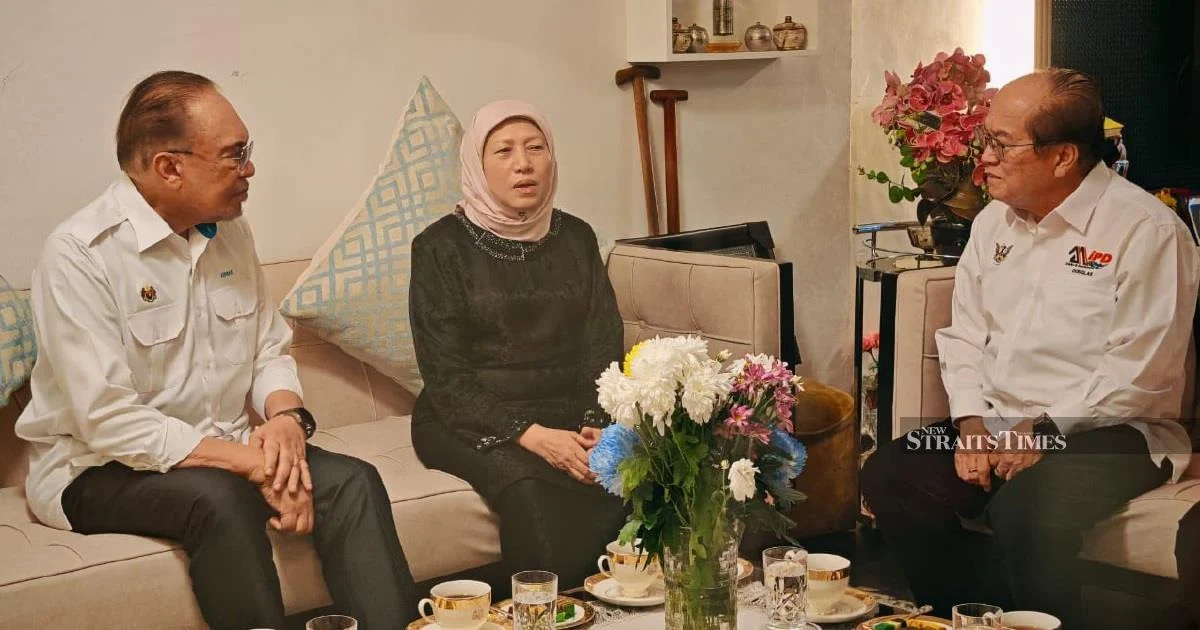
Prime Minister Datuk Seri Anwar Ibrahim made a personal trip to Kuching to console Women, Family and Community Development Minister Datuk Seri Nancy Shukri following the recent death of her spouse, Datuk Kamil Misuari. The visit underscores the close-knit nature of Malaysia's political leadership and the customary practice of senior government figures acknowledging personal losses affecting cabinet members and their families.
Such gestures of solidarity are particularly significant within the Malaysian political framework, where personal relationships and expressions of sympathy hold considerable weight beyond their ceremonial function. The Prime Minister's willingness to travel specifically for this purpose demonstrates the value placed on maintaining ministerial morale and showing institutional support during challenging personal circumstances. Nancy Shukri, who holds a critical portfolio overseeing women's welfare, family services, and community development initiatives, has been instrumental in championing policies affecting Malaysian households and vulnerable populations.
The condolence visit reflects broader cultural and religious traditions deeply embedded in Malaysian society, where immediate expressions of sympathy from senior figures carry substantial meaning for grieving families and their extended networks. In a multi-ethnic and multi-faith nation like Malaysia, such visits transcend political boundaries and serve as important moments of human connection within the demanding environment of high office. These gestures often provide comfort not merely through words but through the symbolic weight of official acknowledgment during vulnerable periods.
Minister Shukri's continued role within the cabinet, even amidst personal tragedy, highlights the demanding nature of ministerial positions and the resilience required of those serving in government. The Women, Family and Community Development Ministry is responsible for numerous programmes, policies, and regulatory frameworks that directly impact millions of Malaysian families across socioeconomic divides. Her portfolio encompasses child welfare, domestic support services, elderly care coordination, and community empowerment initiatives that have become increasingly important as Malaysian society navigates evolving family structures and social challenges.
Prime Minister Anwar's administration has emphasised cohesion within the cabinet and supportive mechanisms for ministers navigating personal difficulties while maintaining public responsibilities. This reflects a conscious effort to foster an environment where public servants feel valued as individuals rather than merely as functional positions within government machinery. The approach aligns with the Prime Minister's broader messaging around inclusive governance and acknowledging the human dimensions of political leadership.
The incident also provides a moment to recognise the often-unseen personal costs of public service, where ministers must balance private grief with public obligations. Cabinet members frequently face situations where personal emergencies coincide with critical policy deadlines or legislative requirements, demanding considerable emotional fortitude. The visible support of the Prime Minister can provide tangible reassurance and practical flexibility that allows grieving officials to manage both their personal circumstances and their governmental duties.
Nancy Shukri's ministerial position has positioned her at the forefront of several significant policy discussions affecting Malaysian women and families, including issues surrounding childcare accessibility, women's economic participation, and protection of vulnerable populations. Her ministry has worked on multiple fronts addressing contemporary family dynamics, including expanded support for single parents, enhanced welfare provisions, and community outreach programmes. The loss of a spouse creates not only personal hardship but potentially affects the time and energy available for such important portfolio responsibilities.
The relationship between political leaders in Malaysia often extends beyond formal government structures into personal networks that recognise life's inevitable difficulties and tragedies. While politics frequently dominates public discourse surrounding ministers, these quieter moments of institutional compassion reveal different dimensions of governance and leadership philosophy. The Prime Minister's decision to prioritise a condolence visit suggests a leadership model that acknowledges emotions and personal circumstances as relevant to effective governance rather than as distractions from administrative duties.
As Malaysia continues navigating post-election political consolidation and policy implementation across multiple government portfolios, maintaining unity and morale within the cabinet remains strategically important. Ministers who feel genuinely supported by the Prime Minister's office are generally more capable of performing effectively in their roles and contributing constructively to broader government objectives. Such visits, therefore, carry implications extending beyond immediate expressions of sympathy into the realm of operational government effectiveness and institutional stability.
The condolence visit also reinforces Malaysia's cultural emphasis on communal acknowledgment of loss and the collective responsibility felt by those in leadership positions to support their peers during difficult transitions. Across Malaysian society, regardless of background or political affiliation, the loss of a family member is recognised as a significant life event warranting genuine expression of support from one's professional and social circles. The Prime Minister's actions in this instance reflect those deeply rooted values while simultaneously projecting an image of government that remains humane amidst the machinery of state administration.