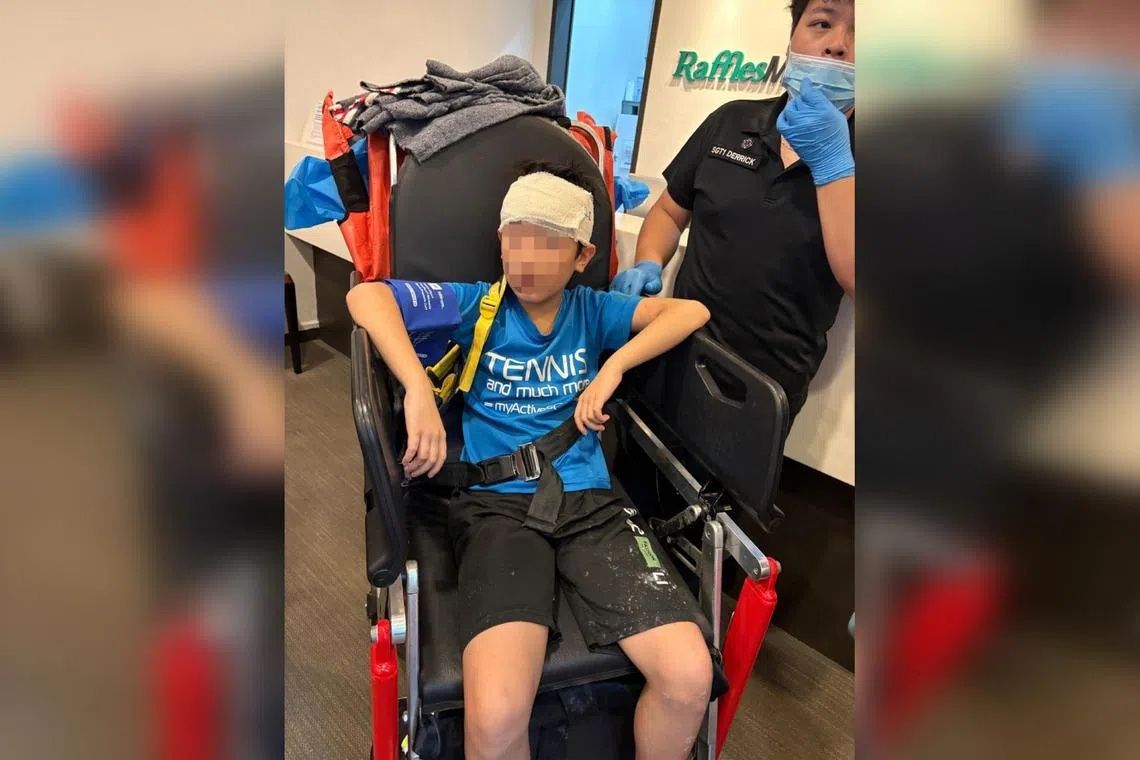
A child required hospitalisation after a signboard gave way at a Food Junction foodcourt outlet in Rivervale Mall, located in Singapore's Sengkang district, during Saturday morning. The Singapore Civil Defence Force dispatched responders to the scene at approximately 10.30am in response to reports of structural failure at the establishment.
The young victim was transported to KK Women's and Children's Hospital for medical evaluation and treatment following the incident. According to the hospital and emergency services accounts, the child sustained injuries significant enough to warrant professional medical attention and overnight observation. The child was subsequently discharged and is now recuperating at home, as confirmed by the foodcourt operator's representative.
Food Junction's management issued a statement acknowledging the incident and commending the swift reaction of their staff to the emergency. The company emphasised that their team worked in coordination with both the mall's operational staff and emergency response personnel present at the scene. The statement underscored the company's commitment to patron safety and outlined immediate measures undertaken to prevent similar incidents in future.
Following the collapse, the company initiated a comprehensive assessment of structural integrity and safety compliance across the affected outlet. This review process culminated in the reinforcement of multiple safety measures and protocols, all of which align with the standards set by relevant regulatory authorities overseeing workplace safety in Singapore. The company did not disclose specific details regarding what caused the initial failure or which particular safety enhancements were implemented.
The foodcourt has since resumed normal business operations, though the company expressed regret over the incident and the disruption caused to customers and the wider community. Food Junction's leadership acknowledged the stress experienced by those who witnessed the occurrence and reassured the public of their commitment to maintaining safe premises. This incident highlights the critical importance of regular maintenance and inspection protocols in high-traffic commercial spaces, particularly in food service establishments that operate continuously throughout the day.
Social media footage of the aftermath, shared on TikTok, revealed substantial destruction to the collapsed structure. Video evidence showed rubble scattered across the entrance area of the Food Junction outlet, with portions of the surrounding ceiling visibly compromised but still partially intact. Observers in the vicinity maintained safe distances from the debris field, demonstrating appropriate caution in the immediate aftermath of the structural failure.
The Food Junction outlet operates on the ground floor of Rivervale Mall, a major commercial hub in the Sengkang precinct that serves residents across the eastern zones of Singapore. The location's accessibility and popularity made the incident particularly concerning given the potential for a larger-scale casualty situation. The fact that the collapse occurred during morning hours, when foodcourts typically experience moderate to heavy customer traffic, underscores the fortunate nature of the outcome given only one person was injured.
Authorities including the Building and Construction Authority have been contacted for investigation and assessment of the incident. The BCA's involvement suggests that a formal inquiry into structural failure mechanisms and potential regulatory breaches may be initiated. Such investigations typically examine maintenance records, previous inspection reports, and adherence to building codes applicable to temporary fixtures and signage within commercial establishments. The findings of such reviews often result in updated guidelines for the retail and hospitality sectors.
This incident serves as a timely reminder for shopping centre operators and retail tenants across the region regarding the necessity of robust maintenance schedules and regular structural audits. In Malaysia and other Southeast Asian nations, where rapid expansion of shopping complexes and foodcourts has been notable in recent years, similar incidents have occasionally occurred. Property managers and business operators must ensure that fixtures, signage, and temporary structures receive adequate attention during maintenance cycles, particularly in high-footfall areas where failure could endanger multiple patrons simultaneously.
The incident also raises questions about inspection protocols and accountability mechanisms within large retail establishments. Whether such checks are performed by in-house teams, contracted third parties, or a combination of both can affect consistency and rigour. Regulators in Singapore and neighbouring countries continue to strengthen frameworks governing structural safety in commercial spaces, driven partly by incidents such as this one. For consumers, the situation underscores the unpredictable nature of public space hazards and the importance of remaining attentive to one's surroundings in busy commercial environments.

