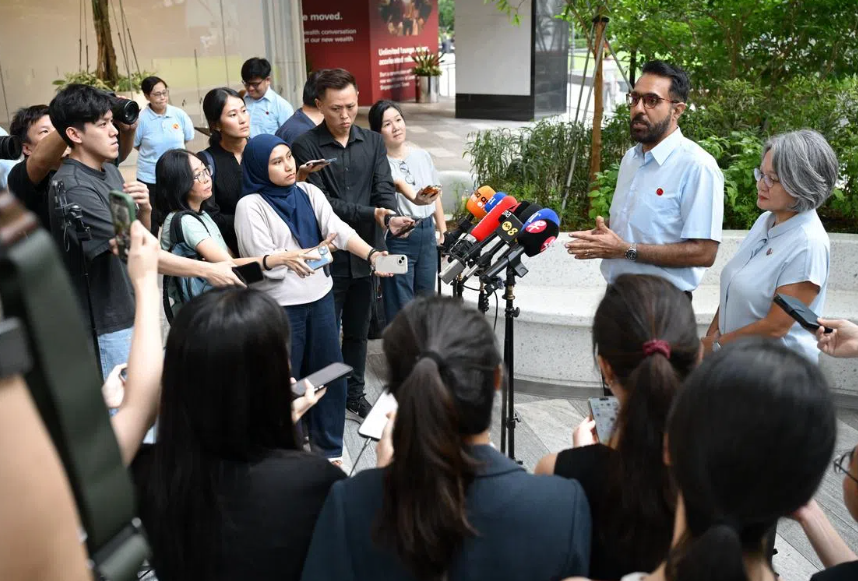
After spending more than six hours in consecutive meetings on June 28 to navigate his gravest political test as party leader, Pritam Singh emerged with the confidence of a man whose position had been secured. The Workers Party secretary-general faced assembled cadres with questions about his fitness to lead following his conviction over misleading Parliament, yet he departed with an assured demeanour, readily telling reporters that the party had demonstrated clear cohesion through its voting decisions.
The internal party conference that day represented an unprecedented moment for Singh's tenure. Since his election as secretary-general in 2018, he had never faced opposition in party ballots, returning unopposed in every electoral cycle. That changed when a faction of cadres orchestrated a vote of no confidence, forcing him to defend his leadership in front of party members who would ultimately determine whether he could continue. The results proved decisive: 82 of the 106 cadres voting supported Singh's retention as party chief, constituting a supermajority that left little room for doubt about where the organisation stood.
The pathway to this outcome had been contentious. A group of dissatisfied members had circulated a letter demanding accountability for Singh's conviction, seeking to use the special cadres conference as a forum to examine his conduct thoroughly. However, the confrontation they anticipated never fully materialised. While Singh faced questioning from party members, the discussion that unfolded included expressions of support alongside criticism, a dynamic that diluted the inquisition. Notably, the group pushing for Singh's removal had actively campaigned for an alternative candidate to challenge him, yet failed to persuade anyone to step forward despite efforts continuing right up until the conference week.
The legal troubles that prompted this internal reckoning originated in 2021 with former Sengkang GRC Member of Parliament Raeesah Khan's admission that she had fabricated a parliamentary account regarding police mistreatment of a sexual assault victim. Singh's involvement in prolonging Khan's deception led Parliament's Committee of Privileges to find him complicit in her false statement. He was subsequently prosecuted for lying to Parliament and convicted, a verdict that survived appellate challenge when the High Court upheld the guilty finding in December 2025. The conviction triggered a parliamentary motion declaring him unsuitable to remain as Leader of the Opposition, prompting Prime Minister Lawrence Wong to formally remove him from that specific position.
Throughout this saga, the Workers Party's institutional response revealed striking institutional discipline. Despite Prime Minister Wong's removal of Singh from the Leader of the Opposition role, the party declined to nominate an alternative MP when afforded the opportunity to do so, effectively closing ranks around their embattled chief. A WP disciplinary panel investigating Singh's conduct determined he had breached the party constitution, yet the party's leadership body responded with a formal letter of reprimand rather than more severe sanction. Some observers characterised this measured response as symbolically soft, suggesting the party hierarchy had prioritised unity over stringent accountability.
Sunday's voting outcome definitively silenced internal dissent and reaffirmed cadre support for Singh's continued leadership. Significantly, the backing extended to former party chief Low Thia Khiang, the architect of the modern Workers Party whose continued endorsement carries substantial weight within the organisation. When asked by reporters before the meetings whether he still supported Singh, Low affirmed his backing, a statement that resonated powerfully given his historical standing in the party. This multigenerational alignment suggested that Singh retained the confidence of both the party's current and former leadership tiers.
The consolidation of party solidarity carries important implications for organisational stability. Opposition parties across the region have frequently collapsed under the weight of internal disputes, with public infighting and leadership upheavals rendering them ineffective challengers to incumbent governments. By successfully containing the Raeesah Khan controversy within party structures and emerging with renewed unity, the Workers Party has insulated itself from this familiar trajectory. The resolution of this internal crisis means the party can now redirect its energies toward parliamentary work and gradually expanding its electoral footprint, activities that demand unified focus.
Yet the party's decision to absorb the political cost of retaining a convicted leader raises uncomfortable questions about whether organisational survival has superseded principled governance. When asked how he would respond to those describing the Workers Party as being led by a "convicted liar," Singh directed critics to his website, asserting that his position remained unchanged from parliamentary statements he had made. He offered no substantive rebuttal to the characterisation itself, instead deflecting the inquiry. This deflection highlighted the tension between the party's internal consensus and the potential vulnerability such consensus creates in broader electoral contexts.
The Workers Party can point to the May 2025 general election results as evidence that public opinion has already rendered judgment on the scandal. That election, held after Singh's conviction in the lower court but before the High Court upheld that verdict, saw the party not merely retain its existing constituencies but expand representation through two additional Non-Constituency MP seats. For many supporters and party loyalists, these electoral gains suggest that Singapore voters have compartmentalised Singh's legal troubles within a narrowly political frame rather than allowing them to delegitimise the party's broader policy platform and parliamentary agenda.
However, the Workers Party's demonstrated ability to consolidate support among its committed base masks a separate strategic challenge: whether the party can broaden its appeal to middle-ground voters who may hold more ambivalent views about leadership integrity. While the party enjoys certain structural advantages, including underdog status relative to the dominant People's Action Party and correspondingly less intensive voter scrutiny, these advantages may erode if questions about ethical fitness become more salient to floating voters. The cadre vote revealed internal cohesion, but cohesion within a relatively small activist base differs fundamentally from persuading swing voters to expand their political support.
Party chair Sylvia Lim has signalled awareness of the need for strategic renewal. Having held the chair position for 23 years, she noted in remarks following the election that the party was actively conscious of leadership renewal's importance for organisational vitality, hinting that other party members would assume more visible roles in future media engagements. Yet Singh's re-election simultaneously confirms that the Workers Party currently lacks alternative figures with sufficient public stature and parliamentary experience to mount a credible challenge to his leadership. This absence of competing power centres provided reassurance to cadres seeking stability but potentially constrains the party's capacity to recalibrate its public image if middle-ground electoral penetration becomes strategically necessary.
Looking forward, the Workers Party faces the familiar challenge confronting any opposition movement that achieves a measure of stability: converting internal unity into expanded electoral relevance. The June 28 votes resolved immediate questions about Singh's continued tenure and party direction, providing a foundation for sustained parliamentary engagement and constituency expansion. Whether this foundation proves sufficiently robust to extend Workers Party appeal beyond its current supporter base, or whether the Raeesah Khan episode and Singh's conviction continue to weigh upon voter calculations, remains an open question that will likely define the party's trajectory through the next electoral cycle.

