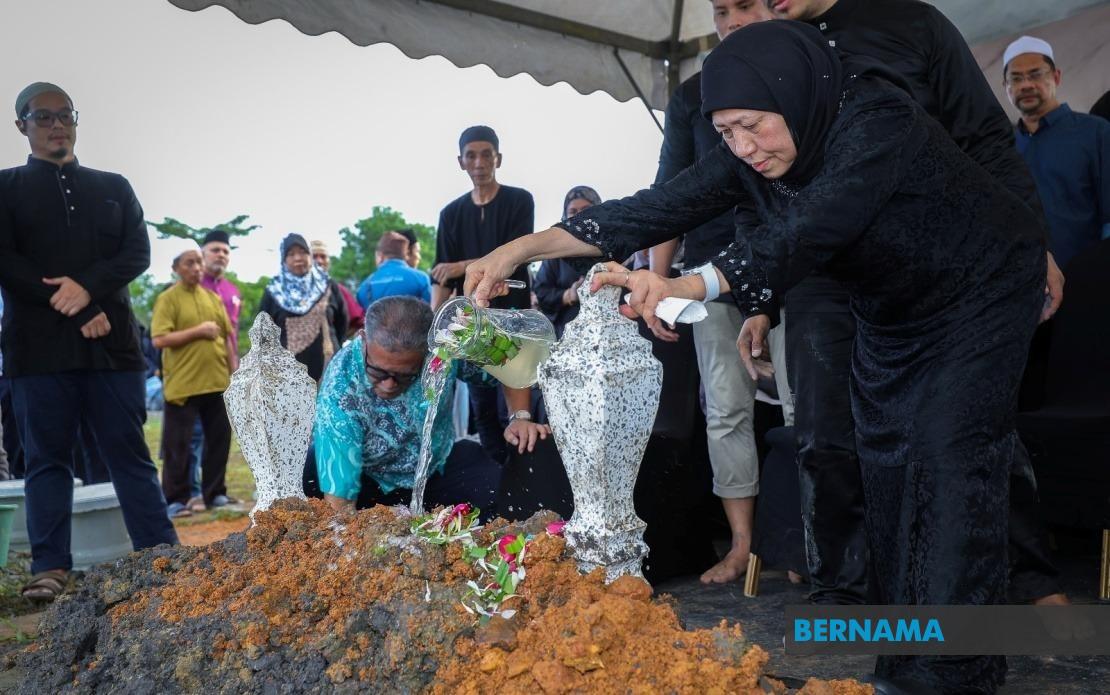
Datuk Kamil Misuari, the husband of Women, Family and Community Development Minister Datuk Seri Nancy Shukri, was committed to his final resting place at Samariang Muslim Cemetery in Kuching on Wednesday afternoon. The burial ceremony took place at 5.15 pm local time, marking the conclusion of funeral rites for the 65-year-old businessman who passed away at a Kuala Lumpur hospital earlier this week.
The funeral gathering drew approximately 100 attendees comprising immediate family relations, extended kinfolk, and associates who came to honour the deceased and offer condolences to his widow. The solemn proceedings reflected the esteem in which Kamil was held within his community and professional circles across both Sarawak and the Federal Territories.
Kamil's journey to his birthplace for final burial began in the nation's capital, where his remains were airlifted from Kuala Lumpur on the morning of the funeral service. The aircraft carrying his body touched down at Kuching International Airport at 12.50 pm, allowing sufficient time for the traditional Islamic preparation ceremonies before the afternoon interment. From the airport, the cortège proceeded directly to the family residence, where relatives and mourners gathered for funeral prayers in accordance with Islamic custom and tradition.
The long-serving minister and her family have deep roots in Sarawak, and the decision to bury Kamil in Kuching underscored the family's continued connection to the state. For Nancy Shukri, who continues to discharge her ministerial responsibilities overseeing women's welfare, family development, and community affairs at the federal level, the loss represents a significant personal tragedy amid her demanding public duties. Her commitment to balancing ministerial obligations with family matters has been a defining aspect of her political career.
Kamil and Nancy established their life together in 1985, marking nearly four decades of marriage that produced three children. Throughout their partnership, Kamil maintained a relatively private profile despite his wife's prominence in national politics, preferring to focus on business endeavours and family responsibilities away from the public spotlight. This discretion contrasted with his status as spouse to a prominent federal minister, a position that inevitably placed his family in the public eye during significant political developments and policy announcements.
The passing of Kamil comes at a particularly demanding period for his widow, as the Women, Family and Community Development Ministry addresses pressing national concerns regarding domestic welfare, gender equality initiatives, and family support structures across Malaysian society. Nancy Shukri has championed progressive policies within her portfolio, and colleagues from across the political spectrum have expressed their sympathies during this difficult period of personal loss.
For those familiar with the dynamics of Malaysian ministerial life, the balance between professional responsibility and family obligations becomes increasingly precarious when personal tragedy strikes. The minister's ability to maintain her duties while grieving represents the quiet resilience that many high-ranking officials must demonstrate, even as they navigate private sorrows away from media scrutiny.
The Samariang Muslim Cemetery, where Kamil now rests, serves numerous families with deep historical ties to Kuching and has been a significant burial ground for the Muslim community in Sarawak for generations. The choice of this location for his interment further emphasises the family's rooted identity within Sarawakian society, despite Nancy's extensive professional commitments in federal politics centred in Kuala Lumpur.
As the ministry moves forward under Nancy's continued stewardship, staff members and colleagues will undoubtedly extend their support during what will inevitably be a challenging transition period. The circumstances surrounding Kamil's death and the swift organisation of funeral arrangements reflect the coordination and respect shown by both government institutions and the broader community network surrounding the minister's family. His passing marks the end of a significant chapter for Nancy Shukri and their three adult children, who must now navigate family dynamics and inheritance matters while maintaining their respective professional and personal responsibilities in Malaysian society.