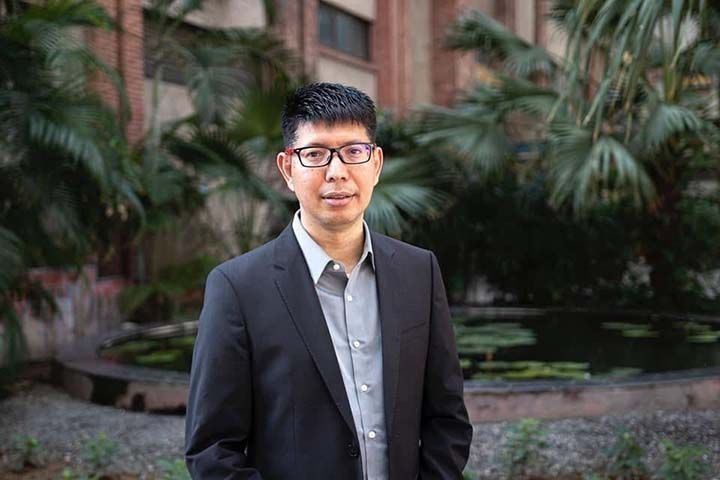
An American scholar who was detained in southwestern China in early June had travelled to Kunming exclusively to participate in an academic workshop, according to the think tank he founded, which issued a statement on Wednesday calling for his immediate and unconditional release. Min Zin, who serves as executive director of the Institute for Strategy and Policy (ISP) - Myanmar, was arrested on June 3 on suspicion of engaging in espionage activities and endangering national security, a claim that China's foreign ministry confirmed last week. The timing of his detention, coming weeks before a major state visit by Myanmar's junta leader Min Aung Hlaing, has underscored ongoing tensions between international academic inquiry and Beijing's security concerns.
The Institute for Strategy and Policy firmly rejected the accusations levelled against Min Zin, characterizing them as baseless and politically motivated. In its statement, the organization emphasised that the scholar's sole purpose in travelling to Kunming was to attend the academic workshop, casting doubt on any credible evidence of wrongdoing. The US State Department's official position aligns with this assessment, with a spokesperson rejecting the espionage allegations outright. American consular officers have visited Min Zin since his detention, and the State Department confirmed it is actively engaged with Chinese officials to secure his release while providing comprehensive consular support.
China's foreign ministry has maintained its position on the matter, reiterating through multiple statements that Min Zin is suspected of espionage and asserting that the case will be handled in accordance with Chinese law. This response typifies Beijing's approach to foreign academics and researchers whose work touches on sensitive political topics, particularly those examining China's relationship with neighboring nations or internal governance challenges. The ministry has not disclosed specific evidence supporting the espionage allegations, a pattern that has drawn criticism from international civil society and academic organizations concerned about the transparency of China's legal processes.
Min Zin's background illuminates why his detention carries symbolic weight beyond the individual case. A former student activist who participated in Myanmar's pivotal 1988 democracy movement, he later pursued academic training in political science at the University of California, Berkeley, where he developed expertise in Myanmar's political economy and international relations. His formative experiences during Myanmar's pro-democracy struggle gave him deep credibility within academic and policy circles studying authoritarian transitions and conflict resolution. His scholarly trajectory from activist to researcher reflects a commitment to understanding Myanmar's complex political landscape through rigorous analysis rather than partisan advocacy.
The Institute for Strategy and Policy that Min Zin founded has emerged as a significant voice in analyzing Myanmar's tumultuous political trajectory, particularly since the military coup in February 2021. Initially based within Myanmar, the organization relocated overseas following the coup as the security environment for independent researchers deteriorated sharply. The think tank's research agenda focuses on the escalating internal conflict, mechanisms for eventual political transition, the collapse of Myanmar's economic foundations, and the intricate bilateral relationship between Myanmar and China—issues of critical importance not only to Myanmar but to regional stability throughout Southeast Asia.
Myanmar's military government has become increasingly reliant on Chinese support since the 2021 coup, which ousted the democratically elected government led by Aung San Suu Kyi and triggered unprecedented internal upheaval. What began as widespread urban protests quickly evolved into a nationwide armed insurgency, with newly formed pro-democracy resistance groups combining forces with long-established ethnic armed organizations to mount substantial military challenges to the junta's authority. This conflict has created considerable humanitarian suffering and displaced hundreds of thousands of people, while also complicating Myanmar's regional relationships and raising international concerns about stability in Southeast Asia.
China's role as a primary foreign partner to Myanmar's military government significantly contextualizes Min Zin's detention. Beijing has maintained substantial economic and military investments in Myanmar despite international criticism of the junta's human rights record, viewing Myanmar as strategically crucial for China's broader regional interests and Belt and Road Initiative ambitions. The detention of an American scholar researching China-Myanmar relations just before Min Aung Hlaing's state visit to Beijing suggests that Chinese authorities may be attempting to signal displeasure with external scrutiny of their military and economic engagement in Myanmar, or to prevent academic analysis that contradicts official narratives.
The arrest raises broader questions about the permissibility of independent academic research in an increasingly securitized environment. The Institute for Strategy and Policy's statement emphasized that academic and research organizations must be able to conduct their work without facing intimidation or unfounded accusations. This concern resonates across the international scholarly community, where researchers working on China, Myanmar, and their bilateral relationship face mounting pressure from both governments. The case exemplifies how geopolitical tensions can constrain the space for objective analysis of sensitive topics, particularly when that analysis might implicitly critique government actions or raise inconvenient questions about power dynamics.
For Malaysian and Southeast Asian observers, Min Zin's detention carries particular relevance given the region's complex relationships with China and shared concerns about authoritarian governance. Myanmar's instability has already generated refugee flows affecting neighboring countries, including Malaysia, which has absorbed significant populations of Myanmar nationals fleeing conflict and persecution. The conditions enabling Min Zin's detention—where academic inquiry into sensitive geopolitical topics can trigger espionage charges—reflect broader regional anxieties about the shrinking space for independent thought and analysis. The case demonstrates how security concerns, whether genuine or politically motivated, can be weaponized against foreign scholars whose work might inconvenience powerful states.
As international pressure mounts for Min Zin's release, the incident underscores fundamental tensions between academic freedom and state security imperatives. China's legal system operates under principles that prioritize state security considerations in ways that differ substantially from Western jurisdictions, creating potential for misunderstanding and conflict when international scholars conduct research on politically sensitive topics. The outcome of this case will likely influence whether foreign academics feel comfortable continuing research on Myanmar and China-Myanmar relations, potentially narrowing the global scholarly conversation precisely when rigorous, independent analysis of these issues is most needed.
The detention also highlights the vulnerability of think tanks and research organizations operating across borders, particularly when their leadership includes foreign nationals or when their work examines great power relationships. Min Zin's relocation of ISP-Myanmar's operations outside the country following the 2021 coup provided the organization with greater operational security but did not eliminate the risks its leadership faces when travelling. The incident serves as a cautionary tale for other academic institutions and researchers working on China-related topics, suggesting that geographical distance from Myanmar does not necessarily provide protection from Chinese reach, particularly when scholars attempt to engage in international academic exchanges.

