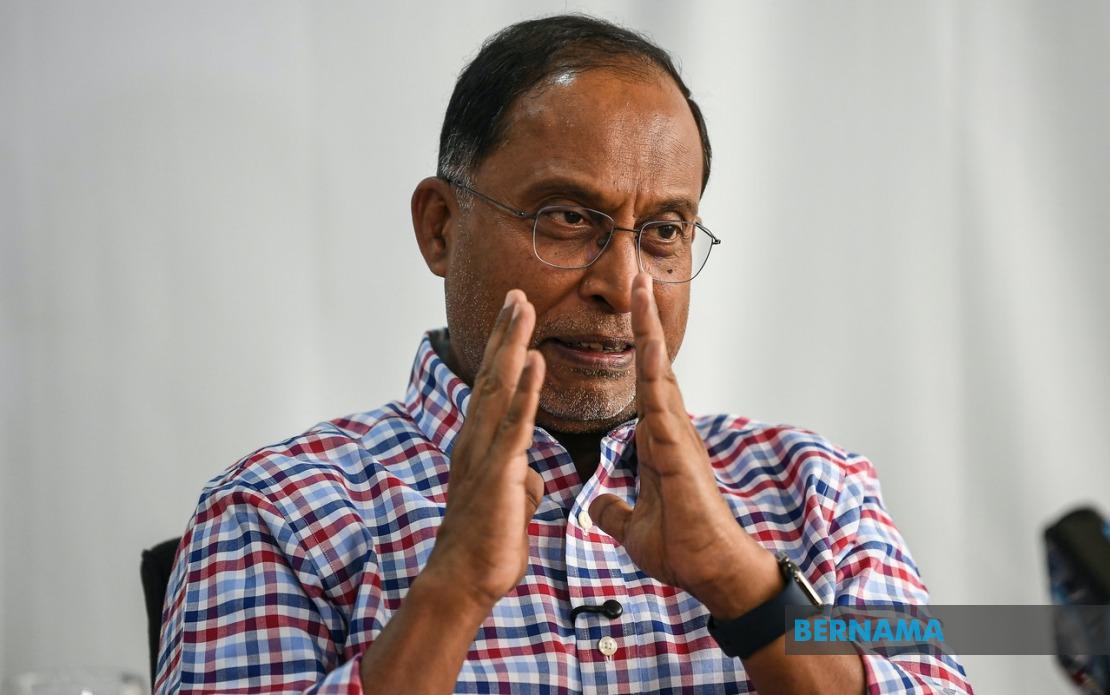
Datuk Seri Dr Zambry Abd Kadir, Malaysia's Higher Education Minister, has issued a stern warning that allegations claiming between 30,000 and 60,000 students gained unauthorised entry to public universities pose a significant threat to public confidence in the country's tertiary education framework. Speaking on June 17, the minister characterised such assertions as serious accusations that could fundamentally undermine the credibility of an institution already facing scrutiny on multiple fronts, particularly among parents and prospective students navigating the complex admission landscape.
The minister's intervention comes amid mounting public discourse surrounding potential irregularities in university intake processes. Beyond merely tarnishing institutional reputations, Zambry cautioned that such narratives cultivate a damaging perception that legitimate opportunities reserved for academically qualified candidates have been diverted for financial benefit. This framing addresses a deep-seated concern within Malaysian society regarding meritocracy and equal access to higher education—anxieties that resonate particularly strongly among middle-class families for whom university education represents a critical pathway to social mobility.
Zambry emphasised that Malaysia's public university admission system operates through established mechanisms designed to prioritise merit and adherence to stated eligibility criteria. The minister's explicit invocation of transparency and clarity suggests an attempt to reassure stakeholders that safeguards exist to prevent the kind of systemic irregularities being alleged. However, this assertion also implicitly raises questions about the adequacy of existing oversight mechanisms, particularly if critics possess credible evidence of widespread breaches.
Crucially, the minister shifted the burden of proof to those making allegations, arguing that accusations of this magnitude demand substantiation through concrete evidence, verifiable data, and transparent methodology. This rhetorical stance reflects a broader governmental approach to managing criticism—demanding accountability from critics while simultaneously asserting institutional integrity. For Malaysian civil society, this poses a tension between legitimate rights to scrutinise public institutions and the requirement to back criticism with rigorous documentation.
The ministry's response has extended beyond ministerial statements. Several public universities have filed police reports seeking formal investigation into the allegations, a move Zambry framed as procedurally necessary rather than an attempt to silence discourse. This escalation to law enforcement underscores the seriousness with which authorities treat the matter, though it simultaneously raises concerns among academic freedom advocates about the potential chilling effect on legitimate institutional critique.
Zambry articulated a distinction between protected freedom of speech and what he characterised as unfounded accusations masquerading as legitimate criticism. The minister stressed that while academic discourse must remain robust and open, assertions must rest upon factual foundations rather than conjecture or speculation. This position reflects international standards governing institutional accountability, yet in the Malaysian context, where criticism of government-linked institutions can carry political implications, such distinctions frequently blur.
The minister explicitly warned that individuals making such allegations bear responsibility for substantiating their claims comprehensively. This places significant evidentiary burdens on civil society actors and investigative journalists seeking to expose potential irregularities—burdens that may exceed the resources available to independent researchers and advocacy organisations. The asymmetry between institutional capacity to demand proof and civil society's ability to generate it represents a structural challenge in Malaysia's accountability ecosystem.
The Ministry of Higher Education signalled openness to constructive feedback intended to enhance Malaysia's educational landscape, while simultaneously drawing a line against what it termed baseless allegations. This formulation permits selective receptivity to criticism—welcoming suggestions for improvement while delegitimising accusations of systemic dysfunction. The question of who determines whether criticism constitutes "constructive" input versus "excessive allegations" thus becomes contentious, particularly given government's institutional interest in the outcome.
For Malaysian students and parents currently engaging with university admission processes, this controversy introduces uncertainty about the mechanisms governing their applications. Even if allegations prove unfounded, the mere circulation of such claims creates perceptual damage that institutional denials alone may struggle to remedy. This highlights the broader challenge of rebuilding trust once compromised, regardless of actual culpability.
The minister's commitment to safeguarding institutional integrity and maintaining public confidence reflects acknowledgment that Malaysia's higher education system depends fundamentally upon perceived legitimacy. Yet the very vigour of the rebuttal suggests authorities recognise the seriousness of these allegations and their potential resonance with public anxieties about meritocratic fairness. How this dispute ultimately resolves—through evidence presented by critics, through investigative findings from police inquiries, or through institutional reforms—will significantly shape Malaysian public perception of higher education accessibility and fairness for years ahead.

