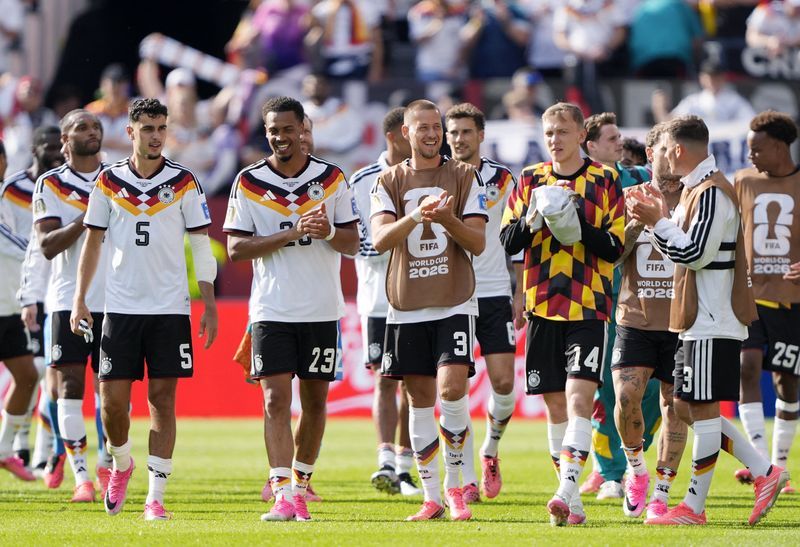
Germany's World Cup campaign gathered momentum in Toronto on Saturday as substitute Deniz Undav delivered a masterclass in clinical finishing, striking twice in the second half to overturn a deficit and edge Ivory Coast 2-1. The result lifts the four-time world champions into the knockout phase, marking their first advancement past the group stage since claiming the title in 2014. For a squad that endured early frustrations—including two disallowed goals—the comeback underscores their resilience and tactical discipline under manager Julian Nagelsmann, qualities that will be essential as the tournament progresses deeper into January.
The match unfolded as a compelling chess match between two contrasting styles. Germany's characteristic emphasis on intricate possession play and positional control came up against Ivory Coast's more dynamic, penetrative approach. The West Africans struck first through Franck Kessie, who pounced on a loose ball in the penalty area during the 43rd minute after Amad Diallo's shot was parried. The goal capped a well-coordinated attacking sequence initiated by Yan Diomande's driving run down the left flank, giving Ivory Coast a half-time advantage despite Germany's territorial dominance.
Germany's frustration in the opening period stemmed from referee decisions that denied them what appeared to be legitimate goals. In the 25th minute, midfielder Aleksandar Pavlovic rose powerfully to meet a short corner but was adjudged to have committed a foul on goalkeeper Yahia Fofana in the process. The decision prompted visible disbelief from Pavlovic and audible displeasure from the German-dominated crowd—over 100,000 people of German heritage reside in Toronto, providing the visitors with substantial vocal support throughout the evening. Later, another German effort was chalked off after officials determined that Jamal Musiala had fouled Odilon Kossounou during the build-up play. Such decisions, contentious as they were, could have derailed Germany's tournament hopes, but instead appeared to sharpen their focus rather than diminish it.
Undav's introduction from the bench altered the game's trajectory decisively. The versatile striker, who has now accumulated nine goals across his last eight matches, provided exactly the spark Germany required. In the 68th minute, he received the ball in a slightly crowded penalty area and executed a controlled volley that found the net with precision, levelling the score and reigniting German momentum. Four minutes later, Undav again found space on the turn, receiving possession in a pocket of space before pirouetting and firing a low drive past Fofana, who had no meaningful opportunity to prevent the shot. The two goals transformed not only the scoreline but the psychological complexion of the encounter.
Ivory Coast, despite their attacking prowess, could not find an equaliser despite possessing genuine opportunities in the closing stages. Simon Adingra, in particular, fashioned a promising opening late in the match but failed to convert his chances with either a clear shot or incisive pass. Germany's defence, marshalled with increasing confidence as the second half progressed, tightened considerably once Undav had put them ahead, allowing only scattered chances. When Nathaniel Brown attempted a low drive in the closing moments, Fofana was forced to make a crucial block, summarising Ivory Coast's inability to capitalise on their early advantage.
The statistical context reveals why Germany's comeback holds particular significance for their tournament ambitions. Ivory Coast now possess one of the most impressive attacking records at the global finals, having scored in their last seven consecutive matches—the longest such streak in the West Africans' World Cup history. This demonstrates their genuine quality going forward, yet it also highlights how Germany's defensive organisation improved substantially in the second period. For Ivory Coast, the defeat leaves them with three points from two matches, creating considerable pressure ahead of their final group assignment against Curacao in Philadelphia.
Germany's position atop Group E with six points represents a commanding stance, though their remaining fixture against Ecuador in New Jersey will determine final seeding within the group. Ivory Coast must now navigate a complex situation: they remain capable of advancing, but will depend on results elsewhere in the group. Ecuador and Curacao's later Saturday encounter in Kansas City holds implications for all three teams' knockout prospects, adding another layer of intrigue to what has been a compelling opening week of tournament football in North America.
Nagelsmann's tactical adjustments and faith in Undav's impact from the bench demonstrate the strategic depth German football brings to major tournaments. The manager's ability to identify the precise moment for substitution changes, coupled with players' willingness to execute their assignments with precision, distinguishes the elite sides in knockout football. For Malaysia and Southeast Asian supporters tracking Germany's progress, their performance against a resourceful African opponent suggests the Germans possess both the character and individual quality to mount a credible title defence as the tournament advances into its decisive phases.