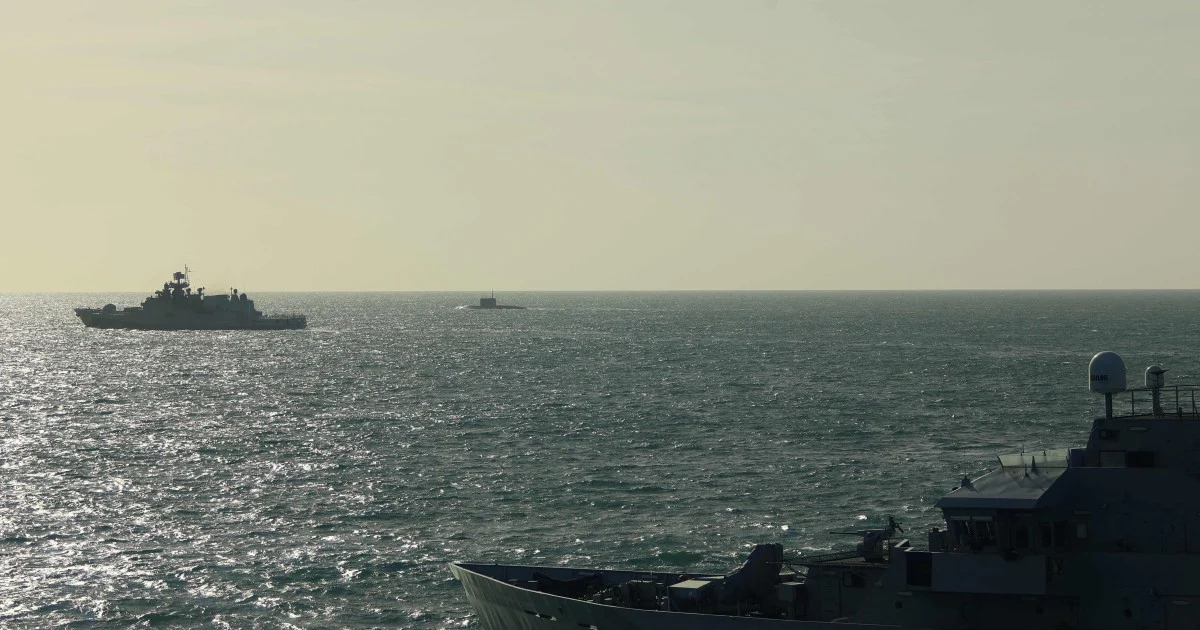
Britain's Prime Minister Keir Starmer has sought to temper interpretations of a recent naval incident in the English Channel, describing warning shots fired by a Russian warship as reflective of careless seamanship rather than a calculated move to provoke international conflict. The characterisation, offered Wednesday, arrives as maritime tensions between London and Moscow continue to test the patience of both nations, with the incident representing the latest in a series of at-sea confrontations that have punctuated their already fraught relationship.
The distinction Starmer drew—between recklessness and sinister intent—carries significant weight in how the incident is understood by international observers and NATO allies watching Anglo-Russian maritime dynamics. By framing the action as ill-judged rather than deliberately hostile, the Prime Minister appears intent on preventing the episode from escalating into a broader diplomatic row, even as he acknowledges the concerning nature of the warship's conduct. This measured response reflects a wider British strategy of maintaining pressure on Moscow while avoiding rhetorical moves that could trigger further military brinkmanship.
The English Channel has become an increasingly contested waterway, with Russian naval assets regularly traversing routes that bring them into proximity with British territorial waters and NATO shipping lanes. These passages, while technically permitting Russian vessels the right of transit through international waters, have sparked repeated disagreements about appropriate maritime behaviour and safety protocols. The channel's geography and heavy traffic make even minor incidents potentially dangerous, as demonstrated by the warning shots fired in the recent episode.
Starmer's comments reflect the complex calculus facing Western leaders in responding to Russian military actions that fall short of direct warfare but exist in a grey zone of provocative behaviour. Too strong a response risks appearing unnecessarily escalatory; too measured a reaction risks sending signals that such conduct carries minimal consequences. The Prime Minister's language suggests Britain intends to condemn the action while preserving diplomatic space for de-escalation, a delicate balance that has become routine in managing UK-Russia relations since the invasion of Ukraine.
The incident underscores how Russia continues to challenge Western norms of maritime conduct through actions designed to assert dominance and test responses without crossing thresholds that would trigger direct military confrontation. Russian naval vessels have repeatedly conducted provocative manoeuvres near NATO waters, sometimes closing dangerously near commercial shipping and military assets. These patterns serve multiple purposes: demonstrating Russian capability in blue-water operations, probing how far Moscow can push before facing significant pushback, and signalling that Russia refuses to be confined or constrained by Western preferences.
For Malaysia and other Southeast Asian nations watching developments in European waters, the dynamics on display offer cautionary lessons about managing great power competition in shared maritime spaces. The English Channel incidents parallel concerns about freedom of navigation and appropriate conduct in waters like the South China Sea, where competing territorial claims and military presence create similar risks of miscalculation. How Britain responds to Russian maritime provocation potentially sets precedents that echo across the region.
The British government's response also reflects the reality that economic and security interests sometimes constrain how forcefully nations can respond to individual incidents. While Russia's actions merit criticism, sustained escalation could complicate broader strategic calculations, particularly as Europe grapples with energy security, trade relationships, and the long-term management of the Ukraine conflict. Starmer's calibrated language allows Britain to register disapproval without institutionalising permanent confrontation.
Navigating these territorial and maritime disputes requires distinguishing between behaviour that violates international law, behaviour that violates established norms of safe practice, and behaviour that is simply provocative but technically legal. The warning shots appear to fall into this middle category—concerning conduct that merits protest but does not constitute an act of war or justify immediate military retaliation. Starmer's framing acknowledges this distinction, treating the incident seriously while avoiding language that could trigger security spirals.
The broader context of UK-Russia relations, complicated by sanctions, NATO expansion concerns, and the Ukraine war, means that even routine maritime incidents carry outsized significance. Each encounter between British and Russian forces becomes a test case for how both sides intend to manage their relationship in the coming months and years. The Prime Minister's Wednesday statement therefore serves multiple audiences: reassuring British allies that London remains firm, signalling to Russia that Britain will not be intimidated, while keeping channels open for eventual stabilisation of the relationship.
Looking forward, Britain faces the ongoing challenge of maintaining freedom of navigation and asserting its security interests while avoiding the appearance of actively seeking confrontation with Russia. How London handles these maritime encounters will shape perceptions of British resolve and NATO commitment among European allies, while also influencing how aggressively Russia continues to test Western boundaries. Starmer's measured tone suggests the government believes the path forward lies in consistency rather than reaction, in maintaining standards without provocation, and in distinguishing between condemnable actions and justifications for escalating military tensions.

