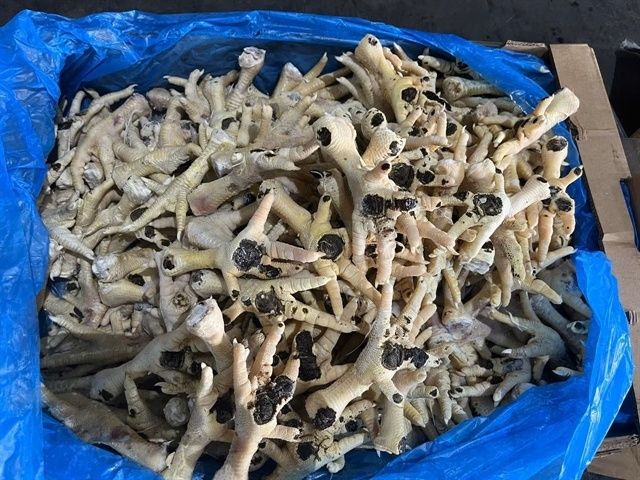
Hanoi police have brought charges against two women suspected of orchestrating one of Vietnam's largest recent food smuggling operations, involving hundreds of containers of frozen chicken feet that were diverted from legitimate processing channels into domestic markets across the country. The investigation, which culminated in formal charges on Friday, June 19, reveals a sophisticated operation that circumvented disease-control protocols and cost the state millions in unpaid import duties while potentially exposing Vietnamese consumers to contaminated food products.
The two suspects, identified as Nguyen Thi To Loan, 47, and Trang Tuyet Ngoc, 45, operated through corporate entities that appeared legitimate on the surface. Loan served as the direct operator of ABF Food Import-Export JSC based in Ninh Binh Province, while Ngoc held the position of assistant department head at An Binh Group. Both have reportedly confessed to all charges levelled against them, according to police statements released to media outlets. Their cooperation may signal a coordinated effort by authorities to uncover the broader network that facilitated this operation over several years.
The scheme operated across a three-year window from 2023 through 2026, during which ABF imported a staggering 339 containers of frozen chicken feet. Customs declarations falsely categorized these shipments as goods intended solely for processing and subsequent re-export, a designation that carries specific legal implications in Vietnam's food import regulatory framework. However, investigators determined that instead of adhering to this protocol, Loan deliberately redirected Ngoc to distribute the entire stockpile throughout Vietnam's domestic market, fundamentally violating the terms under which the imports were authorized.
Vietnam's food safety laws contain explicit restrictions on poultry products originating from countries experiencing active poultry disease outbreaks. These products are permitted entry exclusively for industrial processing and re-export purposes, with domestic sale strictly prohibited under the regulatory regime. The rationale behind this restriction is epidemiological—preventing the potential introduction of avian influenza or other transboundary animal diseases into domestic supply chains where they could spread unchecked through the food system. The decision to circumvent this safeguard demonstrates either reckless disregard for public health or calculated acceptance of substantial risk for profit.
The scale of distribution was extensive and geographically dispersed. Investigators documented that more than 10,000 metric tonnes of the smuggled chicken feet were sold to food-service businesses across multiple provinces including Hanoi, Cao Bang, Ninh Binh, and Quang Ninh. This widespread distribution means thousands of restaurants, food manufacturers, and institutional food providers unknowingly purchased and potentially served products that violated Vietnam's food safety protocols. The volume suggests this was not a minor operation but rather a major systematic diversion of an entire import stream into illicit channels.
The financial dimensions of the case are substantial. Authorities calculated the total import value at more than VNĐ347 billion, equivalent to approximately US$13 million at current exchange rates. Critically, no import duty was paid on these shipments, representing significant lost government revenue. The scheme generated profits for the operators while simultaneously depriving the state treasury of customs revenues and exposing consumers to uncontrolled food safety risks—a triple loss from a policy enforcement perspective.
Law enforcement operations conducted raids on cold-storage facilities connected to the operation, yielding disturbing discoveries that raised additional public health concerns. At the An Viet 2 freezer facility located in Hanoi's Quang Minh Industrial Zone, police uncovered more than 1,000 metric tonnes of the contraband chicken feet. Most alarmingly, approximately 260 metric tonnes had exceeded their shelf life and displayed visible signs of deterioration including mold growth and pronounced odour—yet appeared to be staged for distribution despite their obviously compromised condition. The fact that expired, visibly degraded product was prepared for release into the food supply chain suggests deliberate disregard for consumer safety.
A subsequent raid on the THL cold-storage warehouse in Lang Son Province uncovered an additional 1,030 metric tonnes of frozen chicken feet, further confirming the scope of accumulated inventory. The geographic separation of storage facilities across different provinces suggests a deliberately distributed logistics network designed to complicate detection and enforcement. These storage facilities represent chokepoints where authorities successfully interdicted the contraband before it reached retail and consumption points, though significant volumes had already been distributed prior to the investigation.
Both suspects have been formally charged under Article 188 of Vietnam's 2015 Penal Code, which addresses smuggling offences. The charges reflect the severity with which Vietnamese authorities regard food safety violations and customs evasion. However, investigators have emphasized that their enquiries remain ongoing as they work to map the complete network of participants and organizations that facilitated this operation. The involvement of multiple entities and the sophisticated logistics suggest that Loan and Ngoc, while central to the scheme's execution, may have been operating within a larger ecosystem of complicit actors.
For Southeast Asian readers, this case underscores the persistent vulnerability of regional food supply chains to sophisticated smuggling operations and the challenges that national authorities face in enforcing food safety standards. Vietnam's poultry industry has experienced multiple disease outbreaks in recent years, making biosecurity protocols crucial to regional stability. The case also highlights how corporate structures can be leveraged to disguise illicit activities, with import-export companies positioned as ideal vehicles for customs fraud. The scale of this operation and the involvement of institutional food-service customers raises questions about due diligence procedures in commercial food sourcing across Vietnam and potentially throughout the region.