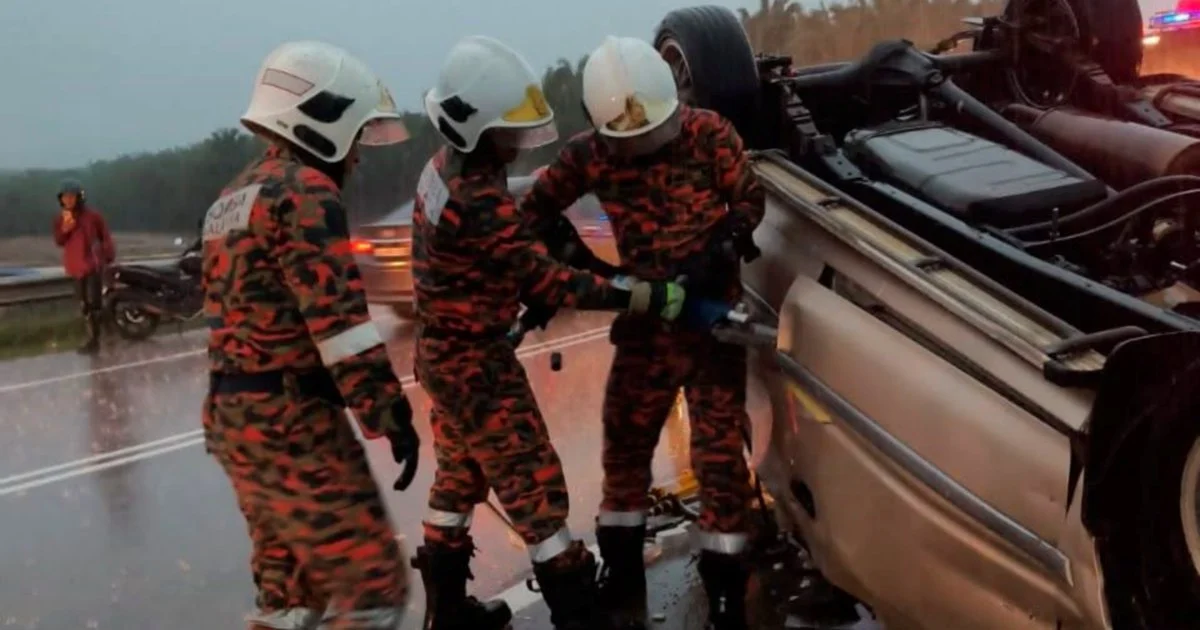
A tragic sequence of road accidents in Pahang claimed four lives in quick succession today, with two sisters dying in one of the incidents. The crashes, which struck the districts of Maran and Pekan in rapid succession, underscore the persistent dangers facing drivers and passengers on Malaysian roads and have reignited concerns about highway safety in the state.
The two fatal collisions occurred within a timeframe of less than 60 minutes, suggesting conditions or circumstances that may have contributed to a heightened accident risk across the affected areas during that period. While preliminary details about the incidents remain limited, the clustering of multiple serious accidents within such a narrow time window is a pattern that frequently draws the attention of road safety authorities and transport planners seeking to identify common causative factors.
The loss of two sisters in what appears to have been a single incident adds a devastating human dimension to the statistics. Road fatalities often fragment families instantaneously, leaving immediate relatives to cope with sudden bereavement and the practical aftermath of losing multiple family members simultaneously. Such tragedies frequently prompt broader questions within communities about preventative measures, driver behaviour, and whether infrastructure improvements might have altered the outcome.
Maran and Pekan are both municipalities within Pahang, a state in the east coast region that encompasses varied terrain from urban centres to more rural corridors. The Maran district encompasses areas along major transport routes, while Pekan, historically significant as the royal town of Pahang, sits near critical road networks connecting the state to neighbouring regions. Both localities have experienced traffic incidents before, though the convergence of two fatal crashes within such proximity remains noteworthy.
Road safety authorities across Malaysia have consistently highlighted the dangers associated with various factors that elevate accident risk, including excessive speed, driver fatigue, mechanical failure, and weather conditions. The frequency with which multiple serious accidents cluster within short timeframes suggests that transient conditions—such as sudden weather changes, reduced visibility, or traffic congestion leading to erratic driving—may play a role in creating hazardous windows on Malaysia's road network.
The immediate aftermath of such incidents typically involves emergency services mobilising rapidly to crash scenes, with investigations examining vehicle damage, witness accounts, and forensic evidence to reconstruct events. Police traffic units generally conduct these inquiries, examining whether factors such as vehicle condition, road maintenance, or driver conduct contributed to the fatalities. In cases involving multiple deaths, these investigations often prove particularly complex and resource-intensive.
For Malaysian road users and policymakers alike, such incidents serve as periodic reminders of vulnerability on the nation's highways. Pahang has witnessed numerous significant traffic accidents over recent years, reflecting challenges that state authorities and federal transport bodies work to address through enforcement campaigns, infrastructure upgrades, and public awareness initiatives aimed at encouraging safer driving practices.
The death of two siblings in a single accident represents a concentrated loss that exemplifies the profound impact individual road incidents can have on families and communities. When multiple fatalities occur within a household or close family unit, the ripple effects extend beyond immediate grief to encompass financial hardship, orphaning of children, or loss of primary household earners, compounding the tragedy at a societal level.
State and federal authorities responsible for road safety will likely examine whether the two crashes shared any common elements or represented coincidental occurrences during a period of elevated accident risk. Understanding whether the incidents were isolated events or symptomatic of broader systemic issues remains crucial for designing targeted intervention strategies and resource allocation in road safety programmes.
The timing of these accidents—occurring within an hour in adjacent Pahang districts—raises implicit questions about whether conditions were deteriorating, whether particular road segments warrant enhanced scrutiny, or whether this represents a statistical anomaly rather than an identifiable pattern. Traffic safety specialists typically emphasise that single incident clusters, while tragic, require careful contextual analysis before drawing broader conclusions about systemic road safety deficiencies in specific regions.
For families of victims, the coming days and weeks will involve formal identification processes, funeral arrangements, and navigation of insurance claims and legal procedures. Malaysian authorities typically ensure that victim families receive assistance in such circumstances, though the simultaneous loss of multiple household members often creates compounded administrative burdens alongside emotional trauma.

