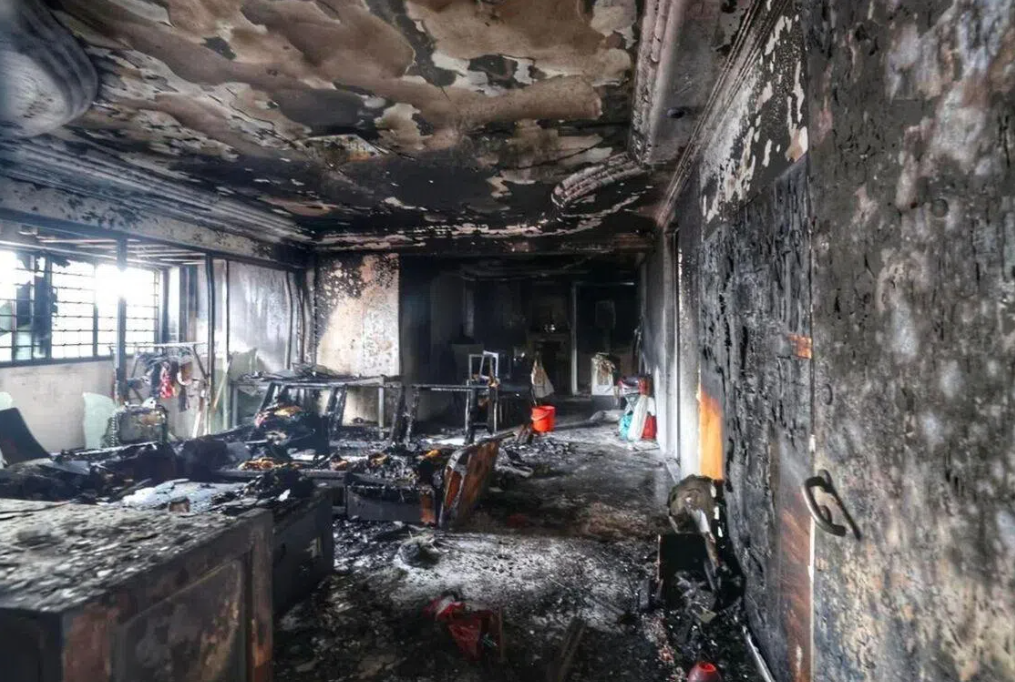
Two individuals were pulled to safety from a high-rise public housing unit in Singapore's Jurong West after a fast-moving fire tore through their living room in the pre-dawn darkness of June 17. The Singapore Civil Defence Force responded to the emergency at Block 842 Jurong West Street 81 around 3.35am, arriving to find the 13th-floor residence already engulfed in smoke. Firefighters made their way through the thick haze to extinguish the flames using water jets, preventing the fire from spreading to neighbouring units and potentially claiming lives.
All four family members living in the affected unit were transported to Singapore General Hospital following the incident. As a protective measure, the SCDF evacuated approximately 40 other residents from the building, underscoring the serious risk such fires pose in high-density residential clusters. Preliminary investigations by the authorities have pointed to an electrical fault in the living room as the likely source of ignition, a finding that aligns with broader patterns of residential fire origins across the island nation.
The family had been asleep when flames consumed their living quarters, unaware of the danger unfolding around them. An alert 18-year-old student living directly above the burning unit became the crucial link between the emergency and rapid response. While playing games in the early morning hours, he detected wisps of smoke filtering upward through windows below his level and made the decision to investigate rather than ignore the warning signs.
Upon approaching the affected flat's entrance, the young man immediately recognised the extreme heat radiating from the door surface. Rather than hesitate, he began knocking urgently on doors throughout the corridor, shouting evacuation warnings to sleeping neighbours. He then rushed back to his own apartment to alert his family before dashing downstairs once more to spread the alarm. His swift thinking and decisive action likely prevented casualties, demonstrating how individual vigilance serves as a critical layer of protection in apartment buildings where fires can spread rapidly through shared spaces.
The neighbour's mother subsequently called emergency services, triggering the professional response that would contain the blaze. When residents from the burning unit emerged, visible injuries told a harrowing story of their escape. A young woman appeared at the student's door asking for towels to treat wounds, her singed hair and soot-covered face bearing witness to the intensity of the heat she had endured. Her father, whom she sought to help, displayed severe burns across his back and arms, skin reddened and damaged from direct exposure to flames.
Visual documentation gathered by Lianhe Zaobao reporters who visited the scene later that afternoon revealed the extent of the destruction. The unit's interior surfaces had been charred black, with walls and ceilings transformed into blackened shells. Windows had shattered from the thermal stress, leaving gaping openings where glass once provided protection. The damage pattern was consistent with a living room fire that had burned with sufficient intensity to compromise structural elements and spread heat throughout the confined space.
A resident living on the 12th floor reported witnessing at least five fire engines positioned around the base of the building, illustrating the scale of the emergency mobilisation. This deployment reflected SCDF's commitment to containing what could have developed into a multi-unit conflagration had the fire remained undetected for even several additional minutes. The speed of the response, combined with the effectiveness of modern firefighting equipment, prevented what might have been a tragedy affecting dozens of households.
In the aftermath, the SCDF has reiterated fundamental electrical safety practices to the public, drawing lessons from this incident to inform preventive messaging. Residents are cautioned against overloading power outlets, a common practice in households where multiple devices compete for limited access points. The agency emphasises the importance of switching appliances off when not in active use, reducing the operational duration of devices and the cumulative electrical stress on circuits and connections.
Authorities specifically recommend that Singaporeans use only products certified with the Safety Mark, a credential issued by the nation's Consumer Product Safety Office that ensures devices meet established safety standards. This certification becomes particularly important given the prevalence of counterfeit or substandard electrical equipment that may lack proper protections against short circuits and overheating. Additionally, the SCDF warns against leaving devices unattended while charging, especially overnight when fires may go undetected for extended periods.
The timing of this incident coincides with growing concerns about residential fire trends across Singapore. Data released by the SCDF in February revealed that total fires increased by three per cent between 2024 and 2025, with figures rising from 1,990 incidents to 2,050. More alarming is the concentration in residential settings, where 1,051 of the 2,050 fires occurred, representing more than half of all reported incidents. This concentration underscores how housing estates remain disproportionately vulnerable to fire hazards, whether from electrical faults, cooking accidents, or other sources.
For Malaysian observers, the Jurong West incident offers instructive lessons regarding fire safety in densely populated housing developments. As Malaysia continues to expand its public housing programmes and high-rise residential complexes proliferate in urban centres, the experiences documented in Singapore provide valuable cautionary examples. The vulnerability of families sleeping unaware in confined spaces, the critical role of alert neighbours in early detection, and the recurring risk posed by electrical systems all have direct relevance to Malaysian public housing estates.
The incident also highlights the importance of comprehensive fire safety education campaigns that move beyond technical advice to emphasise the behaviour changes required of residents. Singapore's approach of combining regulatory standards, product certification, and public messaging demonstrates a multi-layered strategy that acknowledges fire prevention cannot rely solely on technology but requires sustained cultural emphasis on electrical awareness and household vigilance. Malaysian housing authorities and fire safety bodies may find value in examining how such integrated approaches could be adapted to local contexts and implemented across the growing number of residential high-rises in cities like Kuala Lumpur, Penang, and Johor Bahru.

