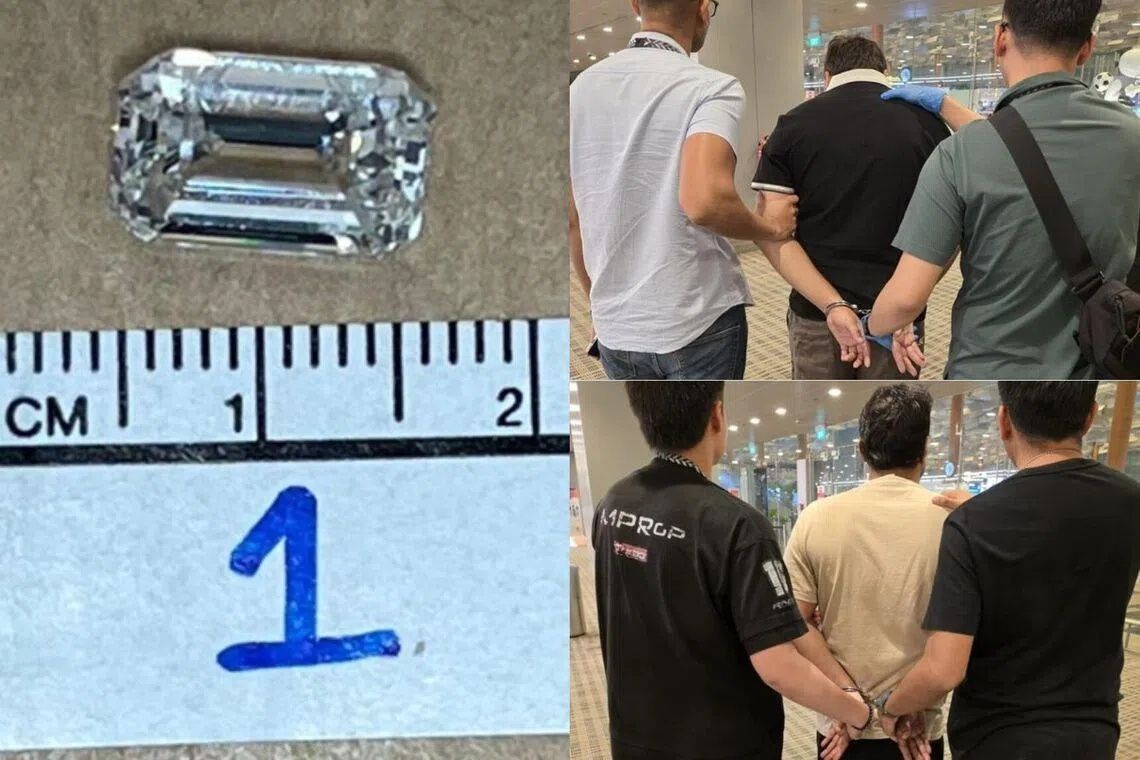
A sophisticated heist at a Chinatown jewellery store has culminated in the arrest of two men accused of making off with a diamond valued at over S$235,000. The 30-year-old and 42-year-old suspects were apprehended at Changi Airport Terminal 3 on June 19, the same day the theft was reported to authorities. The swift arrests follow a coordinated investigation involving multiple police divisions and the recovery of the stolen gemstone, which was later seized as evidence.
The incident unfolded on the afternoon of June 19 when police received a distress call from Kreta Ayer Road in Chinatown at 3.40pm. A jewellery store employee discovered that a high-value diamond had vanished under suspicious circumstances, prompting an immediate police response. The timing of the discovery proved crucial, as it allowed officers to mobilise resources before the suspects could leave Singapore's borders. The case has since highlighted the vulnerability of luxury retail establishments to organised theft operations that exploit the trust and procedures of customer service.
Investigators from the Central Police Division and Police Operations Command Centre worked methodically to identify the culprits. Officers deployed CCTV footage from the jewellery store and police camera networks to track the suspects' movements and establish their involvement in the theft. Ground enquiries and follow-up investigations enabled authorities to build a comprehensive picture of events leading up to and following the heist. This multi-layered investigative approach demonstrates the importance of coordinated intelligence-gathering in modern retail crime prevention.
The modus operandi employed by the two men reveals a calculated and practised technique. The suspects entered the store and feigned genuine interest in purchasing the diamond, thereby gaining the confidence and cooperation of the shop assistant. While the staff member allowed them to examine the precious stone in detail, the pair executed a seamless sleight-of-hand switch, replacing the genuine article with a counterfeit replica. The sophistication of the substitution suggests familiarity with jewellery handling or previous experience in similar thefts. The fake diamond they left behind was crude enough to be discovered upon routine inspection, but the perpetrators evidently hoped they would be long gone before detection.
Their departure from the shop without completing a purchase proved to be the critical error that triggered alarm bells. An experienced shop assistant recognised that the behaviour was suspicious and conducted a verification check of the diamond before it was too late. This vigilance essentially turned what might have been a successful theft into a case with a significant lead for investigators. The discovery was reported immediately to law enforcement, setting in motion the chain of events that would lead to the suspects' interception at the airport.
The arrests at Changi Airport Terminal 3 suggest that the two men were attempting to flee Singapore with their illicit gains. Their apprehension at such a high-profile departure point indicates they were identified and intercepted before clearing immigration, preventing them from escaping jurisdictional reach. The recovery of the stolen diamond at the time of arrest or during subsequent police operations has strengthened the prosecution's case and eliminated concerns about asset recovery complications.
Both men now face charges of theft in dwelling with common intention, a serious offence under Singapore law. If convicted, each faces a maximum prison sentence of seven years coupled with financial penalties. The severity of the potential sentences reflects both the high monetary value of the stolen property and the deliberate, premeditated nature of the crime. Their nationality has not been disclosed by the police, though the airport arrest location suggests they may have been foreign nationals or residents attempting to flee the country.
The Singapore Police Force responded to the arrests with a statement emphasising their commitment to combating luxury retail crime. Authorities reiterated their "zero tolerance" approach to such offences and pledged to pursue offenders with full vigour within the legal framework. This public posturing serves not only to reassure the community but also to deter potential offenders from attempting similar crimes in future.
The police have also issued specific guidance to the luxury retail sector, warning business owners and managers to remain vigilant against similar modus operandi. The appeal highlights the dangers of sleight-of-hand theft techniques and the importance of robust verification procedures when handling high-value items. Shop assistants and owners are being encouraged to exercise heightened caution during transactions involving precious gemstones and jewellery, particularly when customers display excessive interest without commitment to purchase. Staff training programmes that emphasise observation of suspicious behaviour patterns could prove invaluable in preventing future incidents.
For Malaysian readers and regional observers, the case serves as a reminder of the cross-border nature of organised retail crime in Southeast Asia. The sophistication and execution of this heist suggest that networks of professional thieves may be operating across multiple jurisdictions, exploiting differences in security protocols and regulatory frameworks. The rapid arrest and recovery demonstrates Singapore's effective law enforcement capabilities, yet comparable incidents may occur in other regional shopping districts and jewellery markets with less robust security infrastructure. Malaysian jewellers and luxury retailers should take note of the vulnerabilities exposed by this case and consider whether their own establishments possess adequate safeguards against similar techniques.

