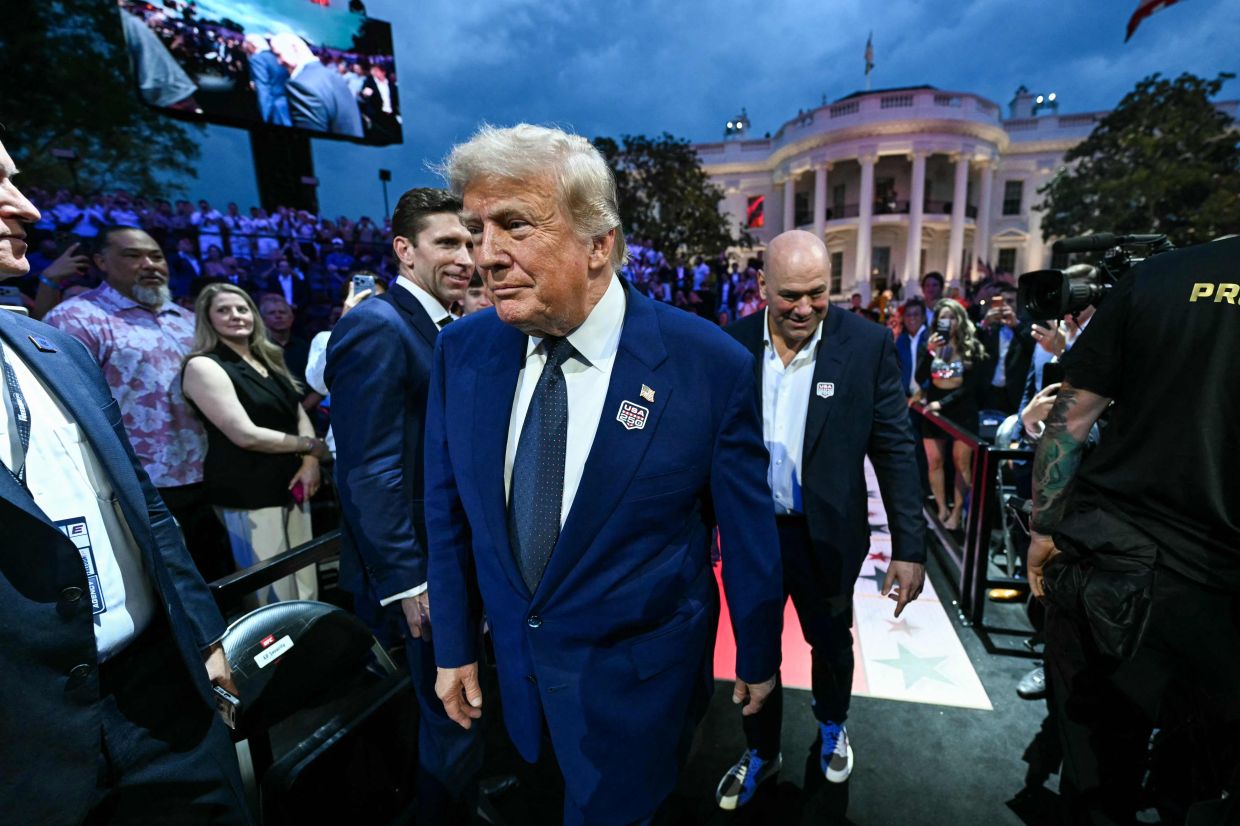
Donald Trump rang in his 80th birthday with an unconventional celebration that brought the brutality of cage fighting to one of America's most prestigious addresses. The Ultimate Fighting Championship event, hosted on the White House South Lawn on Sunday evening, represented a striking departure from the staid traditions typically observed at the president's residence, with a nearly 100-foot-tall arena structure dominating the landscape in preparation for seven matches that would stretch into the night.
The decision to stage the UFC event at the White House reflected Trump's longstanding enthusiasm for the sport and his recognition of the UFC's significant role in his 2024 election victory. The organisation's predominantly young, male fanbase had proven instrumental in mobilising support during the campaign, making the birthday showcase both a personal indulgence and a symbolic gesture towards a key voting bloc. UFC President Dana White, a longtime associate of the president, confirmed that the spectacle originated from Trump's own vision, with the administration embracing the partnership through formal channels—the State Department and Federal Bureau of Investigation had both signed partnership agreements with the organisation.
The guest list underscored the convergence of technology, entertainment, and political power that has come to characterise Trump's inner circle. Mark Zuckerberg, chief executive of Meta Platforms Inc., and David Ellison, CEO of Paramount Skydance Corp., attended alongside Treasury Secretary Scott Bessent and multiple family members. Podcast personality Joe Rogan, whose programme reaches millions of young men who form the core UFC demographic, provided live commentary throughout the evening's matches. The inclusion of military servicemembers and Medal of Honor recipients, along with first responders escorting fighters into the arena, added a patriotic dimension to the proceedings while also broadcasting portions of the event to watch parties stationed at military bases, including as far afield as Okinawa, Japan.
The scale of the operation proved extraordinary, with the UFC investing over US$60 million to construct and execute the event. The distinctive "Claw" structure, which housed an octagon fighting cage with seating for 4,300 spectators, represented an architectural statement that dwarfed previous temporary installations on the South Lawn. An additional 120,000 or more members of the public were granted free access to viewing areas near the Ellipse through a lottery system, transforming the event into a mass spectacle that extended well beyond the White House grounds themselves. The financial commitment from the UFC, coupled with resource allocations from more than seven federal agencies as detailed in legal filings, created a footprint that seemed to rival the scale of state ceremonies.
Corporate sponsorships and promotional partnerships revealed the commercial infrastructure supporting the birthday spectacle. Cryptocurrency exchange Crypto.com and the Ram truck brand, owned by Dodge, featured prominently among sponsors listed on the UFC Freedom 250 website. More controversially, Trump's own family venture, World Liberty Financial, contributed an additional US$250,000 bonus pool for the top two fighters competing that evening, raising questions about the intermingling of personal business interests with presidential events. The decision to stage a news conference at the Lincoln Memorial, where fighters engaged in competitive insults and victory predictions, further illustrated how the celebration extended across Washington's most iconic locations.
Public reception to the event proved decidedly mixed, reflecting broader divisions in American attitudes toward the Trump presidency. A YouGov survey released on June 5 indicated that 51 percent of Americans disapproved of the White House hosting the UFC fights, while only 27 percent expressed approval. These numbers suggested that despite the event's appeal to Trump's political base, a majority of the electorate viewed the staging of professional combat sports at the president's residence as inappropriate or troubling. The controversy extended to formal legal challenges, with the Public Integrity Project filing a lawsuit that characterised the spectacle as a "volcano of corruption," though unsuccessful in stopping the proceedings.
The traditional functions of the White House South Lawn took on secondary importance as the Claw structure came to dominate the historic space. The lawn typically hosts the annual Easter Egg Roll and Congressional Picnic—ceremonial events that reflect the institution's historical continuity and civic purpose. While former President Joe Biden had installed a temporary ice rink on the grounds, the sheer height and footprint of the UFC arena exceeded previous architectural incursions into this carefully preserved setting. Trump himself playfully suggested that the structure might become permanent, comparing it favourably to the Eiffel Tower in a TikTok video, though he later clarified the comment as humorous. Official court filings indicated that dismantling of the structure would commence Monday morning at 10am.
The timing of the celebration proved particularly notable given Trump's imminent departure for France to participate in meetings of the Group of Seven leaders. The White House event thus represented a final flourish of domestic political theatre before transitioning to the more formal protocols of international diplomacy. According to the UFC, Trump would carry a championship belt awarded by the organisation during his travel to these higher-stakes discussions, a symbolic transference of the weekend's competitive spirit into the arena of global statecraft. The juxtaposition of cage fighting and multilateral diplomacy captured the essence of Trump's unorthodox approach to the presidency.
For Southeast Asian observers and Malaysian readers particularly, the event underscores the distinctive style that characterises contemporary American governance under Trump's leadership. The commodification of the White House, the integration of corporate sponsorships into state functions, and the direct appeal to demographic voting blocs through entertainment spectacle represent significant departures from established institutional norms. The UFC's expansion of its international broadcasting, including specific transmissions to military installations throughout Asia-Pacific regions, reflects how American popular culture and political messaging increasingly merge in pursuit of geopolitical influence. The event illustrated both the resources available to the world's wealthiest democracy and the controversies that arise when those resources are deployed in unconventional fashion.