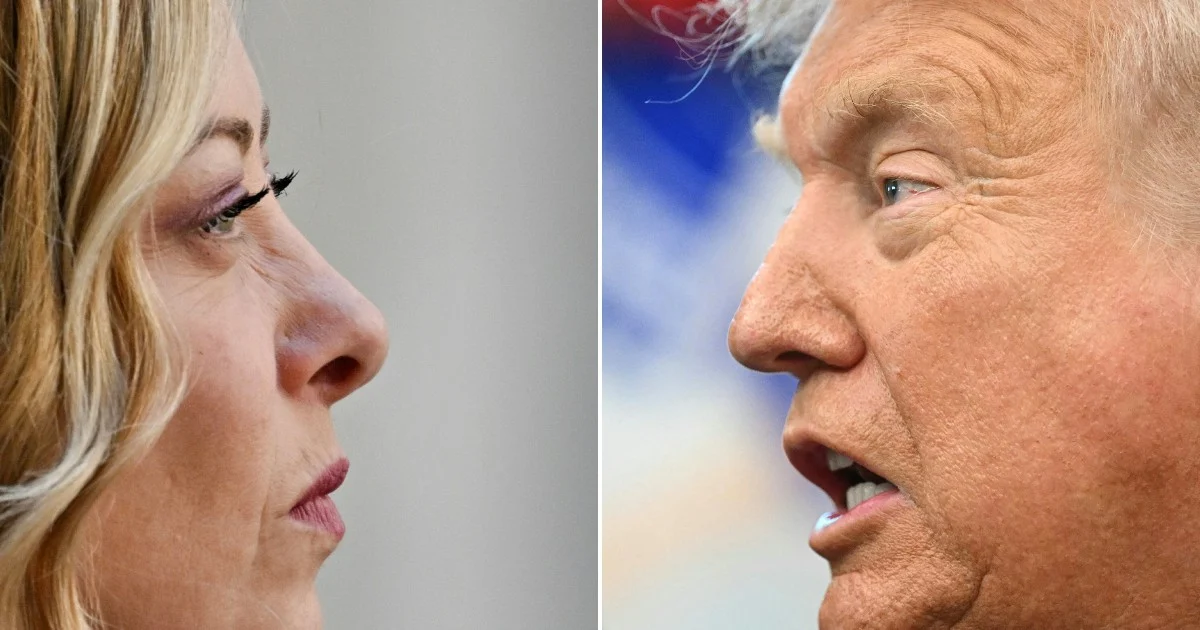
The relationship between the United States and Italy has experienced a notable strain as President Donald Trump publicly widened his disagreement with Italian Prime Minister Giorgia Meloni beyond personal grievances into substantive policy disputes. Trump's Saturday complaints concerning Meloni's efforts to secure a photograph with him represent a dramatic escalation from earlier tensions, with the American leader now framing the interpersonal clash within the context of deeper strategic disagreements between Washington and Rome.
The origins of the dispute trace back to interactions at G7 meetings, where Trump alleges Meloni repeatedly sought photo opportunities with him. Rather than treating this as a minor diplomatic courtesy issue, Trump has chosen to highlight the matter publicly, transforming what might ordinarily remain private into a televised disagreement. This approach reflects a departure from conventional diplomatic protocol, where such encounters typically generate goodwill rather than become sources of international friction.
What distinguishes this row from typical diplomatic posturing is Trump's explicit connection between the photograph dispute and more weighty geopolitical questions. By linking Meloni's personal requests to disagreements over Iran policy and NATO commitments, Trump has reframed a social interaction as emblematic of broader misalignments between Washington and Rome. This strategic positioning suggests the photograph matter serves as a proxy for fundamental disagreements about the direction of transatlantic relations and Mediterranean security strategy.
The Iran dimension adds particular complexity to this dispute, given the region's sensitivity to American-Iranian tensions and the role of Mediterranean powers in monitoring and potentially responding to developments in Middle Eastern affairs. Italy's position as a NATO member and European Union leader places it at the intersection of multiple strategic interests, and any perceived distance from Washington's Iran policies could have ramifications for regional security arrangements. Trump's invocation of Iran disagreements signals that the dust-up transcends personality and touches on consequential strategic decisions.
NATO tensions further complicate the bilateral relationship. Meloni has led Italy into an increasingly prominent role within the alliance, yet differences over defence spending, burden-sharing, and strategic priorities have periodically emerged between Rome and Washington. Trump's previous tenure saw repeated friction with European allies over NATO contributions, and his resurrection of these themes in connection with Meloni suggests such disagreements remain unresolved and potentially contentious.
For Malaysian observers and policymakers, this transatlantic turbulence carries indirect but meaningful implications. As a middle power navigating great power competition, Malaysia has developed relationships with both the United States and European partners, including Italy. Deteriorating US-European coordination, particularly within NATO, can create uncertainty for Southeast Asian nations seeking to maintain balanced partnerships across the Indo-Pacific and beyond. When major Western powers experience friction, the stability of the international order that developing nations depend upon for predictable engagement comes into question.
The public nature of Trump's complaints also signals a potential shift in diplomatic norms. Historically, leaders of allied nations have handled disagreements through private channels before any public airing becomes necessary. The resort to televised accusations and counter-claims suggests either a breakdown in back-channel communication or an intentional strategy to pressure Meloni through media exposure. This approach could set precedent for how other disputes might be handled, potentially making future diplomatic resolutions more difficult.
Meloni's response to these accusations will shape how this incident unfolds. As a conservative leader with strong ties to Trump within international right-wing circles, she faces a delicate balancing act between defending Italy's autonomy and maintaining beneficial relations with Washington. Her ability to navigate this challenge while preserving Italy's standing within both NATO and the European Union will influence broader calculations about transatlantic cohesion that Southeast Asian governments monitor closely.
The underlying tensions reflect deeper questions about the future of the Western alliance. As the United States recalibrates its global priorities and leadership style, traditional allies must reassess their strategies for maintaining influence in Washington. Italy, like other European powers, must determine whether it can sustain its relationship with the United States while pursuing independent foreign policies on issues ranging from Iran engagement to defence modernisation. This uncertainty, now playing out publicly, adds another layer of unpredictability to an already complex geopolitical landscape that affects global stability and Southeast Asia's strategic environment.
The trajectory of this dispute will likely influence how other bilateral relationships develop during Trump's tenure. If relatively close allies like Italy face public criticism and policy disagreements, other nations may question the reliability of commitments from Washington. For the region, maintaining access to American security guarantees and economic partnerships remains important even as European alliances undergo stress. How Trump and Meloni ultimately resolve their differences could serve as a template for managing similar tensions with other partners around the world.