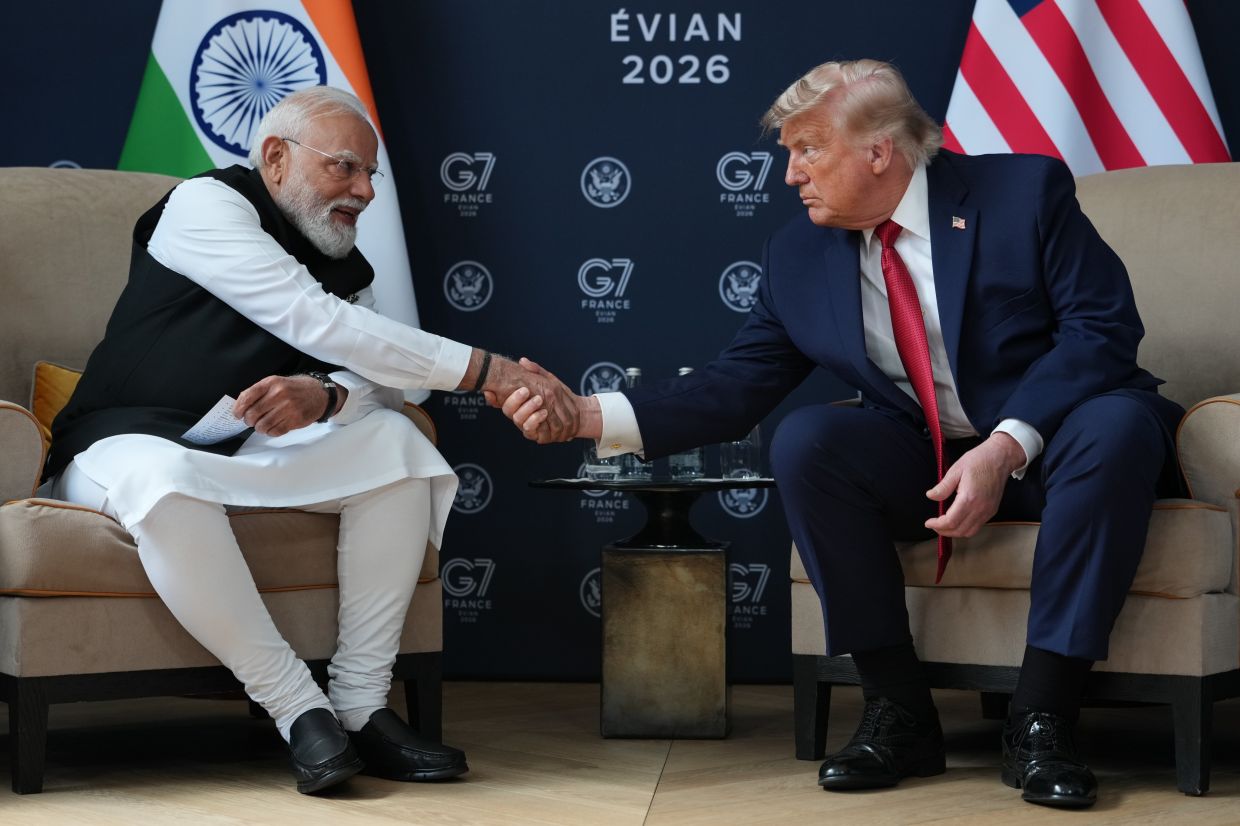
Donald Trump's apparent indifference to the deaths of three Indian sailors during a bilateral meeting with Prime Minister Narendra Modi has ignited a diplomatic firestorm, threatening to undermine the carefully cultivated strategic relationship between Washington and New Delhi. Speaking to journalists following their first summit in 16 months, Trump characterised commercial maritime operations as inherently hazardous, dismissing the incident with remarks that India's political establishment and public have interpreted as deeply disrespectful. His refusal to offer condolences or express any sense of responsibility has exposed the fragility beneath the surface of US-India partnership, despite both leaders' effusive language about their personal rapport and shared strategic interests.
The contentious episode centres on last week's US military strike against the Palau-flagged MT Settebello, which resulted in the deaths of three Indian nationals working aboard the vessel. American Central Command justified the attack as necessary enforcement of its blockade on Iranian ports in the Strait of Hormuz, framing the vessel as engaged in illicit transport of Iranian oil. However, the collateral loss of Indian lives has exposed the human cost of American Middle East policy and raised uncomfortable questions about proportionality and rules of engagement when commercial ships operated by multinational crews are involved. The US military also targeted two additional commercial vessels carrying Indian crew members during the same operations, intensifying New Delhi's concerns about the safety of its maritime workers in contested waters.
During their private discussions, Indian Foreign Secretary S. Jaishankar registered what he characterised as a "strong protest" regarding the killings, according to official statements. Yet the State Department's account of the conversation revealed Washington's uncompromising stance, with officials emphasising that "violations of the US blockade and the illicit transport of Iranian oil will not be tolerated." This rhetorical positioning—which bracketed the loss of life with enforcement warnings—signalled to Indian officials that the Trump administration viewed the incident primarily through a strategic-enforcement lens rather than as a humanitarian tragedy meriting diplomatic sensitivity. The disconnect between New Delhi's moral outrage and Washington's operational framing has crystallised the underlying tensions in a relationship built more on strategic alignment than on shared values or mutual deference.
Trump's remarks to the media compounded Indian grievance. He stated simply, "I heard about that," before pivoting to platitudes about commercial shipping being "a rough profession" and expressing affection for seafarers in general terms. His assertion that such incidents "have been happening throughout time" appeared to normalise the loss of life rather than acknowledge any particular responsibility or remorse. This framing frustrated Indian analysts and politicians who expected at minimum a perfunctory expression of sympathy from the American president, particularly given the strategic importance India holds in US Indo-Pacific strategy. The absence of such diplomatic courtesy—a basic element of statecraft—suggested either deliberate messaging or a troubling casualness about casualties incurred during American military operations.
Public reaction in India has been swift and acerbic. Videos emerged showing auto rickshaw drivers in Delhi removing Trump posters distributed by the US embassy as part of a birthday campaign for the United States, transforming what was intended as soft-power outreach into a symbol of American disregard. Opposition leader Rahul Gandhi seized on the incident to criticise Modi's government, accusing the Prime Minister of passivity in the face of what he termed American disrespect. "A free country would never tolerate such language," Gandhi posted on social media, characterising India's response as subservient compliance rather than principled pushback. This domestic political dimension adds complexity to the bilateral relationship, potentially constraining Modi's ability to appear accommodating to American interests without facing accusations of national betrayal.
The timing of the controversy is particularly awkward given the trajectory of US-India engagement. Trump and Modi last convened in Washington in February 2025, where discussions began on finalising a comprehensive bilateral trade agreement, positioning India among the first nations to enter serious trade negotiations with the new American administration. That summit generated optimism about deepening commercial ties and closer strategic coordination, though substantive progress has remained limited. Trade talks are still ongoing regarding an interim agreement, with negotiations continuing between American and Indian representatives. The broader architecture of cooperation—including the Quad framework involving Japan and Australia—has provided the multilateral scaffolding for US-India alignment, yet maritime incidents and divergent security interpretations threaten to create friction points that complicate these larger frameworks.
During his press remarks, Trump attempted to project intimacy with Modi, calling him a "tough trader" and "great guy" while expressing intentions to visit India in the future. He also asserted that "we cannot be closer," referring to both the personal relationship between the two leaders and the bilateral partnership itself. Yet such reassurances ring hollow when juxtaposed against American military operations that result in Indian deaths and American diplomatic responses characterised by indifference. Secretary of State Marco Rubio has sought to manage the damage, characterising India as one of America's "most important strategic partners" during a subsequent visit to the country. Rubio's efforts to emphasise the relationship's centrality to American grand strategy appear designed to contain political fallout in New Delhi, suggesting Washington recognises the severity of the diplomatic challenge.
The incident illuminates a deeper asymmetry in the US-India relationship. While American strategists value India primarily as a counterweight to Chinese influence in the Indo-Pacific and as a market for American goods and investment, Indian public opinion remains sensitive to perceptions of American dominance and indifference to Indian interests. For many Indians, Trump's casual dismissal of the sailors' deaths evokes historical patterns of American power exercised without adequate regard for consequences affecting Indian citizens. The incident thus threatens to undermine the elite consensus supporting closer US-India ties, potentially emboldening voices within India's political and intellectual establishments that advocate for greater strategic autonomy and less deference to American priorities in the Middle East and beyond.
Looking forward, both governments face pressure to restore confidence in their partnership. For Modi, the challenge involves maintaining the strategic benefits of US alignment while addressing domestic expectations that India's government should defend national dignity and the lives of Indian workers abroad. For Trump, the calculus involves weighing the importance of the India relationship against the operational imperatives of enforcing its Middle East blockade. Unless Washington makes visible efforts to acknowledge the tragedy and demonstrate greater sensitivity to Indian concerns about the safety of maritime workers, public sentiment in India may gradually shift toward questioning whether the strategic benefits of American partnership justify the human costs and diplomatic indignities that appear to accompany it.

