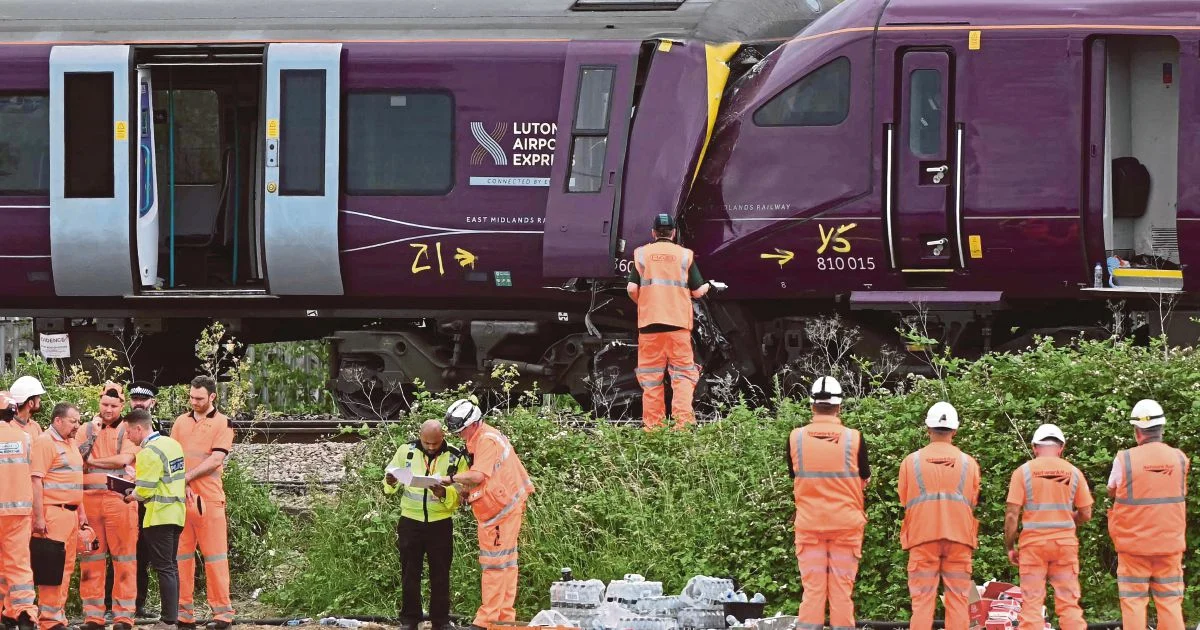
A passenger train collision that occurred north of London has claimed the life of a driver and sent dozens of people to hospital, prompting a full-scale investigation into what triggered the crash. The incident, centred on the Bedford area, has become a major incident requiring co-ordinated emergency response and continues to be scrutinised by accident investigators who commenced work on Saturday to determine the precise sequence of events leading to the collision.
Among the 28 individuals hospitalised following the impact, nine have been classified as critically injured, highlighting the severity of the forces involved in the crash. The remaining injured passengers and staff were assessed as requiring medical attention ranging from moderate to minor injuries. Emergency services that responded to the scene worked methodically to extract those trapped within the damaged carriages and provide immediate trauma care to the wounded.
The investigation into the collision involves detailed examination of the track infrastructure, signalling systems, weather conditions, and the operational procedures followed by train operators at the time of the incident. Train safety in the United Kingdom remains a central concern for transport authorities and operators, particularly given the volume of passenger and freight movements across the rail network daily. The Bedford area, through which multiple rail routes pass serving commuters and long-distance travellers, has become the focal point of this investigation as experts gather evidence.
For Malaysian and Southeast Asian observers, such incidents serve as reminders of the infrastructure challenges facing developed rail networks. While the UK's rail system remains one of the most technically advanced globally, collisions nonetheless occur, prompting continuous review of safety protocols and investment in newer signalling and collision-avoidance technologies. The region's expanding rail infrastructure, particularly in countries like Malaysia with the development of rapid transit corridors and proposed high-speed rail projects, benefits from studying lessons learned from incidents in more mature systems.
The loss of a driver in such circumstances raises important questions about workplace safety and the extreme pressures faced by rail professionals. Train operators work within highly regulated environments with stringent protocols, yet unexpected mechanical failures, signalling errors, or human factors can still trigger catastrophic consequences. The investigation will likely examine whether any communication breakdowns occurred between different train services sharing the same track corridor.
The injury distribution across the 28 hospitalised individuals suggests the collision impacted multiple carriages or that passengers were distributed across different sections of the trains involved. Triage protocols employed by paramedics at the scene would have classified those with the most life-threatening injuries as critical priority, enabling rapid transport to major trauma centres. The recovery process for those critically injured will likely extend over weeks or months, with some potentially facing long-term consequences from their injuries.
From a systemic perspective, such incidents prompt regulatory bodies to review whether spacing requirements between trains, permitted speeds in particular sections, and driver alertness protocols remain adequate. The UK's Rail Accident Investigation Branch, responsible for conducting such inquiries, typically releases detailed reports months after incidents occur, identifying contributing factors and recommending improvements. These recommendations often influence policy across multiple rail operators and guide investment in safety infrastructure upgrades.
Passenger confidence in rail travel can be affected by high-profile incidents of this nature, though statistically rail remains among the safest forms of transport. The incident's impact on public perception will depend partly on how thoroughly the investigation is communicated and what remedial actions emerge from the findings. Clear communication about safety measures and improvements can help restore traveller confidence in the weeks following such incidents.
For Malaysia, which is progressively expanding its rail infrastructure including the proposed Kuala Lumpur-Singapore high-speed rail and various urban transit projects, understanding how mature rail systems maintain and improve safety records provides valuable context. The UK's approach to post-incident investigation and transparency in findings offers a model for how responsible transport authorities should operate when serious incidents occur. Investment in modern signalling technology, regular infrastructure maintenance, and operator training represents the intersection where safety culture and operational excellence meet.
The full implications of this collision will become clearer once the investigation concludes and formal findings are released. In the interim, rail authorities across the UK will likely review operational procedures to identify any immediate corrective measures that can reduce collision risks while investigations proceed. The Bedford incident will join the historical record of UK railway safety, contributing to the body of knowledge that shapes how rail systems worldwide approach the challenge of moving millions of people safely each day.

