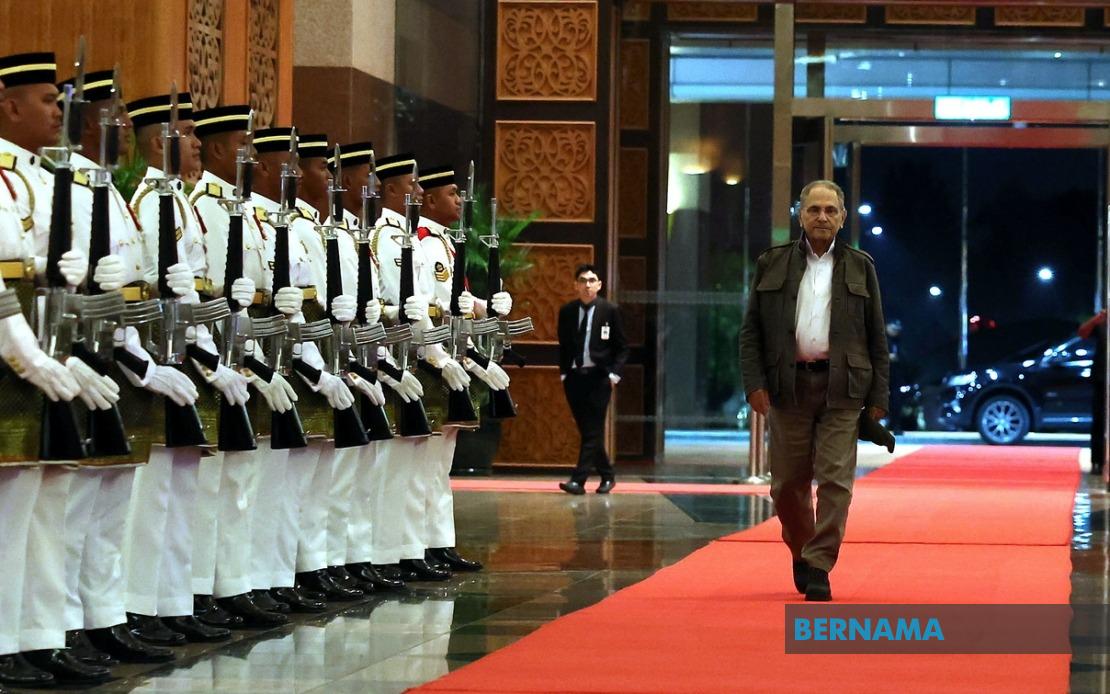
Timor-Leste's President Jose Ramos-Horta departed Malaysia early today, concluding a five-day diplomatic mission that underscored deepening ties between the two Southeast Asian nations. The Nobel Peace Prize laureate and his delegation boarded a Batik Air flight from Kuala Lumpur International Airport's Terminal 1 at 2.15 am, departing Sepang for Dili after days of high-level engagements focused on bilateral cooperation and regional integration.
The ceremonial send-off reflected the diplomatic significance of the visit, with Ramos-Horta receiving a Guard of Honour comprising two officers and 26 personnel from the First Battalion Royal Ranger Regiment upon his arrival at the Bunga Raya Complex. This formal protocol underscored Malaysia's recognition of Timor-Leste's elevated status as a full ASEAN member state, a position the nation achieved on October 26, 2025, following Malaysia's instrumental support during its chairmanship.
During his time in Malaysia, Ramos-Horta participated in a major dialogue session titled "A Changing World, Enduring Values" on June 15, where he offered candid assessments of bilateral relations. The President described connections between Timor-Leste and Malaysia as "exceptionally good," reflecting mutual respect and shared democratic values. He specifically commended Malaysia's institutional achievements across security infrastructure, democratic governance, and economic advancement—attributes relevant to Timor-Leste's own nation-building agenda as it develops post-independence capabilities.
Ramos-Horta's remarks encompassed appreciation for Malaysia's sustained commitment to Timor-Leste stretching back decades. He highlighted Malaysia's pivotal peacekeeping contributions during 1999, a critical juncture when Timor-Leste was establishing sovereignty following the independence referendum. This historical acknowledgment carries weight in regional diplomatic circles, as it validates Malaysia's role in broader ASEAN peace and stability operations that have characterized the organization's approach to member-state crises.
A significant dimension of the visit involved economic outreach. Prime Minister Datuk Seri Anwar Ibrahim hosted a luncheon at Seri Perdana Complex where the two leaders discussed concrete pathways for expanded cooperation. The conversation ranged across trade expansion, direct investment flows, workforce development initiatives, and educational exchange programs. Such discussions reflect Malaysia's strategic interest in supporting Timor-Leste's economic development while simultaneously creating market opportunities for Malaysian enterprises in the broader Southeast Asian context.
The economic partnership remains nascent but holds considerable potential. Bilateral trade figures for 2024 reveal significant asymmetry, with total merchandise exchange valued at USD18.72 million, comprising Malaysian exports of USD18.37 million against imports from Timor-Leste of only USD0.35 million. This imbalance suggests substantial scope for Timorese economic diversification and capacity-building, areas where Malaysian technical expertise and investment could prove catalytic. The limited trade volume also underscores both nations' opportunities to deepen commercial ties through strategic initiatives in key sectors.
Ramos-Horta's invitation to Malaysian investors reflects Timor-Leste's confidence in its economic fundamentals. The President specifically highlighted the country's advantageous position: manageable debt levels, a functioning sovereign wealth fund, and backing from multilateral development institutions. These financial metrics are designed to attract portfolio investment and direct capital flows into Timor-Leste's infrastructure development agenda, an area where Malaysian construction and engineering firms possess considerable comparative advantage and regional track record.
Looking forward, Ramos-Horta expressed confidence regarding Timor-Leste's capacity to assume ASEAN's rotating chairmanship in 2029. This forward-looking statement carries implications for Malaysia's regional development agenda, as Timor-Leste's institutional readiness affects the association's overall capacity to coordinate regional initiatives. The President's commitment to accelerating infrastructure and facilities development suggests Timor-Leste is treating the 2029 summit as a catalyst for national modernization, an aspiration where Malaysian expertise in event management and infrastructure delivery could facilitate partnerships.
The visit crystallizes Timor-Leste's integration into ASEAN's institutional framework following its relatively recent accession. For Malaysia, supporting Timor-Leste's economic development and administrative capacity-building aligns with the broader ASEAN principle of equitable member development and collective prosperity. The engagement also positions Malaysia as a mentor state capable of facilitating institutional transition and supporting newer members' capacity aspirations.
Beyond bilateral arrangements, the diplomatic mission highlights ASEAN's expanding footprint in Southeast Asia. Timor-Leste's membership, formalized just months ago, brings the organization's constituent membership to eleven countries and extends ASEAN's geographic and demographic reach. Malaysia's instrumental role in facilitating this expansion, coupled with ongoing support for Timor-Leste's institutional development, reflects the organization's commitment to inclusive regional architecture and demonstrates how established ASEAN members can support newer entrants' integration and development trajectories.

