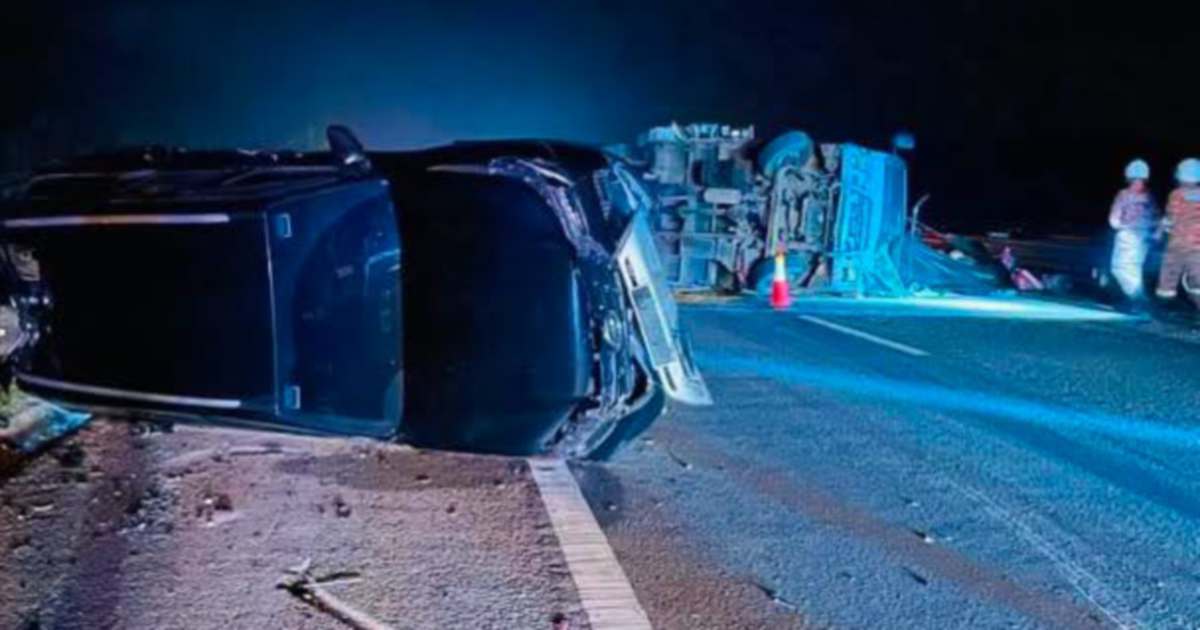
A three-vehicle collision on the East Coast Expressway has left seven people injured, including three media officers attached to Deputy Prime Minister Datuk Seri Dr Ahmad Zahid Hamidi. The accident occurred early this morning at Kilometre 144 of the major north-south expressway near Maran in Pahang, disrupting traffic along one of Malaysia's busiest arterial routes during peak travel hours.
The three media professionals, who form part of the Deputy Prime Minister's communications team, sustained injuries of varying severity but none were reported to face life-threatening complications. Their involvement in the incident highlights the occupational hazards faced by press officers and media personnel who frequently travel alongside government officials for coverage and documentation purposes. The remaining four casualties from the pile-up comprised other vehicle occupants and passengers at the scene.
The East Coast Expressway, which stretches across Peninsular Malaysia's east coast and connects major urban centres from Kuala Lumpur to Terengganu, experiences substantial daily traffic volumes. Accidents at this location underscore ongoing safety concerns about driving conditions along the corridor, particularly during early morning hours when visibility may be compromised and driver fatigue becomes a factor. The incident occurred at a section that experiences significant commercial and passenger vehicle movement.
Emergency response teams from the Maran area attended the scene promptly to manage the aftermath of the collision. Medical personnel assessed all seven injured individuals and provided necessary first aid before transport to nearby healthcare facilities. The coordination between traffic authorities and emergency services enabled relatively swift clearance of the accident, though residual congestion affected subsequent traffic flow for several hours following the incident.
The exact circumstances leading to the three-vehicle collision remain under investigation by traffic authorities and police personnel assigned to the expressway. Preliminary assessments will examine factors including vehicle speeds, road conditions, weather circumstances, and driver actions in the moments preceding impact. Such investigations are routine following multi-vehicle accidents to establish causation and identify any contributing factors that may inform future road safety interventions.
For media personnel working in Malaysian government communications, the incident represents a stark reminder of the physical demands and inherent risks associated with their professional responsibilities. Press officers and media teams regularly accompany high-ranking officials on official engagements, parliamentary sessions, and public appearances throughout the country, requiring extensive travel by road, air, and other transport modes. The injuries sustained by the three officers underscore how accidents can strike suddenly regardless of precautions taken.
The Deputy Prime Minister's office is likely to review travel protocols and vehicle safety measures following this incident, consistent with standard procedures adopted by government departments after accidents involving official personnel. Such reviews typically examine vehicle maintenance standards, driver qualifications, route planning, and communication procedures to minimise future risks to travelling staff and accompanying media teams.
The East Coast Expressway has historically recorded several significant accidents despite continuous improvements to road infrastructure and safety systems. The highway's dual-carriageway design and modern facilities provide good capacity for traffic flow, yet human factors and external conditions continue to contribute to collisions. The Maran section, situated in Pahang's interior, serves as a crucial link for traffic moving between the east coast states and central regions.
Traffic safety authorities regularly campaign for defensive driving practices, speed compliance, and proper vehicle maintenance on expressways. These efforts aim to reduce accident frequencies and severity, particularly along high-speed corridors where impact forces can be substantial. Early morning hours consistently record elevated accident rates nationally, prompting authorities to intensify safety messaging during these periods.
The incident will likely be documented in official traffic safety statistics compiled by the Road Safety Department and the National Police. Such data informs policy decisions regarding infrastructure improvements, enforcement operations, and public awareness campaigns targeting specific accident-prone locations and time periods. The East Coast Expressway regularly features in safety analysis given its significance to national transport networks.
All seven injured individuals were receiving medical attention following transport to appropriate facilities. Their prognosis and recovery timelines would be determined by attending medical professionals based on thorough assessments of injuries sustained. The incident reinforces why comprehensive travel safety protocols remain essential for government officials and their accompanying staff who undertake frequent journeys across Malaysia's transport infrastructure.

