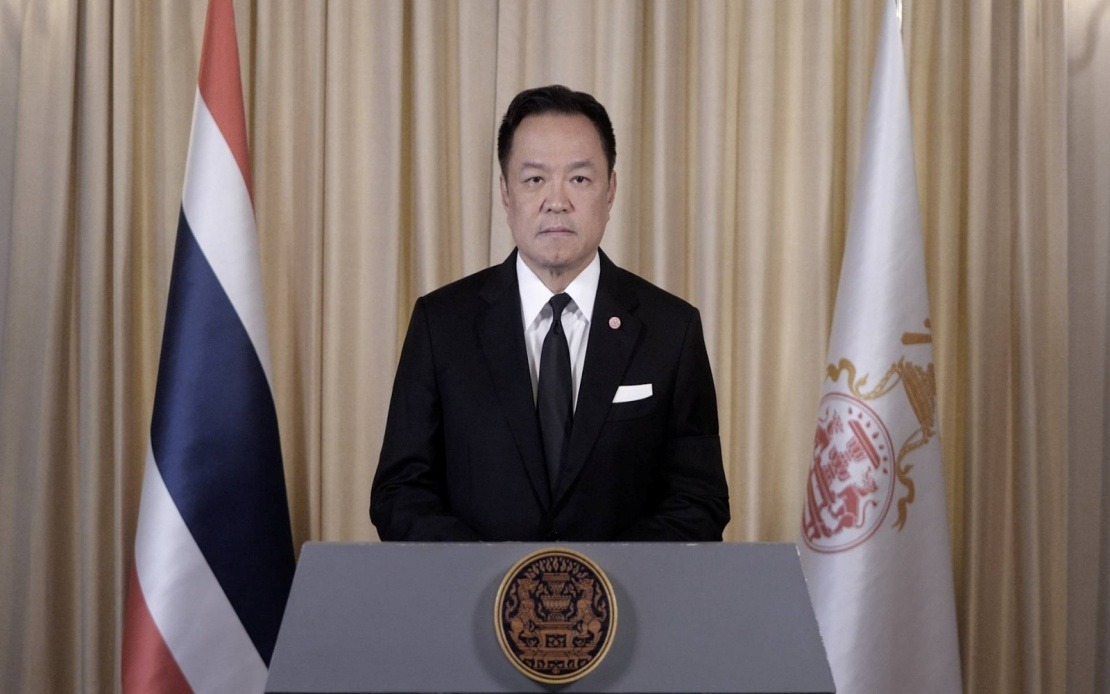
Thailand's government has signalled cautious optimism regarding reports of a ceasefire between the United States and Iran, viewing such a development as a potential catalyst for easing global economic pressures and supporting regional growth. Prime Minister Anutin Charnvirakul told reporters on Monday that any breakthrough in West Asia would represent a meaningful positive development capable of mitigating ongoing international crises and strengthening economic conditions across affected markets. The remarks came after US President Donald Trump announced on Sunday that an agreement with Iran had been finalised, including authorisation to reopen the Strait of Hormuz and lift a US naval blockade that had disrupted global shipping lanes.
Anutin emphasised that Thailand maintains robust capacity to navigate external shocks and geopolitical turbulence despite persistent regional tensions. Rather than adopting reactive postures toward daily developments, the Thai government pursues comprehensive long-term strategic planning to cushion the kingdom against unexpected disruptions. The Prime Minister highlighted that Thailand has successfully absorbed previous disruptions to global supply chains, demonstrating resilience through institutional adaptability and forward-thinking economic management.
Deputy Prime Minister and Finance Minister Ekniti Nitithanprapas reinforced this sentiment, characterising any resolution to the Middle East conflict as genuinely advantageous for both the global economy and Thailand specifically. Ekniti underscored that terminating the conflict would generate immediate benefits through moderating energy prices and diminishing the economic risks that have been constraining growth trajectories. The prospect of lower oil prices and reduced volatility represents meaningful relief for an energy-dependent economy like Thailand, which has been absorbing elevated costs across multiple sectors.
Energy pricing represents a particularly acute concern for Southeast Asian economies, including Thailand. Sustained crude oil expenses filter through supply chains, affecting transportation costs, manufacturing competitiveness, and ultimately consumer prices for essential goods. A ceasefire reducing geopolitical risk premiums embedded in global energy markets would provide tangible relief, potentially allowing central banks to adopt more accommodative stances and businesses to expand investment horizons. For Malaysia and other regional neighbours similarly exposed to energy price volatility, such developments carry substantial implications for inflation management and purchasing power preservation.
Ekniti indicated that Thai authorities would maintain vigilant monitoring of inflationary pressures and their cascading effects on households and small enterprises. The Finance Minister expressed measured optimism that improving global conditions stemming from Middle East stabilisation could translate into stronger economic expansion than currently forecast by international institutions. This projection reflects recognition that downside risks to growth have been partially attributable to geopolitical uncertainty and energy market instability. Resolution of these tensions could unlock pent-up business confidence and consumer spending.
Particularly notable is Thailand's determination to proceed with its ambitious 200-billion-baht energy transition programme despite expectations that peace might suppress crude oil prices. This decision reflects strategic thinking beyond immediate cost considerations. Thai policymakers recognise that sustained dependence on imported oil and natural gas exposes the kingdom to perpetual supply shocks and price volatility, regardless of temporary relief from individual geopolitical episodes. The energy transition investment represents insurance against future disruptions and positioning for long-term competitive advantage as global energy systems evolve.
For Malaysia and the broader Southeast Asian region, Thailand's positioning carries instructive implications. The kingdom's emphasis on structural economic adaptation rather than tactical responses to headlines suggests a maturation in regional policymaking. Rather than celebrating temporary respite from energy price pressures, Thai authorities are leveraging such breathing room to implement transformative energy infrastructure changes. This approach recognises that genuine economic resilience emerges from fundamental structural improvements, not fluctuations in commodity prices.
The Malaysian context parallels Thailand's situation in several respects. Both nations depend substantially on imported energy, both maintain significant export manufacturing sectors sensitive to supply chain disruptions, and both serve as regional hubs navigating global geopolitical crosscurrents. Malaysia's own energy transition aspirations and economic diversification priorities would similarly benefit from stabilised international conditions. However, the Thai experience also underscores that external stability, while beneficial, cannot substitute for deliberate domestic policy measures targeting long-term competitive positioning.
Regional integration considerations further amplify the significance of Middle East stability for Southeast Asia. Supply chain resilience increasingly depends on predictable maritime transit through chokepoints like the Strait of Hormuz. ASEAN economies collectively depend on reliable, affordable energy access to sustain manufacturing competitiveness and support rising living standards. Disruptions in West Asian geopolitics cascade through regional supply networks, affecting everything from petrochemical costs to shipping rates affecting export competitiveness. Conversely, stabilisation in that region creates space for Southeast Asian economies to concentrate on regional integration projects and internal economic modernisation.
The Thai government's framing of the ceasefire as supporting "both the global economy and Thailand" reflects understanding that regional prosperity depends on international stability. Yet implicit in this positioning is recognition that Thailand cannot depend indefinitely on favourable external circumstances. The decision to maintain energy transition investments despite potentially lower oil prices demonstrates that forward-thinking regional governments must pursue structural economic improvements that transcend commodity price cycles. For Malaysia and other Southeast Asian nations, this principle merits emulation.