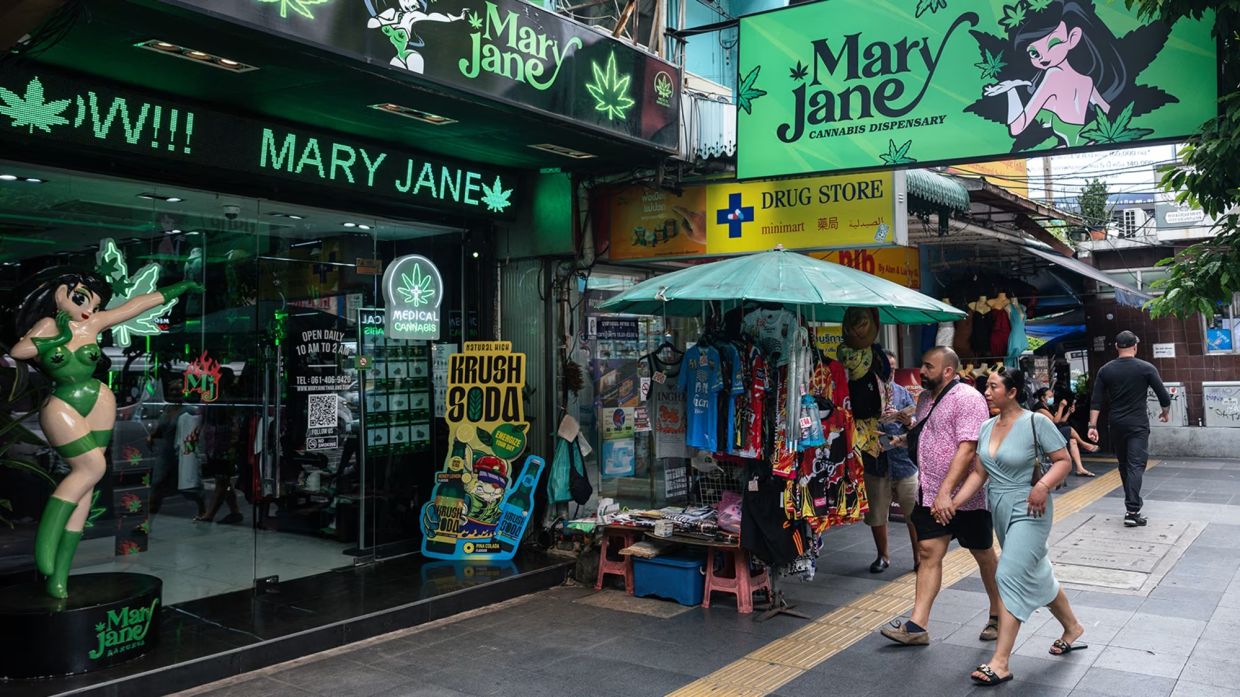
Thailand's approach to cannabis regulation has entered a critical phase after the House Public Health Committee held substantive discussions in mid-June on whether the plant should be reclassified as a controlled narcotic. The meeting underscored fundamental disagreements between health authorities and anti-drug advocates who favour tighter restrictions, and cannabis operators and farmers who argue for a stable legal framework. The debate reflects a broader tension across Southeast Asia as countries attempt to manage cannabis legalisation while protecting public health and economic interests.
Chaired by Sakoltee Phattiyakul, the committee convened medical professionals, government agencies, academics and representatives from industry and community networks to examine Thailand's evolving cannabis framework. Since the country decriminalised cannabis in June 2022, regulators have struggled to contain what many view as an uncontrolled proliferation of sales outlets operating in legal grey zones. A series of public health ministry regulations introduced in June 2025 attempted to impose controls on research, sales, processing and exports aligned with international standards, yet enforcement challenges persist.
The Department of Thai Traditional and Alternative Medicine currently classifies cannabis as a controlled herb under the 1999 Protection and Promotion of Thai Traditional Medicine Wisdom Act, a categorisation that has proven inadequate for managing widespread commercial expansion. Officials acknowledge that concerns have mounted since liberalisation, with unregistered cultivation becoming common and informal sales channels operating with minimal oversight. This regulatory vacuum has created opportunities for what officials describe as grey market operators who exploit loopholes while ostensibly remaining within legal bounds.
Deputy chairman Ekkapop Sittiwantana of the People's Party proposed temporarily returning cannabis to the narcotics list as an interim measure until comprehensive legislation takes effect. He emphasised that unregistered farms and direct informal sales networks have proliferated, creating enforcement difficulties and enabling illicit actors to operate under the guise of legitimate businesses. Sittiwantana advocated for mandatory plant registration systems that would provide authorities with visibility into cultivation and distribution chains while the government completes work on dedicated cannabis legislation.
Associate Professor Smith Srisont, representing networks of medical doctors, academics and community organisations focused on drug-related harm reduction, raised concerns that the current regulatory approach leaves dangerous loopholes unaddressed. While cannabis extracts exceeding 0.2 percent THC retain narcotic classification, the practical effect of widespread availability has already manifested in communities. He argued that returning cannabis to full narcotic control temporarily, followed by development of specialised regulatory law, would represent a more cautious approach than the present framework. Srisont highlighted that various cannabis plant components fall outside criminal controls when cultivated, creating inconsistent enforcement.
The Food and Drug Administration outlined its licensing and inspection mechanisms, covering production facilities, processing plants, imports and retail sales through certified shops. Inspection protocols require testing of raw materials and verification that finished products meet label standards. FDA representatives reported that most inspected cannabis-derived products comply with regulatory standards, yet they acknowledged that the principal challenge remains sales occurring through channels insufficiently integrated into formal legal systems. This gap between registered outlets and actual market activity reflects a persistent implementation problem.
Cannabis business operators and networks, particularly the Thai Cannabis Future Network, presented counterarguments emphasising that legal enterprises face unsustainable competition from black market suppliers, unauthorised imports and regulatory uncertainty. They cited concerns about alleged unofficial pressure linked to licensing decisions and problematic medical prescription systems that impose excessive costs on farmers or are reportedly circumvented through unofficial channels unconnected to legitimate healthcare. Industry representatives argued that cannabis possesses broader economic significance and cultural value beyond pharmaceutical applications.
The Thai Cannabis Future Network advocated for legislation developed through inclusive public consultation rather than frameworks designed primarily to benefit large-scale investors and corporate actors. They contended that small farmers and legitimate businesses require stability and fair treatment under law. This position reflects wider anxieties among agricultural producers and small operators about being displaced by better-capitalised corporations once comprehensive regulation is implemented. The network's concerns about access to medical certifications and fair regulatory treatment highlight implementation challenges beyond legislative design.
Government agencies are simultaneously working on a comprehensive cannabis and hemp bill intended to replace the current fragmented regulatory approach. Originally submitted to the Cabinet under the previous administration, the draft legislation stalled when Parliament was dissolved. The current public health minister has prioritised reintroducing the proposal, with public consultation hearings expected to conclude by late July before Cabinet resubmission. This timeline indicates that Thailand intends to move toward unified legislation within months, though the committee's interim recommendations could significantly influence that bill's final form.
Sakoltee concluded the meeting by requesting officials compile inventories of licensed cannabis retailers in Bangkok and FDA-certified cannabis products for detailed review. He expressed concern that cannabis has become excessively accessible and indicated that future legislation should establish distance requirements between cannabis shops and educational institutions. These specific recommendations suggest the committee is preparing alternative regulatory proposals alongside the public health ministry's bill, indicating Parliament may consider multiple legislative approaches.
The unfolding cannabis regulation debate carries implications extending beyond Thailand's borders. As other Southeast Asian nations evaluate cannabis policy, Thailand's experience demonstrates the substantial implementation challenges accompanying liberalisation without comprehensive legal frameworks. The tension between protecting young people from access, supporting agricultural producers and legitimate businesses, and limiting illicit market expansion reflects choices that regional governments will increasingly confront. Thailand's path forward will likely influence how other countries in the region approach cannabis regulation.

