The Bumiputera Agenda Steering Unit (TERAJU) has made a formal appeal for the upcoming federal budget to dedicate substantial resources toward advancing the Bumiputera Economic Transformation Plan 2035, underscoring the critical link between fiscal allocation and economic empowerment for Malaysia's indigenous business community.
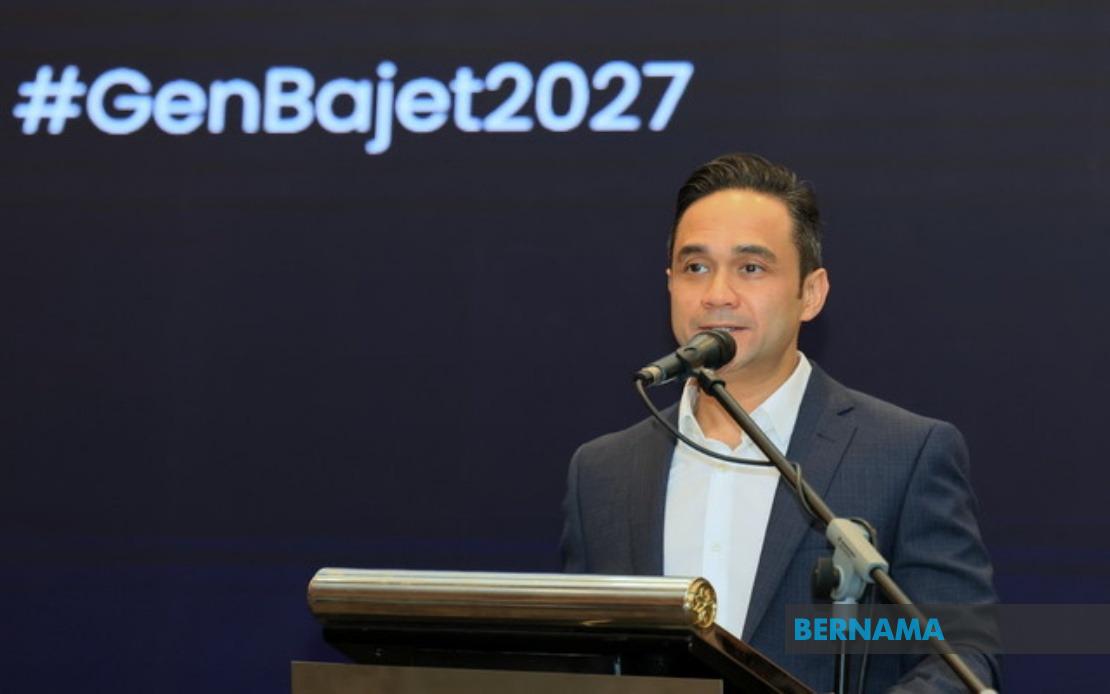
Speaking in Cyberjaya, Nik Nazree Nik Abdul Rahman, senior director of TERAJU's Strategic Services Division, emphasised that meaningful progress on the government's flagship Bumiputera agenda hinges on securing robust financial backing. The unit has structured its ambitions around 132 distinct initiatives spanning the decade to 2035, each designed to meaningfully uplift Bumiputera socio-economic indicators and broaden economic participation among eligible communities.
The framing of this budget request reflects growing scrutiny over implementation capacity and outcomes rather than merely policy announcements. Nik Nazree acknowledged that while TERAJU has achieved 67 per cent progress in rolling out PuTERA35 since its August 2024 launch, the real measure of success lies not in completion rates but in whether these initiatives are genuinely transforming Bumiputera enterprises and household welfare. This distinction matters significantly for Malaysian policymakers accustomed to announcements that outpace tangible results.
Energy transition represents a particularly compelling opportunity that TERAJU sees as underdeveloped within the current Bumiputera framework. As Malaysia accelerates its renewable energy transition and moves toward net-zero commitments, ensuring that indigenous entrepreneurs capture meaningful stakes in solar, wind, and energy infrastructure projects could unlock substantial wealth creation pathways. Without targeted capital and capacity-building investments, however, this transition risks bypassing Bumiputera participants, who may lack the technical expertise and financial firepower to compete effectively.
Capital market development emerges as another strategic frontier that TERAJU identifies as inadequately leveraged. Access to equity financing, bond issuance platforms, and institutional investment has historically been restricted for smaller Bumiputera enterprises, leaving them reliant on bank lending and government grants. Expanding pathways through Malaysia's securities markets would enable scaling and wealth creation at considerably faster velocity than traditional funding mechanisms, yet requires both financial infrastructure investment and regulatory framework refinement.
The implementation monitoring architecture underlying PuTERA35 demonstrates the cross-sectoral coordination required for such an ambitious agenda. Working committees and the Bumiputera Economic Council, chaired by Prime Minister Datuk Seri Anwar Ibrahim, provide institutional oversight, yet their effectiveness depends critically on whether budget allocations translate into actual disbursement and deployment by implementing agencies. Performance measurement becomes increasingly important as the second-anniversary milestone approaches.
TERAJU's commitment to releasing a comprehensive implementation performance report by year-end signals an emerging emphasis on accountability and evidence-based refinement. This assessment will presumably identify which initiatives are delivering measurable returns, which face implementation bottlenecks, and where recalibration or increased investment could yield superior outcomes. For Budget 2027 deliberations, such data should inform prioritisation rather than allowing funding to be spread thinly across all 132 initiatives.
The three-pillar, twelve-driver architecture underlying PuTERA35 reflects sophisticated sectoral analysis, yet translation into budgetary terms requires difficult tradeoffs. Not every initiative merits equal resource allocation, and Budget 2027 provides an opportunity for TERAJU and policymakers to demonstrate strategic focus rather than formulaic distribution. Southeast Asian neighbours monitoring Malaysia's Bumiputera experiment will be watching whether this represents genuine commitment to indigenous economic transformation or another well-intentioned agenda that falters under implementation constraints.
Alignment with the broader MADANI Economy framework positions PuTERA35 within the government's wider economic vision emphasising equity, sustainability, and inclusive prosperity. However, TERAJU's budget advocacy must contend with competing demands across healthcare, education, infrastructure, and defence spending. Making a compelling fiscal case requires not merely identifying funding gaps but demonstrating superior return on investment compared with alternative allocations.
For Malaysian readers and regional observers, the significance of TERAJU's Budget 2027 push extends beyond narrowly defined Bumiputera policy. Economic empowerment of historically marginalised communities represents a structural issue affecting domestic consumption patterns, business ecosystem dynamism, and social cohesion. Whether government budgets reflect genuine commitment to these objectives or treat them as secondary priorities will shape Malaysia's economic trajectory and competitiveness within Southeast Asia for the remainder of this decade.

