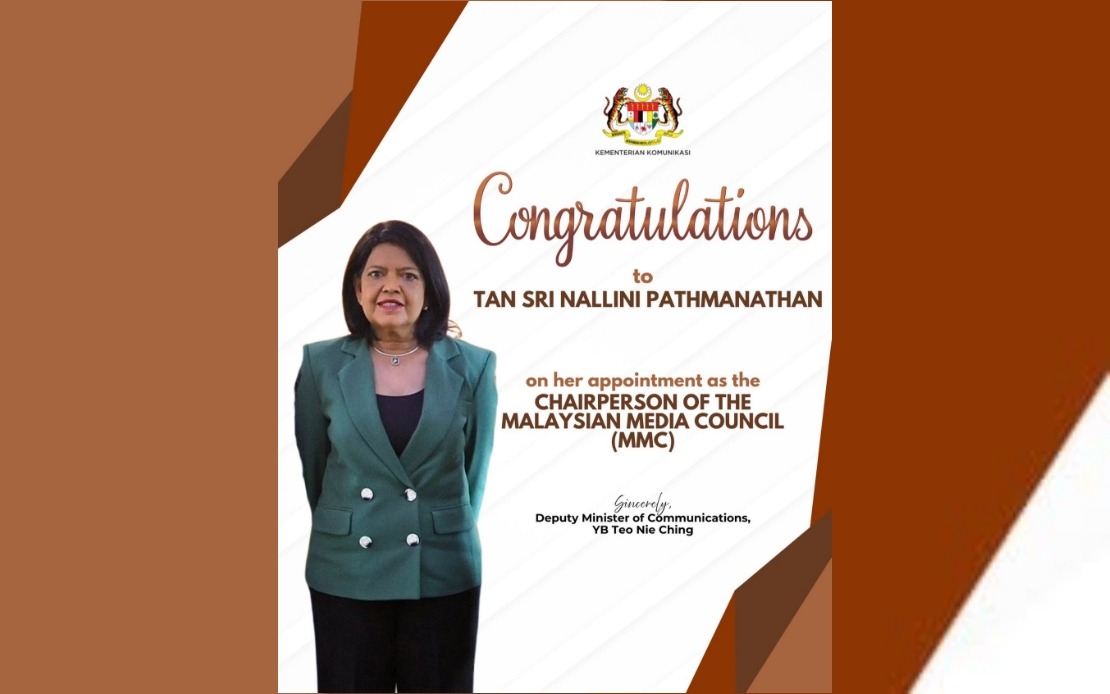
Tan Sri Nallini Pathmanathan, a retired Federal Court judge, has been appointed chairperson of the Malaysian Media Council (MMC), the nation's new self-regulatory body for media oversight. The unanimous endorsement came from the MMC Board at a meeting held on May 26, marking a significant milestone in Malaysia's media governance landscape. Deputy Communications Minister Teo Nie Ching publicly welcomed the appointment through a Facebook post, emphasizing Nallini's judicial credentials and her demonstrated commitment to protecting fundamental freedoms through her bench rulings.
Teo's endorsement centres on Nallini's track record of progressive constitutional interpretation. She specifically cited a 4-3 split decision in a citizenship case involving a child born to a Malaysian father and foreign mother, where Nallini authored a dissenting opinion advocating for a compassionate, purposive reading of Malaysia's citizenship laws. This judgment reflected judicial thinking that prioritizes human dignity and constitutional intent over rigid formalism, qualities Teo considers essential for leading a media self-regulatory council at a time when press freedom remains contested globally.
Equally significant in Teo's appraisal is Nallini's dissenting judgment in a landmark case concerning online news portals and subscriber comments. The case dealt with questions of publisher liability for user-generated content, a perennially thorny issue in digital media regulation. Nallini's ruling that news websites should not bear legal responsibility for commentary posted by their readers aligns with principles protecting editorial independence and reasonable journalistic conduct—matters directly relevant to her new role overseeing media industry standards.
The establishment of the MMC represents a culmination of decades-long advocacy within Malaysia's media and civil society sectors. The body was formally created under the Malaysian Media Council Act 2025, arriving after fifty years of petitions, policy discussions, and sustained calls from journalism professionals and media organizations. This timeline underscores how long the media industry has awaited a dedicated self-regulatory framework that could operate independently from government apparatus while establishing professional conduct standards. The delay has meant Malaysia lagged behind several regional counterparts in establishing formal media accountability mechanisms.
Teo's public backing of Nallini carries particular weight given her portfolio as Deputy Communications Minister. Her emphasis on self-regulation rather than state intervention reflects a broader principle: that media freedom, paradoxically, requires robust voluntary oversight by the industry itself to stave off government control. She articulated this in her post by describing journalists as the Fourth Estate of democracy—a formulation that positions media workers as essential democratic guardians rather than mere commercial operators. State involvement in media regulation, she argued, inevitably invokes perceptions of oppression and governmental overreach, making independent industry mechanisms crucial.
The appointment arrives at a complex moment for Malaysian media. The country has faced persistent questions about press freedom, with international indices tracking concerns about editorial independence, litigation against journalists, and regulatory pressures. An independent, credible self-regulatory council could help demonstrate that the industry possesses capacity for disciplinary and ethical oversight without state direction. Nallini's judicial background—rather than a background in journalism, politics, or business—signals an attempt to position the MMC as impartial and guided by legal and constitutional principles rather than sectoral interests.
However, questions will likely emerge about the council's actual powers and enforcement mechanisms. Self-regulatory bodies globally face inherent tensions: they must be credible enough to satisfy public interest and government expectations, yet independent enough to protect media freedoms. The MMC's effectiveness will depend on whether media organizations willingly submit to its rulings, whether its decisions carry meaningful consequences, and whether it can command public confidence as an impartial arbiter. Nallini's judicial reputation for principled decision-making becomes relevant here—her perceived fairness and intellectual rigour will substantially influence whether the council gains legitimacy.
For Malaysian journalism specifically, the MMC establishment under Nallini's leadership could reshape professional norms and industry self-discipline. Currently, Malaysian media operates within a regulatory environment that includes the Communications and Multimedia Act, Official Secrets Act, and defamation law—a framework that creates multiple pressure points. A functioning self-regulatory council might clarify ethical standards for reporting, establish transparent complaint mechanisms, and create forums for discussing contentious issues like source protection and editorial independence. These functions could ease tensions between media practitioners and regulators if the council commands genuine respect.
Regional context matters too. Southeast Asia's media landscape includes varying self-regulatory arrangements, from active ombudsman offices in some countries to minimal oversight mechanisms in others. Malaysia's MMC potentially positions the country as moderately advanced in media governance architecture, though effectiveness matters more than institutional existence. Neighbouring countries and international media freedom organizations will likely watch how the council handles controversial cases and whether it prioritizes press freedom in its determinations.
Teo's invocation of Nallini's dissenting opinions also suggests the government views the MMC as operating within constitutional and human rights frameworks rather than as a tool for content control. This rhetorical positioning—emphasizing judicial independence, progressive interpretation, and protection of fundamental freedoms—may reflect genuine commitment or strategic messaging. Either way, it establishes a baseline expectation that the council will defend rather than restrict media space. Whether Nallini's actual decisions and the MMC's operations fulfil this expectation remains to be seen as the body matures and encounters high-profile cases or complaints.
The timeline of the MMC's establishment also reflects Malaysia's evolving governance approaches. That the council was created through dedicated legislation rather than administrative arrangement suggests legislative commitment and legal teeth. That it arrived after fifty years of advocacy underscores how entrenched resistance to media self-regulation had been, whether from government departments or industry skeptics. Nallini's appointment, backed by senior government figures while she maintains judicial credentials, represents an attempt to thread the needle between credibility and acceptance—a delicate balance upon which the council's future influence depends.

