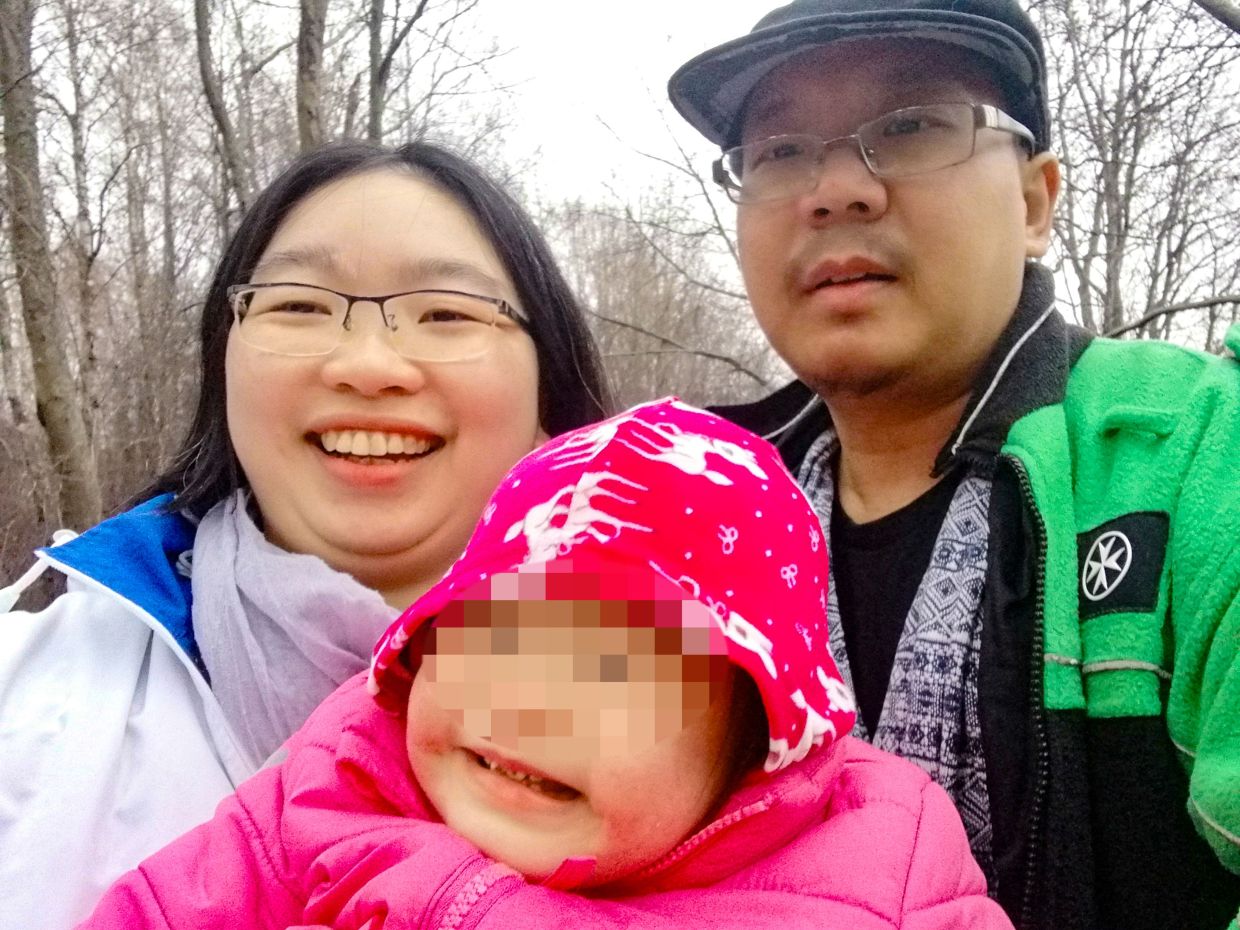
A Swedish court has effectively ended a Hong Kong couple's latest legal manoeuvre to regain custody of their four-year-old daughter, ruling that judicial review of social welfare decisions falls outside the court's purview. The June 10 decision represents another significant setback for Tsang and Kwan, who have waged a protracted battle across multiple jurisdictions to bring their child home, only to face mounting obstacles from child protection authorities on both sides of the globe.
The Swedish Social Welfare Committee had submitted its application to formally transfer guardianship to the child's foster family, who have cared for her since May 2024. In its June 3 report, the committee determined that the girl—identified publicly by her parents as Lily—required protection from what it described as a "rootless and insecure existence" if she remained under parental care. The welfare body's language underscored the breadth of its concerns, extending beyond isolated incidents to suggest systemic deficiencies in the parents' capacity to provide stable, nurturing conditions. The committee emphasised that the child deserved to grow up in an environment characterised by "warmth, routines, predictability and safety," qualities it apparently concluded her biological parents could not reliably furnish.
The couple's legal team sought to challenge this determination in court, arguing that the welfare committee's assessment lacked rational foundation. However, the Swedish court rejected their petition on procedural grounds, determining that social welfare reviews simply were not subject to direct judicial challenges at that stage. Instead, the court stipulated that the parents would need to await a formal decision from the authorities before mounting a legal challenge—a temporal and structural hurdle that effectively delays their ability to contest the guardianship transfer. Tsang subsequently expressed frustration to the South China Morning Post, lamenting that the court "did not even allow us the opportunity to challenge its irrationality," suggesting he views the procedural barrier as itself unjust.
The family's misfortunes began years before their arrival in Sweden. Lily was born at home in Finland in October 2021, the couple's second child. Three years earlier, their eldest daughter had died at just one month old, also following a home birth. When Finnish authorities declined to register Lily's birth—citing the parents' permanent Hong Kong residence—investigations were opened into potential negligence surrounding their first daughter's death. This investigative cloud would follow the family across borders, eventually informing social welfare assessments in Sweden.
The couple relocated to Sweden, where their circumstances deteriorated rapidly. In December 2023, Lily was placed into social welfare care after her parents were arrested on suspicion of money laundering. Although that charge was subsequently dropped, the separation persisted. The Swedish authorities' intervention reflected a broader concern about the family's stability and judgment, compounded by the earlier Finnish investigation and the unconventional nature of their repeated home births without proper medical oversight or birth registration.
Desperate to maintain their public narrative and generate international attention, Tsang and Kwan established a social media campaign called "Save Lily," uploading family photographs and legal documents to build support among diaspora communities and sympathetic observers online. This strategy reveals the couple's determination to fight through every available channel, even as traditional legal avenues narrowed. The campaign also highlights a growing tension in child protection cases between parental rights advocates and welfare authorities, a debate with resonance across the Asia-Pacific region where home birth movements and alternative parenting philosophies periodically clash with statutory child safety frameworks.
The situation has simultaneously taken an unexpected turn in Hong Kong. After returning to the city, the couple welcomed a newborn son, Danny, earlier this year following another home birth. However, when they refused to submit a DNA test to prove their biological relationship to the child—a standard requirement for birth registration—the Hong Kong Social Welfare Department assumed custody of the infant. This development is emblematic of the couple's apparent antagonism toward institutional procedures and governmental verification mechanisms, a stance that has consistently undermined their credibility with authorities across multiple jurisdictions.
Currently, Danny remains under the care of Hong Kong's Social Welfare Department, and the couple's capacity to regain custody hinges on ongoing parental assessment by government social workers and a forthcoming court hearing scheduled for late this month. On a recent Monday, Tsang reported that he and Kwan, operating under official supervision, brought Danny to a Department of Health maternal and child health centre for examination. The facility found no immediate health concerns, a modest positive development that may provide marginal support to their case, though it addresses only the narrowest medical dimension of the broader questions about their parenting judgment and household stability.
The case illuminates the complex terrain faced by cross-border families when child welfare concerns arise. Malaysia and other Southeast Asian nations with growing expatriate communities and diverse family structures may increasingly encounter similar situations where parents clash with welfare authorities across different legal systems and cultural frameworks. The Swedish court's decision to restrict judicial review of welfare determinations reflects Northern European child protection philosophy, which prioritises administrative expert judgment over parental preference when safety is perceived to be at stake. Whether Hong Kong courts will adopt a similar approach to Danny's case remains uncertain, though the couple's track record suggests they face an uphill struggle to persuade authorities that they can now provide the stable, medically supervised, and properly documented family environment that modern child welfare standards demand.

